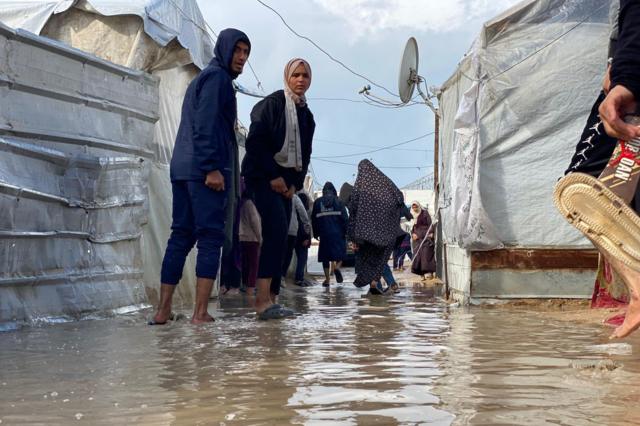
Three Palestinian displaced individuals were injured in Gaza on Thursday as a result of a wall collapsing, which had been previously damaged by Israeli airstrikes, amid a weather system affecting the region since the night. Heavy rains and strong winds have worsened the living conditions for the displaced, who are enduring harsh circumstances.
Medical sources confirmed that the dilapidated wall fell onto a tent for displaced individuals on Al-Wahda Street, leading to two injuries being transported to Al-Shifa Hospital in the west of the city, while field treatment was provided to the third injured person. This incident comes at a time when Gaza is suffering from extremely complex health conditions.
Details of the Incident
In a related context, the heavy rains have caused hundreds of tents and shelters to flood in various areas of the Gaza Strip. The spokesperson for the Gaza Municipality, Hosni Mahna, explained that the extensive damage to infrastructure and drainage networks has resulted in water pooling in the streets and leaking into the living areas of the displaced. He also pointed out that several tents have been uprooted and destroyed due to the strong winds.
Mahna warned of imminent environmental and health risks due to the mixing of rainwater with sewage in several areas, indicating that municipal crews are attempting to intervene with very limited and primitive resources to mitigate the impacts of the weather system, amid the ongoing deterioration of conditions.
Background & Context
Approximately 1.9 million Palestinian displaced individuals in the Gaza Strip are living in tragic conditions within dilapidated tents lacking the most basic necessities of life, as a result of Israeli aggression and siege. Despite a ceasefire agreement that came into effect on October 10, 2025, living conditions have not seen any significant improvement, as the Israeli occupation continues to prevent the entry of humanitarian aid and shelter materials into the strip.
The Israeli war on Gaza has resulted in over 72,000 martyrs and nearly 172,000 injuries, in addition to destruction affecting around 90% of the civilian infrastructure. These conditions leave residents vulnerable to weather fluctuations, especially in winter, without shelter to protect them.
Impact & Consequences
The repercussions of the weather system extend beyond humanitarian dimensions, as the environmental and health pressures resulting from the flooding place the displaced in an even more complicated situation. An increase in disease cases due to water contamination could lead to the outbreak of epidemics, further straining a healthcare system that is already suffering from severe resource shortages.
Moreover, the continued deterioration of living conditions may exacerbate social crises, increasing frustration and despair among the population. These circumstances could drive more youth to consider emigration or engage in illegal activities in search of a livelihood.
Regional Significance
The situation in Gaza serves as an indicator of the humanitarian challenges facing the Arab region in general. The recurring crises in Gaza highlight the urgent need for effective humanitarian interventions by the international community and underscore the importance of finding lasting political solutions to the Israeli-Palestinian conflict.
Furthermore, the conditions in Gaza impact the security and stability of neighboring countries, as humanitarian crises can lead to an influx of refugees into these countries, increasing the pressures on them.
In conclusion, Gaza remains a symbol of resilience in the face of challenges, but it urgently needs support from the international community to alleviate the suffering of its residents and improve their living conditions.