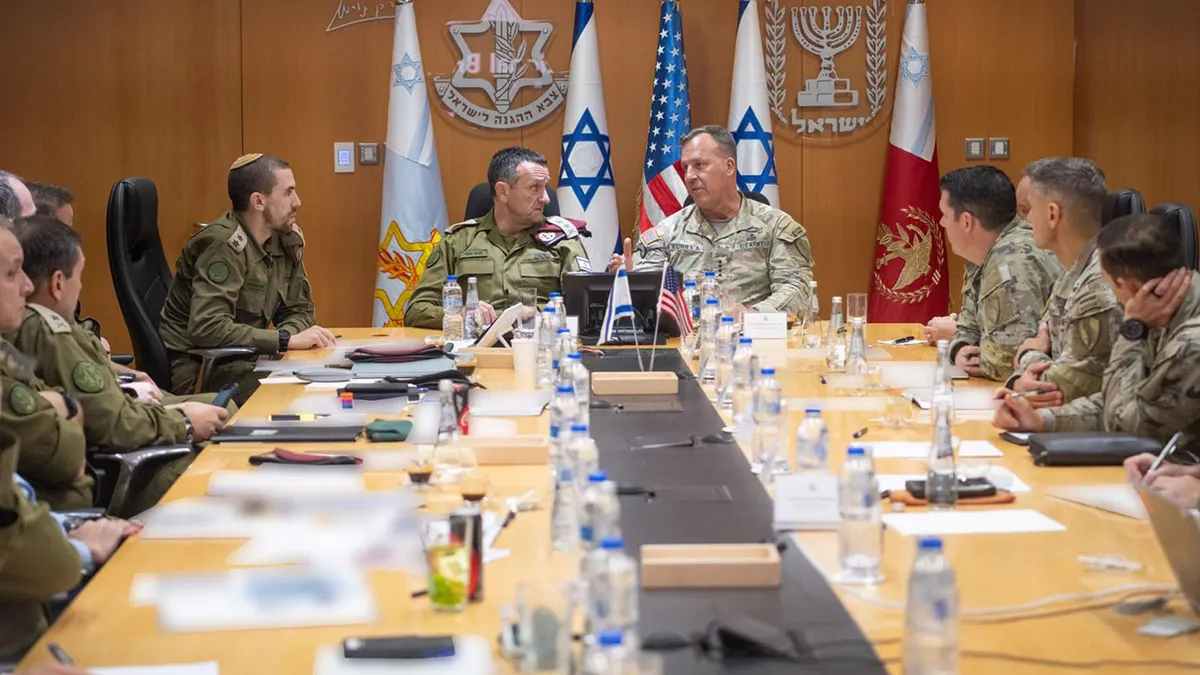
General Eric Kurilla, the commander of U.S. Central Command, visited Israel today, where he endorsed new military plans that enhance cooperation between the two countries. This visit comes at a sensitive time marked by escalating tensions in the region, particularly due to the volatile security situation in the Palestinian territories and threats from Iran.
During the visit, Kurilla met with several Israeli military officials, where they discussed joint strategies to address security challenges in the region. The American general emphasized the importance of military cooperation between the United States and Israel, noting that these plans aim to bolster Israeli defensive capabilities.
Details of the Visit
Kurilla's visit follows a recent surge in hostilities in the West Bank and Gaza Strip, where violent confrontations have occurred between Israeli forces and Palestinians in recent days. Kurilla pointed out that the United States is committed to supporting Israel in facing these challenges, and the approved military plans include enhancing air and ground capabilities.
The importance of intelligence sharing between the two sides was also highlighted, as Kurilla noted that cooperation in this area is a critical factor in addressing regional threats, particularly from Iran and its allies in the region.
Background & Context
Historically, military relations between the United States and Israel have been strong, with the U.S. considering Israel a strategic ally in the Middle East. These relations have seen significant development in recent years, especially following normalization agreements between Israel and several Arab countries.
However, the situation in the region remains complex, with rising tensions between Israel and Palestinians, in addition to Iranian threats that concern the United States and its allies. In this context, Kurilla's visit is part of U.S. efforts to enhance security and stability in the region.
Impact & Consequences
This visit is expected to affect Israeli-Palestinian relations, potentially provoking angry reactions from the Palestinian side, which views U.S. support for Israel as backing for occupation. Additionally, the enhancement of military cooperation may escalate tensions in the region, negatively impacting peace efforts.
On the other hand, these military plans may strengthen Israel's ability to confront threats, potentially leading to a shift in the balance of power in the region. Some believe that these steps could increase polarization between Arab states and Israel, especially amid the tense circumstances.
Regional Significance
Kurilla's visit and the confirmation of military plans serve as a strong message to Arab countries, reflecting the U.S. approach to strengthening military relations with Israel at a time when security challenges are increasing. This may raise questions about the future of Arab-Israeli relations, particularly in light of the ongoing Israeli-Palestinian conflict.
These developments could also influence Arab positions towards the United States, as some may view U.S. support for Israel as conflicting with the interests of Arab nations in achieving peace and stability in the region. Under these circumstances, the question of how this visit will impact future relations in the region remains open.