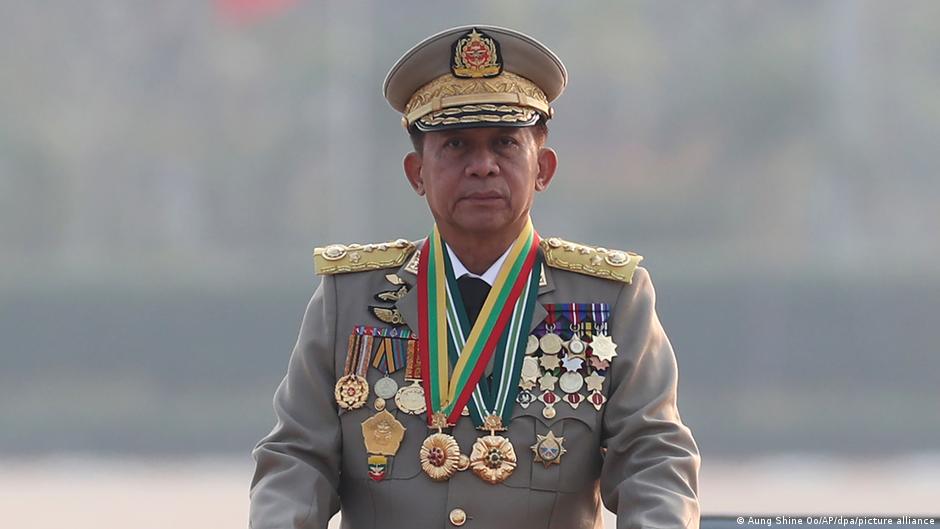
General Min Aung Hlaing, the commander of Myanmar's military, has announced his candidacy for the presidency after being nominated by parliament members, paving the way for him to assume the presidential office. This announcement comes at a time when the country is suffering from ongoing internal conflicts, as Hlaing seeks to consolidate his power following the coup he led in 2021 against the democratically elected government.
The 69-year-old general, who took power after the ousting of Aung San Suu Kyi, is now facing a three-way vote in a parliament largely dominated by military supporters. He was nominated by Kyaw Kyaw Htay, reflecting parliamentary support for his bid for the presidency.
Details of the Event
In a surprising move, Min Aung Hlaing was replaced by a close military ally, Yee Win Oo, who will take over as the commander of the army. This step indicates internal maneuvers within the military to strengthen control over power in the country, as Hlaing aims to secure his new position as part of a long-term strategy to maintain military influence in the government.
These developments follow the parliamentary elections held last January, which saw overwhelming victories for military-backed parties. These elections demonstrated a significant decline in the influence of democratic parties, reflecting ongoing pressures on opposition movements.
Background & Context
Historically, Myanmar has suffered from decades of military rule, with Aung San Suu Kyi being ousted from power after her party won the elections in 2020. The coup triggered a wave of popular protests, which were met with severe repression by the military. In 2011, there was hope for a transition to democracy following Suu Kyi's release, but recent events have shown that the military still retains significant power.
Since the coup, the country has experienced escalating violence, with thousands of political opponents arrested and protests criminalized. These conditions have exacerbated humanitarian and economic crises in the country, complicating the situation further.
Impact & Consequences
This move is seen as a confirmation of Min Aung Hlaing's intention to continue ruling the country with an iron fist, as noted by analyst Nying Min Khant from the Myanmar Institute of Strategy and Policy. Hlaing is believed to be seeking international legitimacy, despite lacking popular support.
This political shift could lead to increased internal tensions, with protests against military rule expected to rise. The international community is closely monitoring these developments, as they may affect relations with Western countries that impose sanctions on the military regime.
Regional Significance
The events in Myanmar hold particular importance for the Arab region, reflecting the challenges faced by countries in achieving democracy and human rights. The situation in Myanmar could also impact regional stability, especially with regional powers seeking to enhance their influence.
In conclusion, the situation in Myanmar remains complex, requiring the international community to take effective steps to support democracy and human rights in the country. The continued military dominance could exacerbate humanitarian and political crises, necessitating urgent action from the international community.