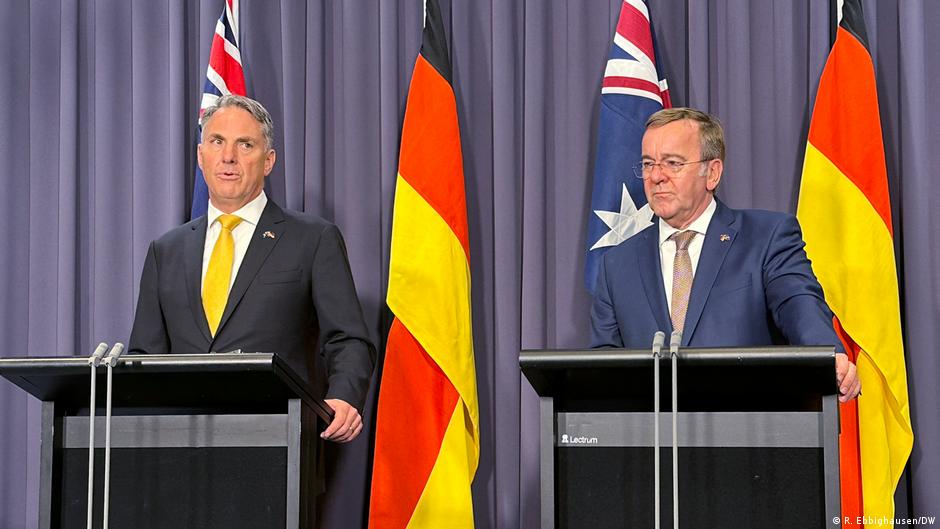
German Defense Minister Boris Pistorius concluded an eight-day Asia tour, which included Japan, Singapore, and Australia, where he warned of a potential breakdown of the rules-based global order. During his meetings, he highlighted the importance of this system that has supported international cooperation for decades.
In Canberra, Australian Defense Minister Richard Marles pointed to the shared values between his country and Germany, stating, "We respect the rule of law, both nationally and internationally," reflecting a consensus on the significance of the rules-based order.
Details of the Event
Throughout his tour, Pistorius emphasized the close interconnection between the Pacific region and Europe, noting that the world has become more interconnected, where economic crises and conflicts in one area are influenced by developments in others. He explained that the international system faces new challenges, and leaders are increasingly aware of the erosion of old certainties.
Pistorius also pointed out the necessity for middle powers, such as Germany, Japan, Singapore, and Australia, to collaborate in forming new alliances to address global challenges. He stressed the importance of a greater role for major powers in shaping the international system, with a need to change the priorities of this system.
Background & Context
Historically, Germany has relied on the United States for its security, but global political changes, especially during Donald Trump's presidency, have highlighted the difficulties of this reliance. Pistorius called for enhancing Germany's self-reliance in its defense policy, indicating that the focus should be on how to strengthen cooperation among middle powers rather than solely concerning itself with major powers.
He also noted that countries like India and Indonesia, which seek a larger role in the international system, should be part of these new alliances. India, which maintains close ties with Russia, exemplifies the challenges Germany may face in building new alliances.
Impact & Consequences
Pistorius's warnings reflect a growing awareness of the importance of reshaping the international system to address new challenges. The rules-based order requires radical reforms, and there must be consensus among major and middle powers to ensure its sustainability.
His call for independence from the United States indicates a shift in German foreign policy, which may impact transatlantic relations. Amid these dynamics, we may witness the emergence of new alliances focused on shared values rather than solely relying on major powers.
Regional Significance
For the Arab region, these developments reflect the need to enhance cooperation among Arab states in facing global challenges. With the increasing crises in the region, it is essential for Arab countries to adopt new strategies to strengthen their role in the international system.
Moreover, shifts in international politics may affect Arab relations with major powers, necessitating a reevaluation of these relationships in line with Arab interests.
In conclusion, Pistorius's tour in Asia signifies a transformation in German defense policy, highlighting the importance of cooperation among middle powers in addressing global challenges, prompting Arab states to consider new strategies to enhance their role in the international system.