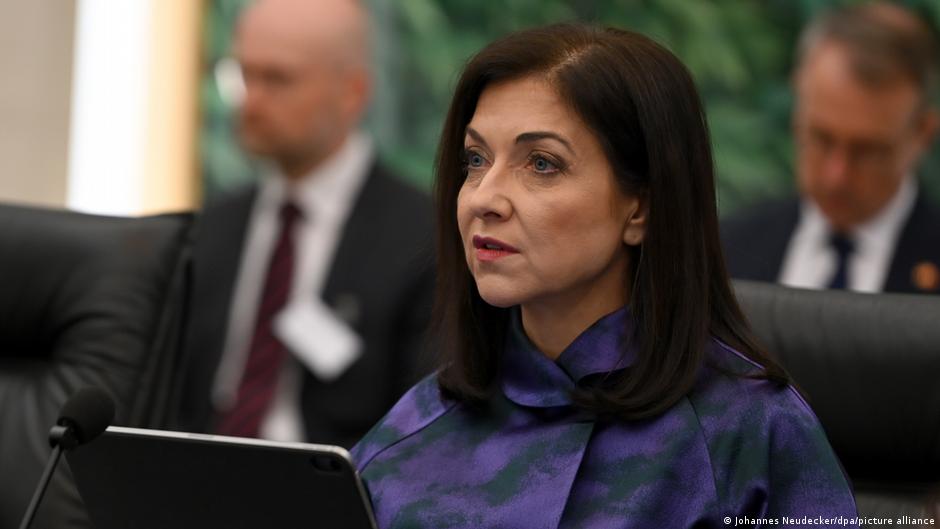
German Economy Minister Katharina Reich has become a controversial figure, making bold decisions since taking office in Chancellor Friedrich Merz's government in 2025. The 52-year-old Reich is known for her strong stances, which have drawn criticism from environmental and climate activists who view her as a defender of industrial interests.
Before entering the government, Reich served as a member of the German Bundestag from 1998 to 2015, after which she transitioned to the energy sector, becoming the chair of the board of Westenergie, the largest subsidiary of the energy giant E.ON. Under her leadership, the company provided fossil fuel energy to approximately 6.6 million people, increasing her criticism as a lobbyist for the industry.
Details of the Controversy
Upon taking office, Reich announced her intention to roll back the efforts of her predecessor, Robert Habeck of the Greens, who aimed to promote the transition to renewable energy in German heating systems. About 72% of German homes use natural gas or oil for heating, making the construction sector one of the least advanced in implementing climate policies.
Habeck had proposed a law requiring new heating systems to primarily rely on renewable energy, but this proposal faced strong opposition, particularly in the eastern part of the country, where some accused him of imposing high costs on citizens. With Reich's arrival, she canceled this law, stating that "the heating law cost us trust and divided society."
Background & Context
Historically, Germany has undergone significant transformations in its energy policies, especially after its decision to abandon nuclear energy. However, global economic challenges, including trade disputes and wars, have significantly impacted the country’s energy strategies. Germany is currently grappling with rising energy costs, increasing pressure on the government to provide effective solutions.
Reich aims to balance industrial interests with citizens' needs, having received support from major industrial associations from the outset due to her focus on affordability in energy policy. However, even the German Federation of Industries (BDI) has begun to express criticism due to the economy not improving as expected.
Impact & Consequences
Attention is turning to how Reich's policies will affect the future of energy in Germany. There are fears that prioritizing fossil fuel interests over renewable energy could exacerbate the climate crisis. This trend poses a risk to future generations, as Germany needs to innovate in future energy technologies rather than rely on fossil fuels.
Amid escalating global crises, including the war between the United States and Iran, pressure is mounting on the German government to address rising energy costs. Finance Minister Lars Klingbeil proposed taxing unexpected profits from energy companies, but Reich rejected this proposal, causing tensions within the government.
Regional Significance
Germany's energy policies are particularly significant for the Arab region, as Arab countries are among the largest producers of oil and gas. Any changes in German energy policy could impact global demand for fossil fuels, reflecting on the economies of Arab nations. Additionally, the shift towards renewable energy may open new avenues for cooperation between Germany and Arab countries in clean energy sectors.
In conclusion, the decisions made by German Economy Minister Katharina Reich remain under global scrutiny, as she must achieve a balance between economic growth and environmental protection during a time of increasing economic and political challenges.