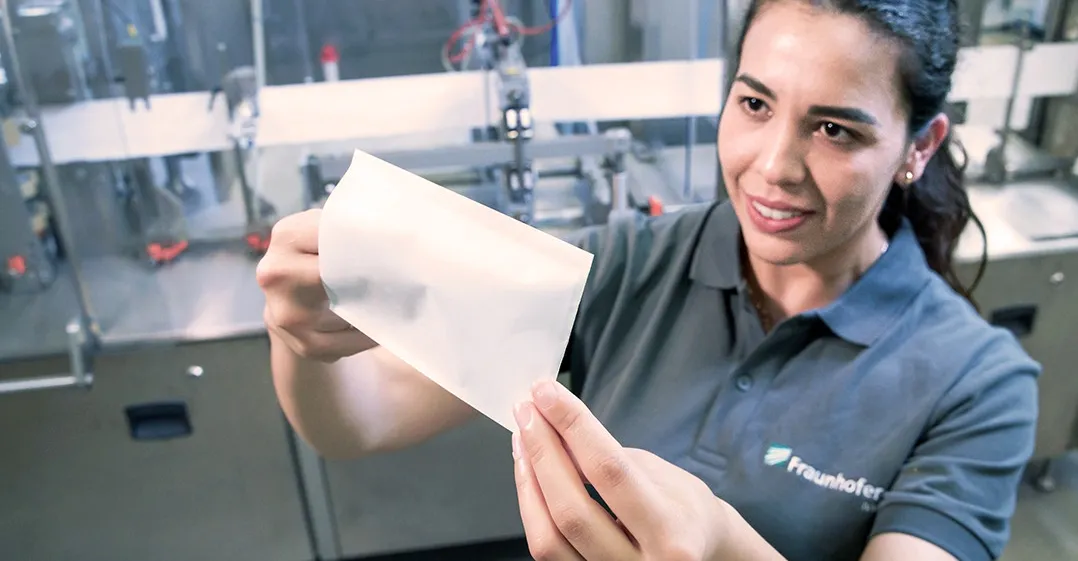
German researchers at four Fraunhofer institutes have unveiled a new technology for wrapping paper that relies on the use of lasers instead of adhesives or plastics. This method represents a significant step towards achieving environmentally friendly packaging, as it contributes to improving the recycling process of paper and reducing pollution caused by additional materials used in traditional packaging methods.
The new project, named "Babour", leverages the expertise of the four institutes that focus on research in polymers, engineering, packaging, and laser technologies. The new process involves analyzing the chemical composition and paper structure of various types of paper using techniques such as scanning electron microscopy and X-rays to determine whether the paper can be sealed without the need for any additives.
Details of the New Technology
The first step in the new sealing process involves analyzing the chemical composition of the paper, where components such as hemicellulose, cellulose, and lignin are examined. These components play a crucial role in the strength of the final seal. Once the type of paper is approved, it is exposed to laser beams in a controlled process that rapidly heats the paper's surface, transforming lignin, hemicellulose, and cellulose into short-chain compounds. These compounds remain on the surface of the paper and act as a natural adhesive, creating a tight seal when heat and pressure are applied.
So far, tests have shown that a seal measuring 3 mm in width and 2 cm in length can support a weight of up to 44 pounds. The researchers have already developed a laboratory-scale paper processing unit capable of producing a flat paper bag design used by companies like LEGO. The team is also working on improving the design of the laser and sealing units and integrating quality measurement systems to ensure the required bonding strength is achieved.
Background & Context
The issue of pollution caused by plastic and adhesive materials in packaging processes is one of the major challenges facing the environment today. With increasing environmental awareness, many researchers and innovators are seeking to develop alternative solutions that contribute to reducing environmental impact. Paper, as a packaging material, is considered more environmentally friendly compared to plastic, but the use of adhesives hinders its recycling process and reduces its quality.
Historically, most packaging processes have relied on the use of adhesives, leading to increased environmental pollution. However, technological advancements such as the use of lasers represent a radical shift in this field, opening new horizons for more sustainable packaging.
Impact & Consequences
This new technology is seen as a revolution in the packaging field, as it can significantly change how products are produced and distributed. If this method is widely adopted, it will reduce reliance on plastic materials, contributing to decreased environmental pollution and improving the quality of recycled paper.
Moreover, these innovations could help promote a circular economy, where materials are used more efficiently, reducing waste and enhancing sustainability. This technology may also open the door for companies to offer environmentally friendly products, enhancing their competitiveness in the market.
Regional Significance
In the Arab region, where many countries suffer from environmental pollution issues, this new technology could be a significant opportunity to improve packaging processes and reduce environmental impact. These innovations could contribute to the development of local industries that rely on sustainable materials, thereby enhancing the green economy in the region.
In conclusion, these developments in the field of packaging represent an important step towards a more sustainable future, inspiring further research and innovations in this area, contributing to environmental protection and achieving sustainable development.