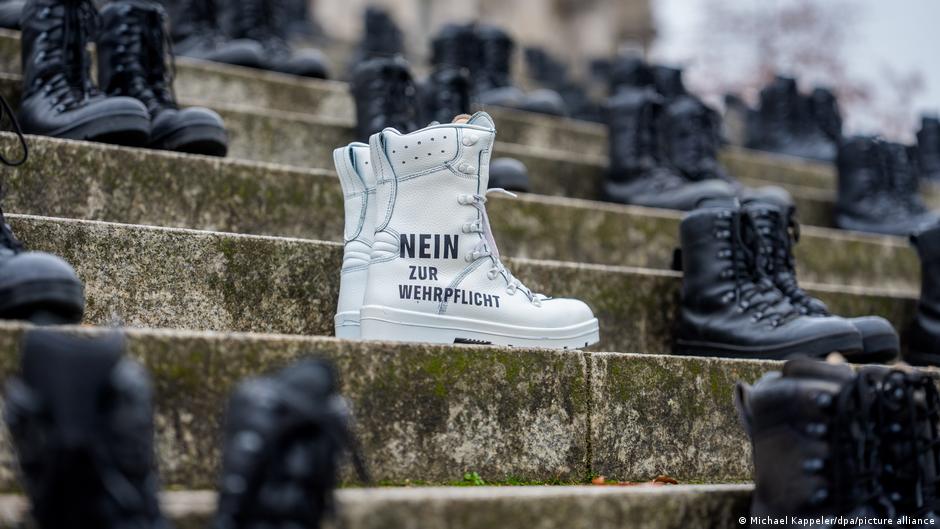
German youth are experiencing a growing rejection of military service, with many expressing their unwillingness to join the Bundeswehr. As the military seeks to bolster its ranks by an additional 60,000 soldiers in the coming years, the prospect of reinstating mandatory military service may soon become a reality.
In this context, Phil Wiering, an 18-year-old student, voices his concerns about the possibility of compulsory military service. He states, "They always say it’s about defense, but I don’t see any real threat, so I have no interest in completing military service." Wiering is one of the spokespersons for the initiative "School Strike Against Mandatory Military Service," organized by a group of youth in the city of Münster.
Details of the Initiative
The German government is preparing to implement new laws regarding military service, which will involve sending a questionnaire to all young people upon reaching the age of 18. This questionnaire will include questions about their willingness to join the military, with a scale from zero to ten indicating their interest, where zero signifies no interest. However, submitting the questionnaire is not the end of the process; all young people, even those who express disinterest, must undergo a medical examination by a military doctor.
The recruitment campaign by the Bundeswehr is also intensifying amid fears of potential attacks from Russia against NATO territories. These circumstances have prompted many young people to consider applying for conscientious objection, meaning they would not be called up for military service even if it were enforced.
Background & Context
Historically, mandatory military service has been a part of life in Germany for decades, with an option for civil service for those unwilling to join the military. However, compulsory service was suspended in 2011, leading to a significant reduction in the size of the military. The situation changed dramatically following Russia's full-scale invasion of Ukraine in 2022, with the number of conscientious objectors steadily increasing, reaching a peak in 2025 with 3,879 applications recorded.
The process of applying for conscientious objection requires careful preparation, as consulting organizations that assist individuals in this process have seen a notable increase in inquiries. The German Peace Society has established a network of over 200 volunteer advisors to help youth submit their applications.
Impact & Consequences
This phenomenon is indicative of social and cultural changes in Germany, as youth express their desire to take a stand against war. Lothar Eberhardt, one of the advisors in this field, discusses the importance of understanding the personal reasons that drive individuals to object to military service, noting that conversations with applicants can be time-consuming.
Eberhardt emphasizes that submitting an objection application requires a compelling clarification of the moral reasons preventing the individual from performing military service, as the reasons must be personal and convincing.
Regional Significance
The implications of this phenomenon extend beyond Germany, reflecting a growing awareness among youth regarding issues of war and peace. In the Arab region, this trend may inspire young people facing similar challenges, potentially fostering a culture of objection to wars and advocating for peace.
In conclusion, the increasing rejection of military service in Germany signifies a shift in social and political attitudes and highlights the importance of dialogue on war and peace issues worldwide.