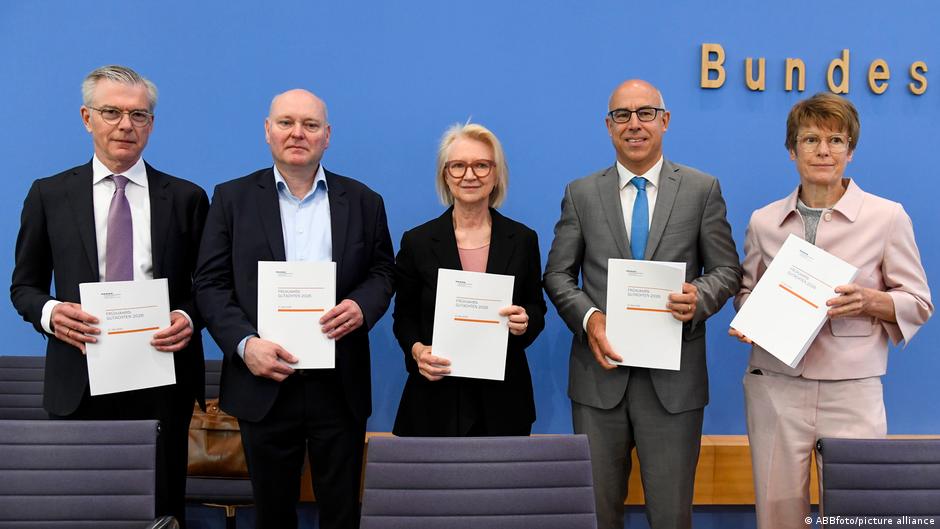
It appears that the meeting held by German Chancellor Friedrich Merz with a group of economic experts was not encouraging, as recent economic reports reveal that Germany is facing a severe economic crisis. In a meeting on Wednesday, it was announced that the economic growth forecast has been reduced to 0.5% for this year and 0.8% for the next year, reflecting a state of instability in the German economy.
These figures come at a time when the German economy is under significant pressure, with forecasts indicating that the inflation rate could reach 3% by 2026. These numbers represent a substantial decline from the promises made by Chancellor Merz upon taking office, where he pledged to steer the economy back on track.
Details of the Event
Voices are growing among business leaders expressing their dissatisfaction with the government, pointing out that Germany's competitive position in the global economy has never been this fragile. The industrial sector is considered one of the most important sectors in Germany, as it is linked to one-quarter of jobs in the country. However, German companies have begun to lose their competitive edge globally since the onset of the economic recession in 2019.
Last fall, there were some hopes that the economy might start to recover by 2026, but the war in Iran has undermined those expectations. Oil, gas, and electricity prices have surged significantly, increasing pressures on both consumers and businesses alike.
Background & Context
Historically, Germany has been regarded as one of the strongest economies in the world, with its exports of cars, machinery, chemicals, and pharmaceuticals thriving. However, with increasing global economic pressures, including U.S. trade policies and the war in Iran, German companies are facing unprecedented challenges.
Concerns are also rising regarding demographic changes in the country, as the baby boomer generation approaches retirement age, increasing the burden on the social welfare system. Experts predict that contributions to social insurance programs could rise to over 50% by 2040 if radical reforms are not implemented.
Impact & Consequences
Reports indicate that the German government is struggling to implement necessary reforms, as interests conflict among various political parties. While some call for increased contributions from the older generation, others fear that such policies could create additional hardships for the population.
Moreover, high government spending on armament and renewing deteriorating infrastructure will lead to an increase in the budget deficit, which is expected to reach 3.7% of GDP this year.
Regional Significance
The Arab region is indirectly affected by the economic crises in Germany, as Germany is an important trading partner for many Arab countries. Any downturn in the German economy could impact investments and trade between the two sides.
In light of these circumstances, it is crucial for Arab countries to monitor economic developments in Germany, especially given the challenges Germany faces in the fields of energy and industry.