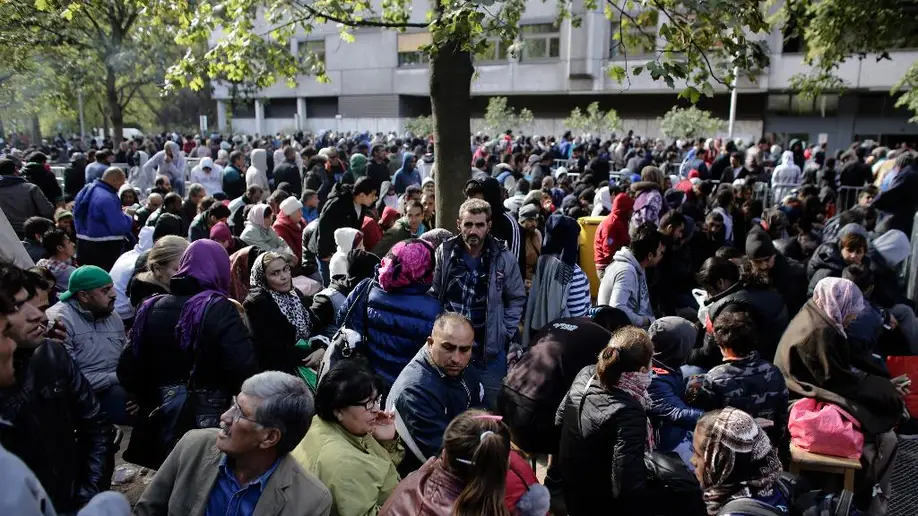
German Chancellor Olaf Scholz announced the potential return of many Syrian refugees to their homeland during Syrian President Bashar al-Assad's visit to Germany. These statements come at a time when the situation in Syria is witnessing notable changes, raising questions about the future of Syrians abroad.
Scholz emphasized the importance of rebuilding Syria, stating that the return of refugees should occur in a safe and sustainable framework. This announcement comes as pressures increase on European countries to accommodate refugees, while many Syrians are looking to return home after years of conflict.
Details of the Event
President Assad's visit to Berlin is his first since the onset of the conflict in Syria and may represent a step towards restoring relations between Syria and Europe. During the visit, Assad discussed with German officials ways to cooperate in various fields, including reconstruction. German officials expressed their readiness to support reconstruction efforts, provided that there are tangible steps towards achieving peace and stability in the country.
These developments come at a time when the situation in Syria is showing relative improvement, with violence decreasing in some areas. However, significant challenges still face the return of refugees, including security and economic conditions.
Background & Context
Since the outbreak of the conflict in Syria in 2011, millions of Syrians have fled to neighboring countries and Europe in search of safety. European countries have faced significant challenges in accommodating these refugees, leading to the emergence of political movements calling for stricter immigration policies. In recent years, some European countries, including Germany, have begun to reassess their policies towards Syrian refugees.
Historically, Germany has been one of the leading countries in accommodating refugees, having welcomed over one million Syrians since the beginning of the conflict. However, the situation in Syria has changed, raising questions about the feasibility of these refugees' return.
Impact & Consequences
The statements from the German Chancellor may encourage more Syrians to consider returning to their homeland, especially if suitable conditions are provided. However, returning is not merely an individual decision; it requires security and economic guarantees. There are also concerns that return could exacerbate conditions in areas suffering from a lack of basic services.
Moreover, these developments could affect relations between Germany and other countries in the region, as some nations may seek to enhance their role in the reconstruction process. This step may also provoke mixed reactions from Syrian refugees still living in difficult circumstances.
Regional Significance
The return of Syrian refugees to their homeland is a sensitive issue affecting many Arab countries. For instance, Iraq, Lebanon, and Jordan host large numbers of Syrian refugees, and any changes in return policies could impact the economic and social conditions in these countries.
Additionally, these developments may open the door for further cooperation between Arab countries and Europe in the fields of reconstruction and development. However, challenges remain, as joint efforts are required to ensure a safe and sustainable return for refugees.