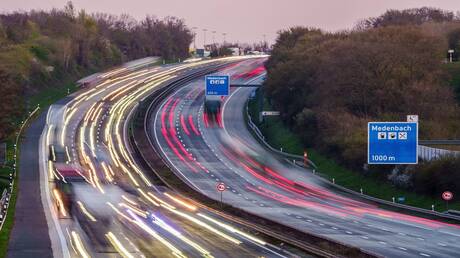
Veronica Grimm, a member of the German government advisory council focused on economic development, has proposed a measure aimed at imposing speed limits on German highways. This proposal comes at a time when the country is experiencing a rising fuel crisis due to the ongoing conflict surrounding Iran, raising concerns about the sustainability of energy resources.
Germany is one of the few countries that does not enforce strict speed limits on its highways, making it a preferred destination for many drivers. However, the current situation necessitates new measures to tackle the challenges posed by fuel shortages.
Details of the Proposal
In light of the increasing tensions in the Middle East, particularly the conflict related to Iran, fuel prices have begun to rise significantly. Many experts have indicated that this crisis could impact the German economy, prompting Grimm to suggest speed limits as a means to reduce fuel consumption.
The proposal includes setting a maximum speed limit of 130 kilometers per hour, which could help decrease fuel consumption and thus alleviate the crisis. The suggestion has received mixed reactions from drivers and politicians, with some viewing it as a necessary step, while others consider it a restriction on personal freedoms.
Background & Context
Historically, Germany has relied on an open highway system, which symbolizes freedom and speed. However, with increasing environmental and economic awareness, European governments have begun to reconsider their policies regarding speed and fuel consumption. In recent years, there have been growing calls for speed limits as a means to reduce carbon emissions and improve road safety.
This initiative comes at a sensitive time, as pressure mounts on European governments to address climate change and achieve sustainability goals. Geopolitical crises, such as the conflict over Iran, have exacerbated the situation, making it essential to take urgent steps.
Impact & Consequences
If this proposal is adopted, it could lead to significant changes in driver behavior and how highways are utilized. Drivers may alter their driving habits, which could impact overall traffic flow. Additionally, implementing speed limits could contribute to reducing traffic accidents, thereby enhancing road safety.
From an economic perspective, this change could lead to reduced fuel consumption and consequently lower costs for drivers. However, the German economy may face new challenges if the fuel crisis persists, necessitating new strategies to address these challenges.
Regional Significance
The current fuel crisis is a direct result of tensions in the Middle East, particularly the conflict over Iran. This conflict has wide-ranging effects on global energy markets, impacting Arab countries that heavily rely on oil exports.
If this crisis continues, it could lead to an increase in fuel prices in Arab countries, affecting local economies. Additionally, political tensions may impact stability in the region, requiring Arab nations to take proactive measures to address these challenges.
In conclusion, Grimm's proposal represents a new step in addressing the escalating fuel crisis. As challenges mount, it remains essential for governments to adopt effective strategies to tackle energy and environmental crises.