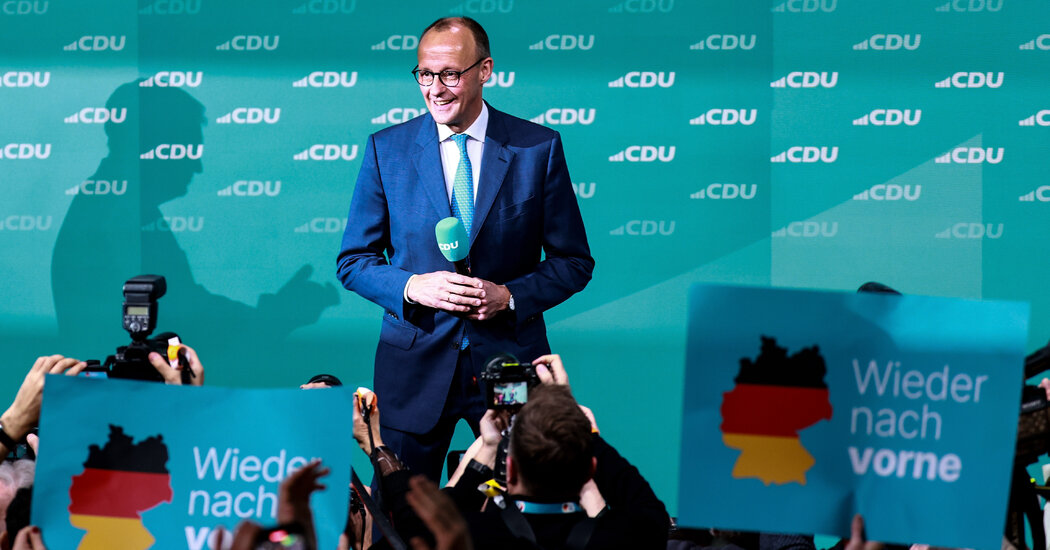
German Chancellor Friedrich Merz has expressed his country's readiness to contribute to the security of the Strait of Hormuz after the conclusion of the US-Israeli war on Iran. During his meeting with interim Syrian President Ahmad al-Shara in Berlin, Merz emphasized the necessity of ending this war as soon as possible, indicating that Germany would be prepared to provide the necessary support when the appropriate conditions are met.
Merz's statements come at a time when tensions are escalating in the Middle East, where the Strait of Hormuz is considered one of the most important maritime passages in the world, with approximately 20% of global oil exports passing through it. The region has witnessed a rise in conflicts in recent years, affecting the stability of global energy markets.
Details of the Meeting
During the meeting, Merz and al-Shara discussed the current situation in the Middle East, where the German Chancellor underscored the importance of international cooperation to ensure security in the region. He noted that Germany, as a leading country in the European Union, hopes to play an active role in peace and stability efforts.
Merz also expressed concern over the repercussions of the war on Iran, pointing out that the continuation of the conflict could exacerbate humanitarian crises and increase civilian suffering. He affirmed that a peaceful solution is the optimal choice to ensure regional stability.
Background & Context
Historically, the Strait of Hormuz has seen numerous military and political conflicts, being a vital strategic point. Since 2019, tensions between Iran and the United States have escalated, leading to military interventions by several countries, including Israel. These events have significantly impacted maritime navigation and energy security in the region.
In recent years, Germany has sought to enhance its role as a mediator in regional conflicts, aiming to provide diplomatic solutions rather than military ones. This approach aligns with Germany's foreign policy, which focuses on promoting peace and stability in tense areas.
Impact & Consequences
If the US-Israeli war on Iran comes to an end, it could pave the way for improved relations among countries in the region. Additionally, the stability of the Strait of Hormuz would enhance global energy security, benefiting both major and minor economies alike.
On the other hand, this development may contribute to reducing tensions between Iran and Western countries, potentially leading to the reopening of channels for dialogue and cooperation in various fields, including trade and security.
Regional Significance
The Arab countries neighboring the Strait of Hormuz are among the most affected by the tensions in the region. The stability of this vital area will enhance economic development opportunities and reduce the security risks faced by these nations. Furthermore, ending the conflict could improve relations between Arab countries and Iran, opening new avenues for regional cooperation.
In conclusion, the question remains open regarding the ability of the involved parties to achieve peace in the region. Merz's recent statements reflect a genuine desire for stability, but actual implementation requires joint efforts from all concerned parties.