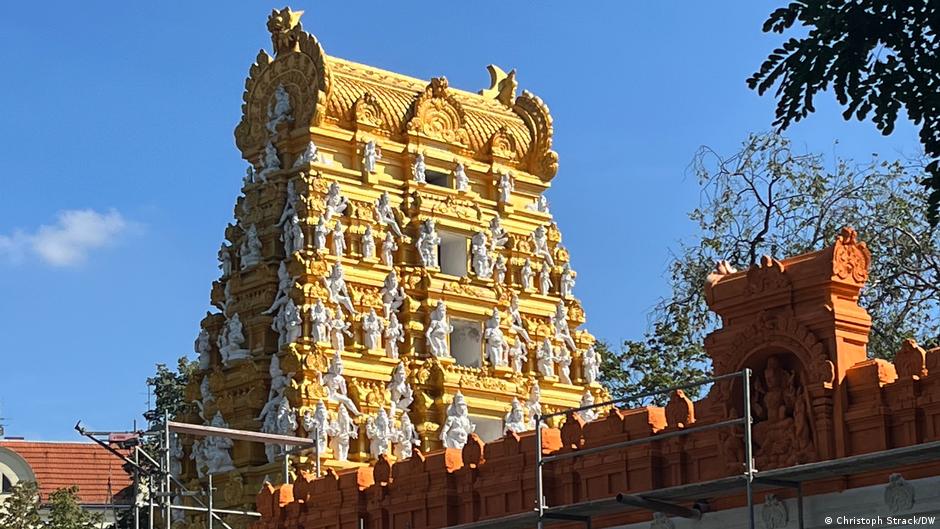
Germany is undergoing a significant religious transformation in recent years, with new temples increasing in major cities, reflecting a growing religious diversity. In the city of Erlangen, located in northern Bavaria, preparations are underway for the construction of a new Hindu temple, while mosques and other churches are expanding to accommodate the needs of diverse communities.
Erlangen serves as a living example of this change, as the Hindu community plans to build a new temple known as the Shiva-Vishnu Temple, thanks to government support and donations from the local community. The city is also home to over 2,000 Indian students, making the Indian community the largest non-German group in Erlangen.
Details of the Event
Currently, Erlangen hosts large mosques that are planning to expand, in addition to Coptic churches that have transitioned from former Catholic churches. For instance, the church of Saint Peter and Paul has been converted into a Coptic Orthodox church, with the number of Coptic families rising from 18 families to around 60 families today.
Statistics indicate that the number of Christians in Germany is continuously declining, with their proportion dropping to about 44% of the population, paving the way for the emergence of new religious communities. According to the German Office for Migration and Refugees, over 5.3 million Muslims live in the country, alongside growing Jewish, Buddhist, and Hindu communities.
Background & Context
Historically, Germany has been considered a predominantly Christian country, but with the increase in migration from countries such as Syria and India, new religious communities have begun to emerge. Since 2015, the country has witnessed a significant influx of refugees, contributing to the diversity of the religious landscape.
Statistics show that the population of Indian origin in Berlin has more than doubled tenfold between 2014 and 2024, reflecting the need to build new temples to meet the needs of these communities. There are also new projects underway to construct temples in cities such as Frankfurt, Cologne, and Hamburg.
Impact & Consequences
This transformation in the religious landscape of Germany is an indicator of the social and cultural changes the country is undergoing. As the number of temples and mosques increases, so do opportunities for dialogue between different cultures, contributing to enhanced understanding and tolerance among communities.
However, some projects face legal and administrative challenges, as certain communities experience delays in obtaining the necessary permits to build places of worship. This challenge highlights the need for improving legal procedures to facilitate the construction of new temples.
Regional Significance
This phenomenon in Germany serves as evidence of the importance of religious and cultural diversity, which could inspire Arab countries to promote tolerance and understanding among different sects. Additionally, the presence of diverse communities in Europe enhances opportunities for cooperation between Arab countries and Germany in cultural and religious fields.
In conclusion, the religious transformation in Germany illustrates how diverse communities can coexist and thrive together, emphasizing the importance of dialogue and understanding between different cultures.