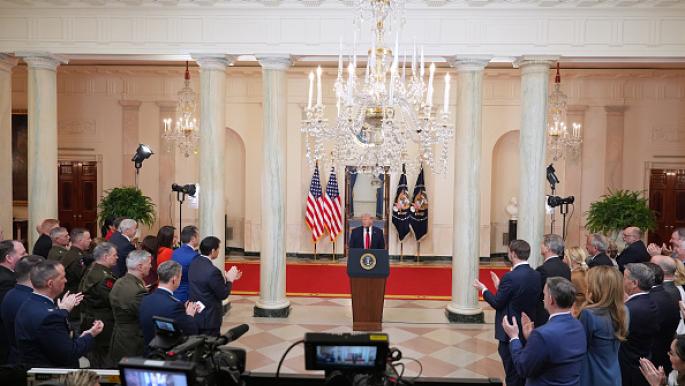
Global markets experienced a significant decline on Thursday, driven by escalating tensions related to Iran. This downturn followed President Donald Trump's remarks that dashed hopes for market stability, prompting investors to avoid risks.
Stocks and bonds in several major markets fell as investors expressed concerns over potential escalation in the region. Trump's statements affected investor sentiment, indicating that the situation in Iran might require more severe actions, which heightened uncertainty in the markets.
Details of the Event
The market decline coincided with reports of increasing tensions between the United States and Iran, with recent events showing a rise in military and political rhetoric. Markets reacted negatively to these developments, with the Dow Jones Industrial Average dropping by 2%, while European markets also witnessed notable declines.
Oil prices also dipped slightly, falling to $70 per barrel, reflecting concerns over the impact of geopolitical tensions on supplies. At the same time, government bonds saw increased demand, indicating a shift by investors towards safer assets.
Background & Context
These developments come at a sensitive time, as markets had begun to recover from the impacts of the COVID-19 pandemic. However, the escalation of geopolitical tensions, particularly concerning Iran, could hinder this recovery. There had been hopes that the international community could reach an agreement with Iran regarding its nuclear program, but Trump's recent statements have weakened these hopes.
Historically, financial markets have experienced significant volatility due to tensions in the Middle East. Political and military events in the region often affect oil prices, which in turn impacts the global economy.
Impact & Consequences
These tensions could lead to increased volatility in financial markets, potentially affecting global investments. Furthermore, the continuation of this uncertainty may prompt many companies to delay investment decisions, impacting future economic growth.
Moreover, rising tensions could lead to higher oil prices, increasing the cost of living in many countries, especially those reliant on imports. This situation could negatively affect economic stability in the region.
Regional Significance
The Arab region is among the most affected by geopolitical tensions, as any escalation in conflict could have wide-ranging repercussions. Neighboring countries to Iran may feel anxious about any military escalation, potentially leading to increased internal tensions.
Additionally, Arab markets could be directly impacted by fluctuations in global markets, affecting local investments and economies. Under these circumstances, Arab nations may need to take proactive measures to protect their economies from the repercussions of regional tensions.
In conclusion, the situation in global markets remains volatile, with investors needing to monitor developments closely. Iranian-related tensions may continue to influence markets, necessitating flexible investment strategies.