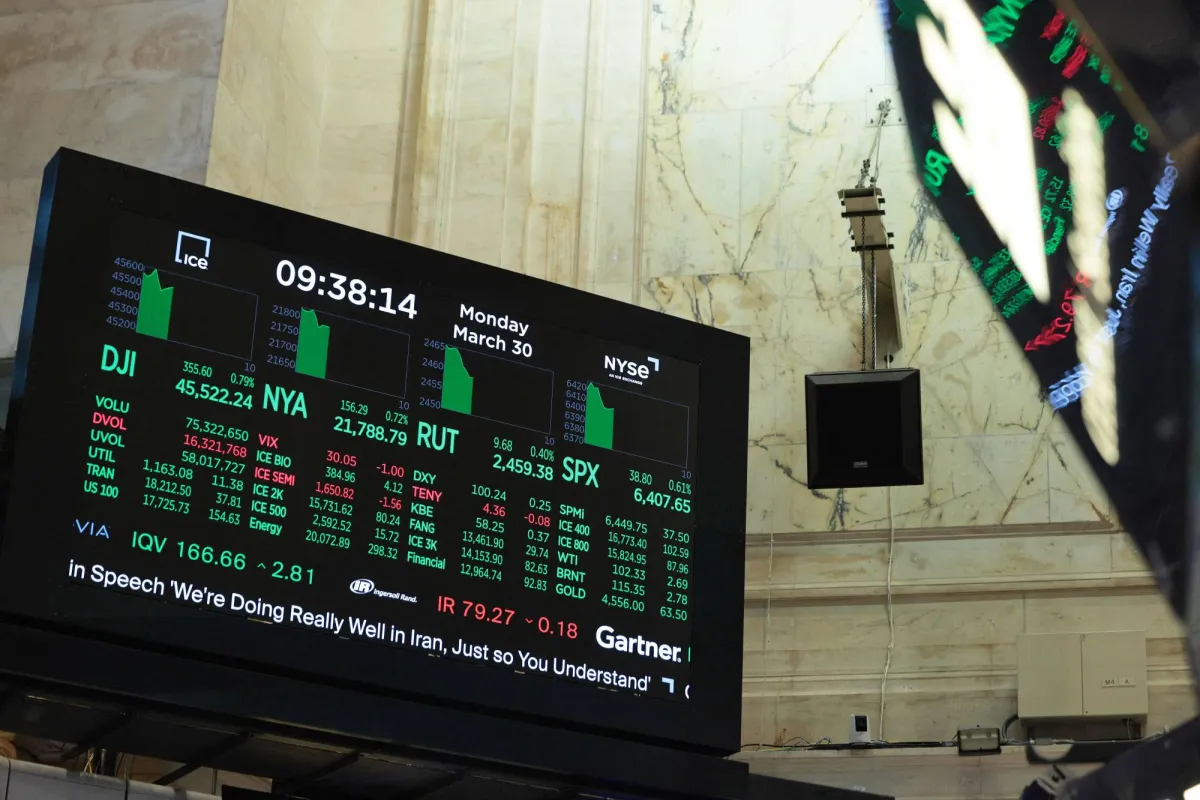
Global markets experienced a notable rebound on Wednesday, with stocks rising and bonds gaining, while the dollar weakened, fueled by hopes of de-escalation in the Iran conflict. This recovery marks the largest jump in regional markets in over three years.
The European "Stoxx 600" index jumped by 2.3% in early trading, heading towards its biggest daily gain in a year, with travel stocks rising by 4% and airline and defense stocks increasing by 3.6%. German bond yields also fell by 7 basis points, according to Reuters.
Details of the Event
The broader "MSCI" index for Asia-Pacific stocks outside Japan rose by 4.7%, ending a four-day losing streak and marking its largest daily increase since November 2022. This rise followed statements from former U.S. President Donald Trump, indicating that the United States might end its military strikes on Iran within two to three weeks.
In this context, Rodrigo Catri, a currency strategist at the National Australia Bank, stated: "There remains a significant divergence in views regarding the meaning of a ceasefire or peace, but the market welcomes the existence of dialogue between the two parties." He added: "This is at least a positive sign regarding the willingness to end the conflict, despite continued attacks from both sides."
Background & Context
Strong economic data for March contributed to the rebound in Korean and Japanese stocks, with the South Korean "KOSPI" index leading the gainers with a rise of 9.1%, while the "Nikkei 225" index surged by 5.2%, and Taiwanese stocks increased by 4.6% at their highest levels of the day. South Korea's exports also recorded strong growth of 48.3% in March, exceeding market expectations.
According to analysts from "ING Bank", the growth in Korean exports was driven by strong global demand for semiconductors and positive price effects, with limited impact from supply constraints on key exports. A separate purchasing managers' index for South Korea showed that industrial activity expanded at its strongest pace in over four years.
Impact & Consequences
In financial markets, the U.S. dollar index fell by 0.1% to 99.62, marking its largest daily decline in two weeks, with the yield on the 10-year U.S. Treasury bond dropping by 4.8 basis points to 4.261%. Futures prices for "Federal Reserve" funds indicate an implied probability of 17.9% for a 25 basis point interest rate cut during the July meeting.
In the cryptocurrency market, the price of Bitcoin rose by 1.3% to reach $69,064.01, while Ethereum increased by 2.1% to $2,150.93.
Regional Significance
Retail fuel companies in India raised jet fuel and commercial liquefied petroleum gas prices on Wednesday, following a sharp increase in global prices due to the U.S.-Israeli war on Iran. India, the second-largest importer of liquefied petroleum gas in the world, is facing its worst gas crisis in decades.
On the other hand, Turkish industrial activity contracted at its fastest pace in five months in March, with rising costs, supply chain disruptions, and declining demand due to the war in the Middle East, according to a business survey published on Wednesday. The survey showed that Turkey's manufacturing purchasing managers' index fell to 47.9 points in March, indicating a decline in industrial activity.
In conclusion, these global economic developments reflect the impact of the Iran conflict on financial markets, highlighting the importance of dialogue and understanding among the concerned parties to achieve stability in the region.