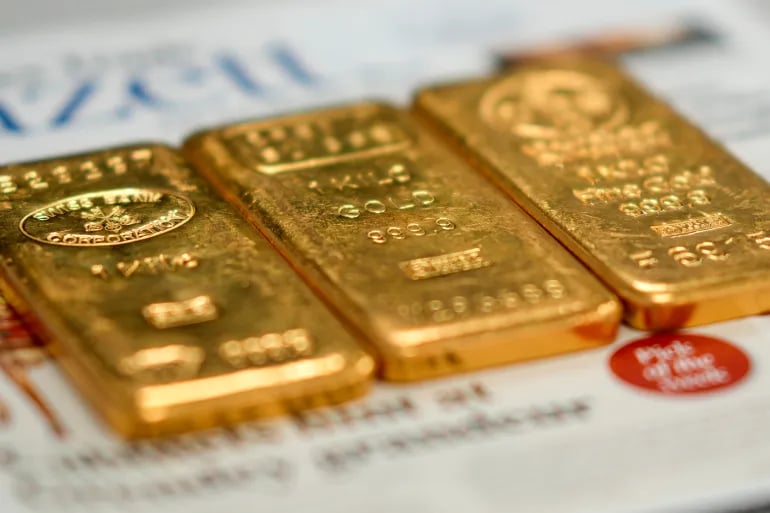
Gold and silver prices rose at the close of trading on Friday, as hopes for ending the conflict between the United States and Iran supported the prices. Tehran presented a new negotiating proposal to Washington, which helped alleviate inflation-related concerns. Nevertheless, both metals recorded losses for the second consecutive week.
Futures contracts for gold for June delivery increased by 0.32%, or $14.90, reaching $4644.50 per ounce, reducing its weekly loss to 2%. In contrast, July silver futures saw a rise of 3.24%, or $2.403, reaching $76.431 per ounce, despite a 0.66% decline over the week.
Details of the Event
Positive news regarding negotiations between the United States and Iran contributed to the strengthening of gold and silver prices. This news led to a decline in the dollar, making the bullion priced in greenbacks less expensive for buyers using other currencies. This market change reflects a quick response to geopolitical developments, as gold is considered a safe haven in times of uncertainty.
Global economic trends also play a significant role in determining precious metal prices. Amid geopolitical tensions, investors tend to shift towards safe assets like gold, increasing demand for it. However, fluctuations in dollar prices significantly impact market movements.
Background & Context
Historically, gold and silver have been precious metals that attract significant attention in financial markets. In recent years, gold prices have experienced considerable volatility due to global political and economic tensions. Additionally, the effects of inflation and monetary policies play a crucial role in determining price trends.
Iran and the United States are key players in the geopolitical arena, and any progress in negotiations between them can significantly impact global markets. Therefore, any news related to this conflict captures investors' interest and influences their investment decisions.
Impact & Consequences
The effects of rising gold and silver prices extend beyond mere numbers, as these movements reflect general market sentiment. When gold prices rise, it indicates investors' concerns about economic and political volatility. Furthermore, higher prices for precious metals can affect industries that rely on them, such as jewelry and technology.
Moreover, a declining dollar can lead to increased demand for gold as a hedge against inflation. This situation may contribute to a rise in investments in precious metals, thereby enhancing price stability in the long term.
Regional Significance
Gold and silver prices are important indicators for Arab economies, as many countries rely on exports of precious metals. Amid geopolitical tensions, gold prices can influence investments in the region, prompting governments to take appropriate measures to protect their economies.
Additionally, rising gold prices may lead to increased demand for jewelry, positively impacting local industries. At the same time, investors in the region should be cautious of potential price fluctuations due to political and economic changes.
In conclusion, gold and silver prices remain under continuous influence from global events, necessitating investors to closely monitor developments. Understanding these dynamics can aid in making more informed investment decisions.