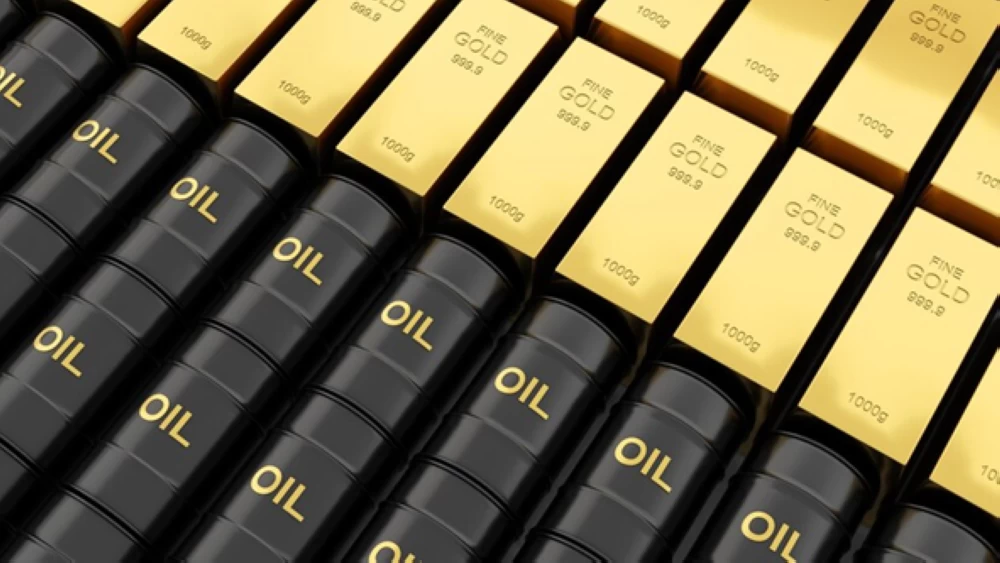
Gold prices fell slightly on Tuesday, with spot prices decreasing by 0.1% to $4640.93 per ounce by 03:27 GMT. Additionally, U.S. gold futures for June delivery dropped by 0.4%, recording $4666.70 per ounce.
In a related development, silver prices also saw a decline of 0.9%, reaching $72.17 per ounce, while platinum fell by 1.1% to $1958.75 per ounce. Palladium also lost 0.5%, settling at $1478.49.
Market Dynamics and Influences
Data indicates that gold prices are under pressure due to the strengthening of the U.S. dollar, which negatively affects the appeal of the precious metal as a safe haven. Concurrently, volatility in financial markets is increasing uncertainty among investors.
On the other hand, oil prices continue to achieve significant gains, remaining above $110 per barrel. This increase comes amid rising global energy demand and geopolitical tensions affecting oil supplies.
Background & Context
Historically, gold is viewed as a safe haven for investors during economic crises. However, changes in interest rates and monetary policies play a crucial role in determining price trends. In recent years, markets have experienced substantial fluctuations due to global events such as the COVID-19 pandemic and trade wars.
Conversely, the oil markets are also undergoing significant changes, with prices influenced by multiple factors including production levels, demand, and political tensions. The Middle East is a key region affecting oil prices due to the presence of numerous producing countries.
Impact & Consequences
Fluctuations in gold and oil prices can significantly impact the global economy. Rising oil prices may lead to increased transportation and production costs, negatively affecting the prices of goods and services. Meanwhile, a decline in gold prices could impact investments for individuals and companies that rely on the precious metal as part of their investment portfolios.
Furthermore, these changes may have repercussions on financial markets as investors seek to reassess their investments under changing conditions.
Regional Significance
The Arab region is among the most affected by fluctuations in oil prices, as many countries depend on oil revenues to finance their budgets. Therefore, any increase in prices could contribute to boosting local economies, while a decrease may lead to economic pressures.
Regarding gold, declining prices could impact local markets, as gold is one of the most important assets held by individuals in Arab countries. Consequently, investors in the region are closely monitoring these changes.
In conclusion, gold and oil prices remain volatile, prompting investors and analysts to closely follow economic and political developments. Understanding these dynamics can aid in making more informed investment decisions.