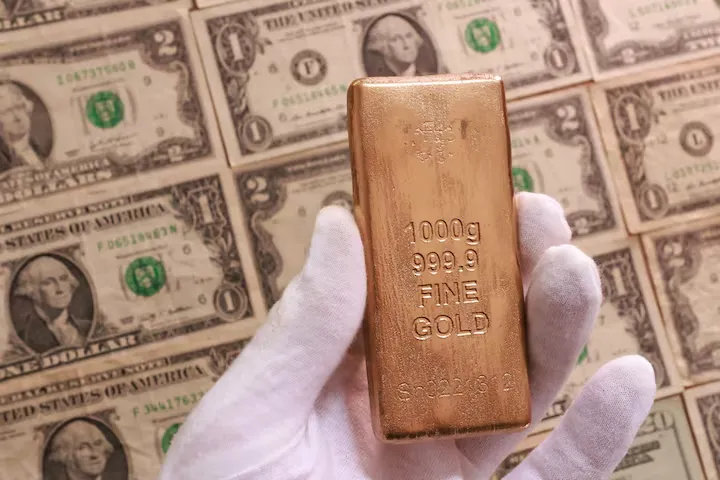
Gold prices experienced a slight increase during weak trading in European markets, as prices rose alongside a decline in the dollar. This increase comes at a time when investors are evaluating the impact of a proposed ceasefire in the ongoing conflict between the United States, Israel, and Iran, and its effect on oil prices and inflation expectations.
In spot trading, gold rose by 0.35% to reach $4691.86 per ounce by 10:40 GMT, after previously declining by 1%. Additionally, U.S. gold futures for June delivery increased by 0.83% to $4718.20 per ounce.
Details of the Event
Kyle Rodda, Senior Market Analyst at Capital.com, commented on this rise, stating, "We have seen this increase against the backdrop of headlines concerning the possibility of a ceasefire. However, the fundamentals behind this remain questionable, and these movements seem to reflect a partial decline in oil demand." He also noted that the decline in the dollar, alongside oil prices, contributed to the rise in gold prices.
Crude oil prices fell by more than 1%, yet they remain above $107 per barrel. At the same time, the dollar index decreased by 0.2%, making gold less expensive for holders of other currencies. The rise in oil prices is a significant factor fueling inflation, as companies pass on higher costs to consumers, which may prevent central banks from lowering interest rates.
Background & Context
Although gold is traditionally viewed as a hedge against inflation, rising interest rates diminish the appeal of non-yielding assets like gold. According to the CME's FedWatch tool, traders have almost ruled out any possibility of U.S. interest rate cuts this year, compared to previous expectations which indicated two cuts of 25 basis points before the outbreak of the war with Iran.
In a related context, Iran confirmed that it has formulated its positions and demands in response to ceasefire proposals conveyed through intermediaries, emphasizing that negotiations "are incompatible with warnings and threats of committing war crimes." The United States and Iran have also received a framework for a ceasefire plan, while Iran rejected the reopening of the Strait of Hormuz following threats from U.S. President Donald Trump.
Impact & Consequences
The next forty-eight hours are deemed critical, as Rodda indicated that any strikes on Iranian power stations could lead to chaos and confirmed volatility in the markets. In this context, silver prices rose by 0.3% to $73.21 per ounce, while platinum increased by 0.35% to $1995.98, and palladium rose by 0.51% to $1510.63.
Simultaneously, Indian refining companies announced the postponement of maintenance operations for their units to meet local fuel demand, reflecting the geopolitical situation's impact on energy markets.
Regional Significance
The rise in gold prices and the volatility of oil prices pose a significant challenge for the Arab region, where many countries rely on oil revenues. Furthermore, any escalation in the ongoing conflict could affect economic stability in the region, necessitating proactive measures from governments to protect their economies.
In conclusion, the situation in financial markets remains influenced by political developments, making it essential to closely monitor events.