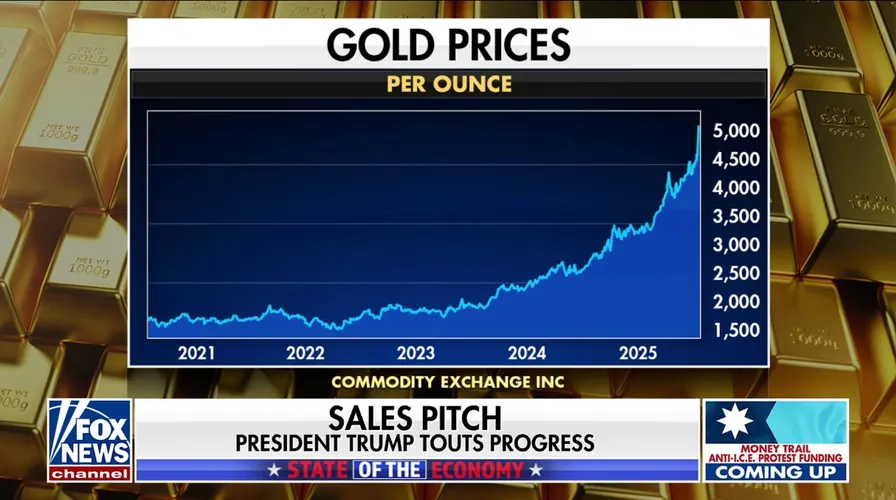
Gold prices have experienced a notable rise over the past few days, recording new gains amid increasing demand for safe-haven assets. However, the decline in hopes regarding U.S. interest rate cuts has limited these gains, reflecting a state of uncertainty in the financial markets.
According to reports, gold prices increased by up to 1.5% last week, with the price of a single ounce reaching approximately $1900. This rise comes at a time when concerns about a slowdown in global economic growth are mounting, prompting investors to seek safer assets.
Event Details
Gold prices are significantly influenced by changes in interest rates, as the yellow metal is considered a safe haven during times of instability. However, recent economic data from the United States, including job reports and inflation indicators, have affected market expectations regarding future interest rate policies.
While there were hopes for a potential rate cut to support the economy, statements from Federal Reserve officials have dispelled these hopes, leading to declines in gold prices during certain periods. This divergence in trends reflects the challenges facing financial markets.
Background & Context
Over the past years, gold prices have experienced significant fluctuations due to global economic and political changes. In 2020, for example, gold reached record highs due to the repercussions of the COVID-19 pandemic, as investors turned to the yellow metal as a safe haven.
However, changes in U.S. monetary policy play a crucial role in determining market trends. Amid rising inflation rates, there were expectations that the Federal Reserve would cut interest rates to support the economy, but recent statements indicate that this scenario may not materialize soon.
Impact & Consequences
The impact of rising gold prices extends to various economic sectors. For investors, higher prices may lead to increased demand for gold as a safe investment, while it may affect industries that rely on the yellow metal, such as the jewelry sector.
Moreover, the decline in hopes for interest rate cuts may increase pressure on financial markets, potentially negatively impacting stocks and bonds. Investors in emerging markets, including Arab countries, may feel the effects of these changes more acutely, exacerbating uncertainty.
Regional Significance
In the Arab region, gold is considered an important asset relied upon by many investors. With rising prices, demand for gold as a means of preserving wealth may increase, especially amid the challenging economic conditions faced by some countries.
Additionally, the decline in interest rates may impact investments in other sectors, potentially leading to a slowdown in economic growth in some countries. Therefore, monitoring developments in gold prices and U.S. monetary policies will be essential for understanding future trends.
In conclusion, gold remains at the forefront of investor interest, representing an important tool in facing economic challenges. As changes in monetary policies continue, it will be crucial to observe their effects on global and local markets.