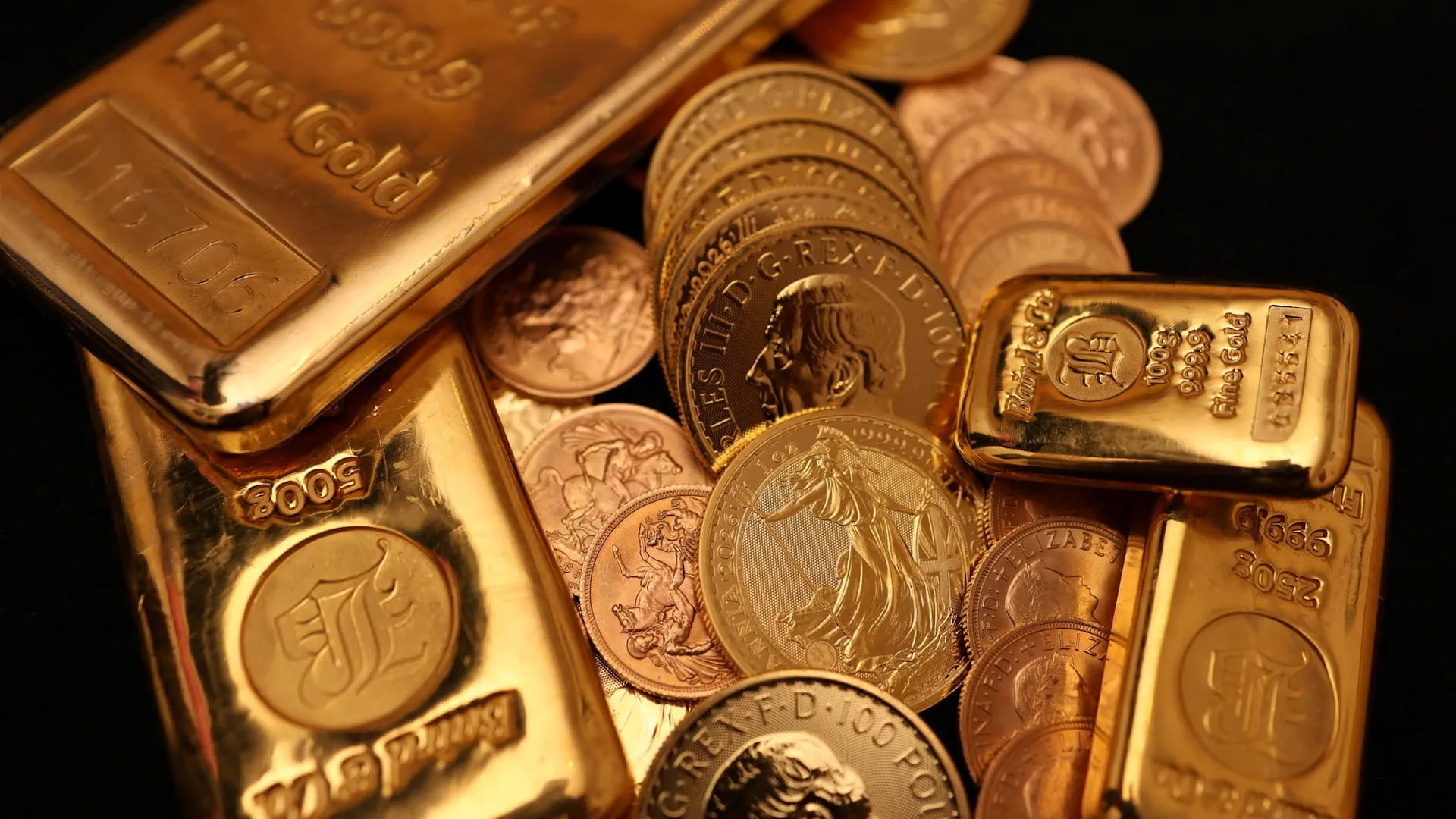
Gold prices experienced a significant rise of over 1% today, Wednesday, supported by a decline in the US dollar, as oil prices fell below $100 per barrel. This drop in oil prices has helped to ease concerns related to rising inflation and increasing interest rates globally, amid reports of a US plan to resolve the conflict with Iran.
Specifically, the price of gold in spot transactions rose by 1.6% to reach $4545.46 per ounce, while US gold futures for April delivery increased by 3.29% to $4547. This increase was a result of the dollar's decline, making gold priced in US currency less expensive for holders of other currencies.
Details of the Event
Oil prices have fallen to levels below $100 per barrel, contributing to the easing of inflationary pressures. This coincided with reports indicating that the United States has presented a 15-point plan to Iran aimed at ending the conflict in the Middle East. US President Donald Trump announced progress in talks with Iran, noting that Tehran has made significant concessions regarding non-nuclear energy and the Strait of Hormuz, without providing further details.
Typically, rising oil prices lead to increased inflation due to higher transportation and manufacturing costs. However, the current decline in oil prices may alleviate these pressures, positively impacting financial markets.
Background & Context
Global financial markets are characterized by volatility due to geopolitical tensions, particularly in the Middle East. The ongoing conflict between the United States and Iran is one of the key issues affecting global markets. Recent years have seen an escalation in tensions, leading to heightened concerns over rising oil prices and inflation.
Gold prices are considered a safe haven for investors during times of economic uncertainty, so any decline in the dollar or drop in oil prices may lead to increased demand for gold. The CME Group's FedWatch tool has shown that traders do not expect any interest rate cuts from the US Federal Reserve this year.
Impact & Consequences
The impact of rising gold prices on financial markets can be significant, reflecting an increase in demand for safe assets. Additionally, a weaker dollar may lead to increased investments in emerging markets, boosting economic growth in those countries. On the other hand, stable oil prices may help reduce inflationary pressures, giving the US central bank a greater opportunity to maintain interest rates unchanged.
In this context, prices for other precious metals have also risen, with silver in spot transactions increasing by 2.46% to $73, while platinum rose by 1.27% to $1959.9, and palladium increased by 1.53% to $1463.7.
Regional Significance
The current developments in gold and oil prices are particularly significant for Arab countries, which heavily rely on oil exports. Any changes in oil prices may affect the budgets of producing countries, reflecting on economic stability in the region. Moreover, geopolitical tensions, such as the conflict with Iran, may impact foreign investments in the region.
In conclusion, financial markets remain under the influence of geopolitical tensions and global economic changes. It is important to monitor developments in gold and oil prices, as they can directly affect the Arab economy.