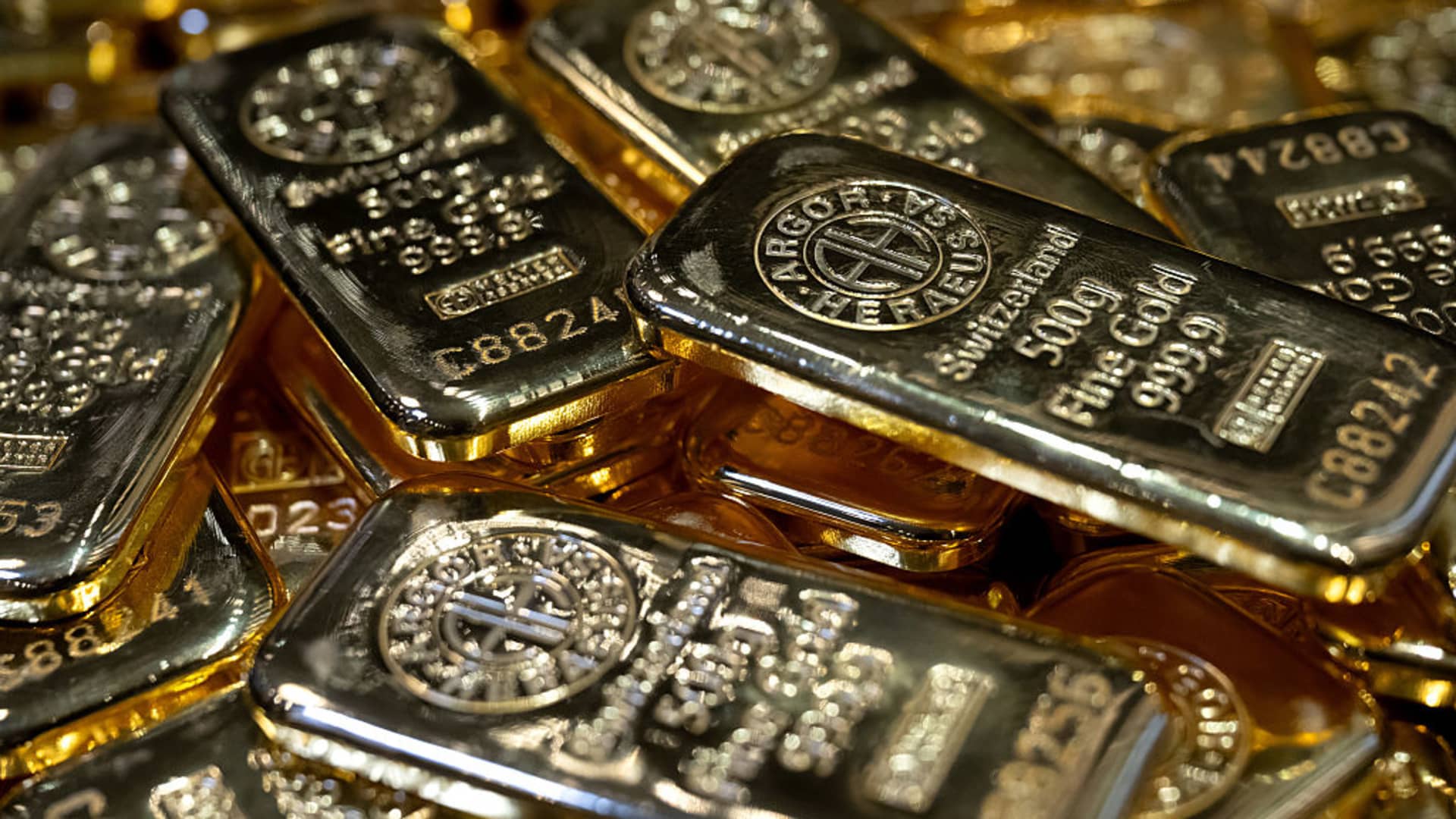
Prices for precious metals, including gold and silver, fell sharply on Monday as investors continued to shy away from these metals, believing they are safe havens amidst the ongoing conflict in Iran that dominates the global economic landscape.
In specific price details, the price of gold fell to $4,126.36 per ounce, reflecting a decrease of 7.8%, while gold futures stopped at $4,119.10, marking its lowest point since 2026. Global markets have been noticeably affected by these developments, with gold prices losing approximately 10% throughout the past week.
Specific Event Details
Figures show that the price of gold has lost about 25% of its value since peaking at the end of January, when it reached $5,594.92 per ounce. Silver fared no better, dropping to $62.24, a decline of 8.3% and a reduction of over 50% compared to its level recorded on February 28. Additionally, other precious metals like platinum and palladium experienced significant declines as platinum fell to $1,760.90 and palladium recorded $1,347.50.
These declines reflect the overall trend in the markets, with many investors searching for more profitable alternatives such as government bonds amid rising interest rates due to increasing pressures.
Background & Context
Financial markets are always affected by geopolitical crises, but the conflict in Iran has a particular impact, especially in such a resource-rich area like the Middle East. Since the outbreak of the conflict, concerns have grown about its impact on energy prices and inflation rates, affecting investor confidence in precious metals. History shows that crises often lead to significant fluctuations in precious metal markets; for instance, during previous military conflicts, gold was generally viewed as a safe haven asset.
With the escalating tensions in the region, investor sentiment has shifted, redirecting interest away from precious metals towards assets offering higher returns during periods of crisis.
Impact & Consequences
In analysis, the market is likely to experience further volatility if the situation in Iran remains unresolved in the near future. With expectations for rising interest rates, demand for non-yielding gold may decrease, while government bonds become more attractive. It is also anticipated that continued instability in the Middle East will increase fluctuations in energy prices, which will in turn impact global economic activity.
There is also the potential for the situation to worsen, which may drive many investors back to traditional investment hubs instead of precious metals, potentially creating a new downward spiral.
Regional Significance
In the Arab context, the economic situation is significantly affected by the ongoing events in Iran. Arab nations that import energy may face significant challenges due to rising prices resulting from the conflict, which could impact economic growth. Additionally, with rising interest rates, governments may find it challenging to manage their debts.
In conclusion, the decline in gold and silver prices signals deeper changes in investor behavior amid current crises, raising questions about economic stability in the region and emphasizing the need for more resilient strategies to face these challenges.