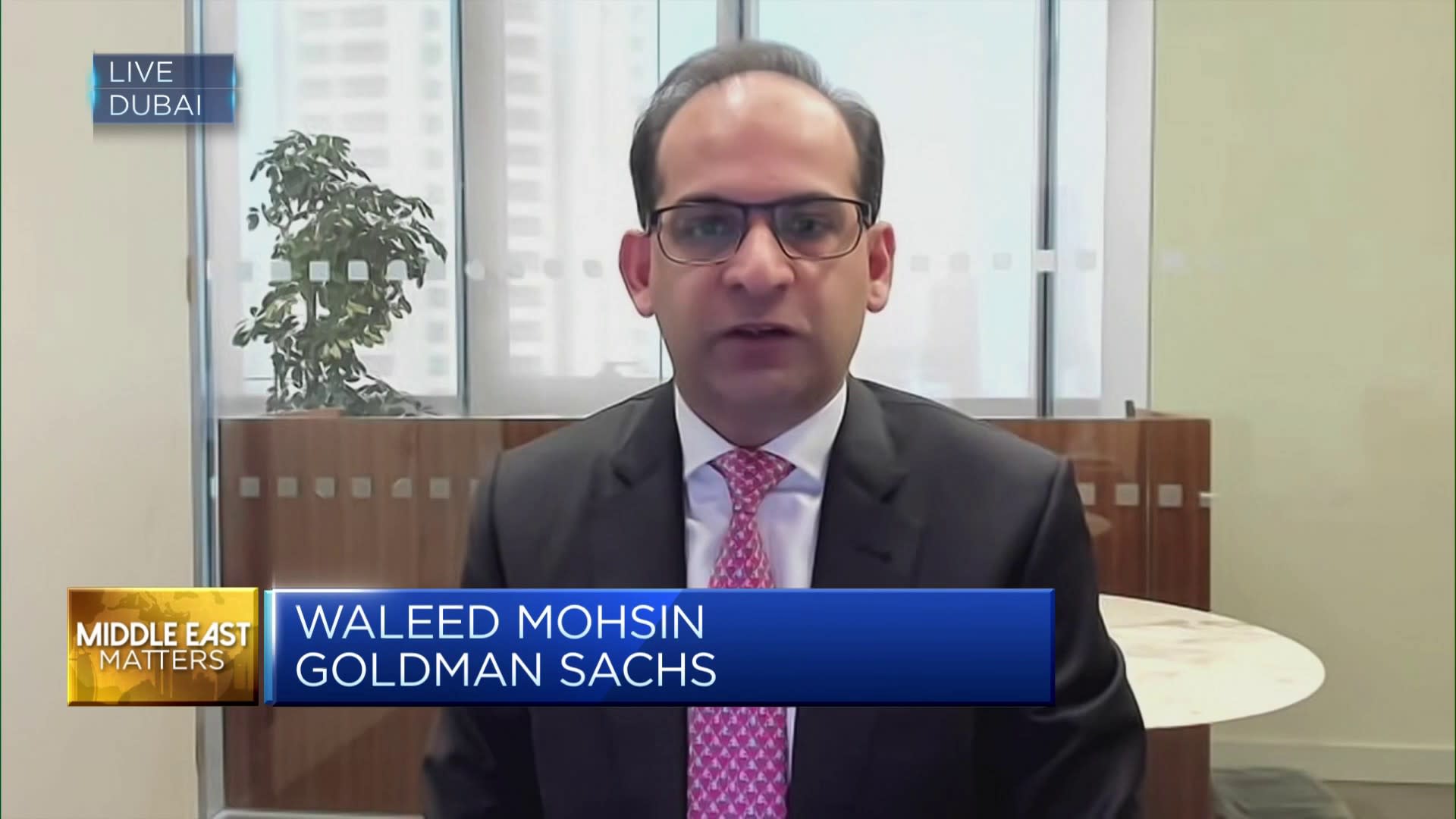
In its latest report, Goldman Sachs has lowered its oil price forecasts for the second quarter of 2026, estimating that Brent crude will reach $90 per barrel and West Texas Intermediate will be priced at $87 per barrel. This revision comes in the wake of an agreement reached between the United States and Iran regarding a two-week ceasefire, which has directly impacted market expectations.
Previously, Goldman Sachs had anticipated an average price of $99 per barrel for Brent crude and $91 for West Texas Intermediate. However, changes in market-related risks, along with an increase in oil flow through the Strait of Hormuz, prompted the bank to adjust its forecasts.
Details of the Forecast Adjustment
Oil prices have seen a decline of more than 11% during the current week, as optimism prevailed following the announcement of the ceasefire between the United States and Iran. Nevertheless, prices rebounded during trading sessions in Asia, as concerns grew that the resumption of supplies from the Middle East may not be complete, amid doubts regarding the sustainability of the ceasefire.
Goldman Sachs' forecasts for the third and fourth quarters of 2026 indicate that Brent crude prices could reach $82 and $80, respectively, while West Texas Intermediate prices are expected to range between $77 and $75. However, the bank noted that the risks associated with its forecasts still lean towards the positive side, reflecting the potential for long-term disruptions and ongoing losses in oil production.
Background & Context
The Middle East is considered one of the most significant oil-producing regions in the world, where political events play a major role in determining global oil prices. Agreements and ceasefires between major countries such as the United States and Iran directly affect the market, as any escalation in tensions can lead to significant price increases.
Historically, oil prices have experienced substantial fluctuations due to political events in the region, where conflicts and wars have led to production cuts and price hikes. Therefore, any signs of stability or instability in the region significantly influence market expectations.
Impact & Consequences
Goldman Sachs' reduction in forecasts reflects a state of uncertainty in the market, as any failure to maintain the ceasefire could lead to a significant rise in prices. Should the ceasefire fail and production losses in the Middle East continue at a rate of up to 2 million barrels per day, Brent crude prices could soar to $115 in the fourth quarter of the year.
These forecasts serve as an important indicator for investors and financial markets, as oil prices impact numerous economic sectors, including transportation and energy. Therefore, monitoring developments in the Middle East will be crucial for understanding future price trends.
Regional Significance
The geopolitical dynamics in the Middle East are critical for global energy security. The region's oil production capacity means that any disruptions can have far-reaching consequences for the global economy. The interplay between political agreements and market responses highlights the interconnectedness of global oil markets.
In conclusion, the situation in the Middle East remains fluid, and the implications of the ceasefire agreement will be closely watched by market analysts and investors alike. The ongoing developments will likely shape the trajectory of oil prices in the coming months.