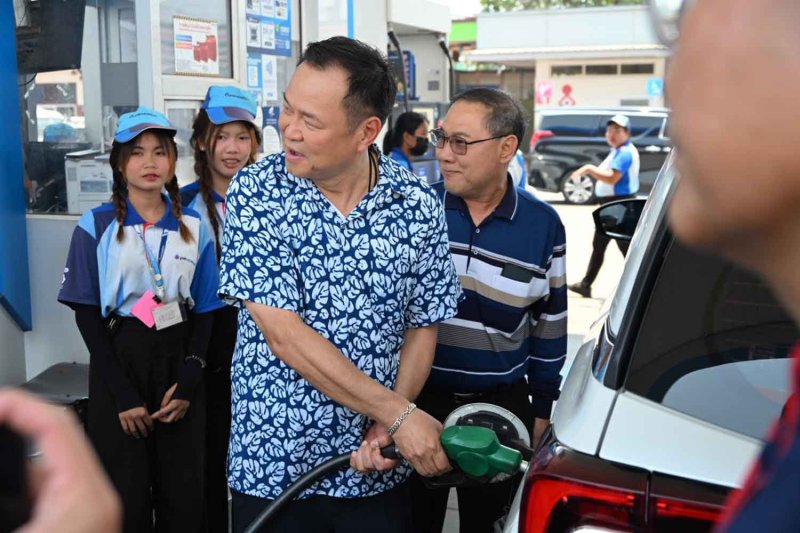
The Thai government has confirmed that there will be sufficient fuel supplies to meet demand during the upcoming Songkran holiday, as authorities are enhancing distribution and monitoring efforts nationwide to alleviate public concerns about fuel shortages. This confirmation came from Rachada Dhanadirek, Assistant Minister in the Prime Minister's Office, who explained that Prime Minister Anutin Charnvirakul is closely monitoring the situation.
As part of the preparations, several measures have been taken, including increasing fuel distribution efficiency by supplying distributors with approximately 7 million liters per day to reduce congestion at fuel stations. Operators have also been instructed to increase reserves and prepare backup fuel trucks in areas with high demand.
Details of the Event
The government is also organizing special refueling points for public transport in collaboration with the Ministries of Interior and Transport. To improve flexibility, the mandatory fuel reserve requirement has been reduced from 3% to 1%, allowing for faster imports of refined oil, as reported by Rachada.
The public can track fuel availability in real-time via the Fuel-Now app or its website. Authorities are also seeking to diversify crude and refined oil imports to mitigate uncertainties arising from the war in the Middle East.
Background & Context
The Songkran holiday, celebrated in Thailand in mid-April, is one of the largest holidays in the country, witnessing a significant increase in travel. Historically, this period has sometimes experienced fuel shortages due to high demand, raising concerns among citizens.
The Ministries of Energy and Foreign Affairs are collaborating through diplomatic and commercial channels to secure supplies from several producers, including Brazil, Azerbaijan, and Nigeria. Fuel shipments have been scheduled to ensure continuity of supplies, with expectations of over 36 million barrels of oil arriving in Thai waters by May, including more than 24 million barrels in April alone.
Impact & Consequences
Reports indicate that fuel production and consumption are stable, with an average diesel production of 82.21 million liters per day, local usage reaching 82.99 million liters, along with 4.43 million liters in exports. The total demand has reached 87.42 million liters per day.
These measures come at a time when fuel demand is significantly rising, as diesel consumption has increased from around 70 million liters per day earlier this year, reflecting stronger economic activity and increased travel.
Regional Significance
Arab countries are directly affected by fluctuations in global oil prices, as the region is one of the largest oil producers. The stability of fuel supplies in Thailand may have positive effects on global markets, potentially contributing to price stability in Arab countries.
In conclusion, these government actions in Thailand reflect an effective response to citizens' concerns and emphasize the importance of pre-planning to ensure supply stability during peak periods.