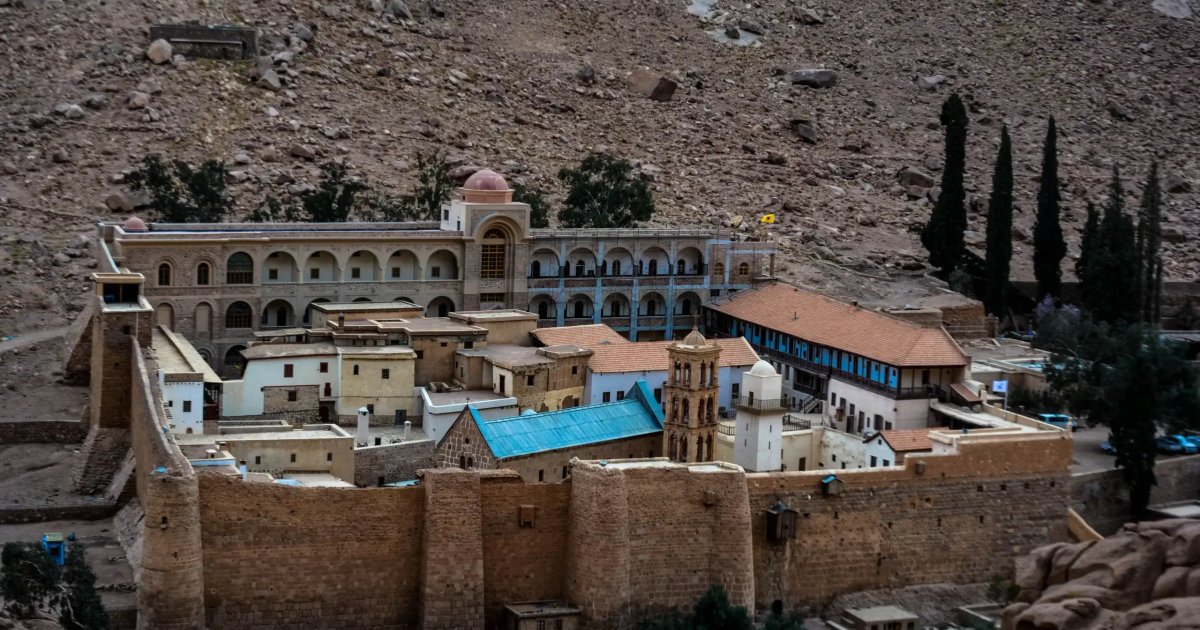
In a move reflecting the importance of cultural and religious heritage in Egypt, the Governor of South Sinai visited St. Catherine's Monastery, one of the oldest monasteries in the world, for the first time. During the visit, he was welcomed by several priests who presented him with a rare book as a gift, showcasing the deep cultural and religious ties in the region.
The visit of the Governor of South Sinai to St. Catherine's Monastery is a significant event, as the monastery is one of the important tourist and religious landmarks that attract visitors from around the world. The monastery dates back to the sixth century AD and is renowned for its unique location at the foot of Mount Sinai, where it is believed that the Prophet Moses received the Ten Commandments.
Details of the Event
During the visit, the governor toured the monastery, where he explored the historical and artistic landmarks it contains. He also met with several priests who informed him about the history of the monastery and its spiritual significance. The rare book presented to him is considered a cultural treasure, reflecting the rich history of the monastery.
This visit comes as part of the Egyptian government's efforts to promote religious and cultural tourism in the region, aiming to attract more local and international visitors to these historical sites.
Background & Context
St. Catherine's Monastery is one of the sites listed as a UNESCO World Heritage site and is considered an important center for religious and cultural studies. The history of the monastery spans centuries and has witnessed many historical events that have made it a meeting point for the three Abrahamic religions. The monastery also serves as a center for dialogue among different cultures, enhancing its role as a tourist destination.
Historically, the monastery has been a refuge for scholars and researchers, housing a rich library of rare books and manuscripts. This library is considered one of the oldest in the world, adding further significance to the monastery in the cultural and religious context.
Impact & Consequences
This visit is seen as a positive step towards boosting tourism in South Sinai, as it may contribute to attracting more visitors to the region. It also reflects the Egyptian government's commitment to preserving and promoting cultural and religious heritage, which could lead to increased investments in this sector.
The visit also enhances Egypt's image as a safe and distinguished tourist destination, demonstrating the government's commitment to developing religious and cultural tourism. This type of tourism can contribute to improving the local economy and providing new job opportunities for residents.
Regional Significance
The Governor of South Sinai's visit to St. Catherine's Monastery carries broader implications that extend beyond Egyptian borders, reflecting the importance of cooperation among Arab countries in the field of cultural and religious tourism. This visit could serve as a model for other countries to enhance their cultural and religious heritage.
Furthermore, promoting religious tourism in Egypt can strengthen ties between Arab countries, fostering understanding and cooperation among peoples. Amid the economic challenges faced by many countries, tourism can be one of the effective solutions to enhance economic growth.
In conclusion, the Governor of South Sinai's visit to St. Catherine's Monastery underscores the importance of cultural and religious heritage in Egypt and highlights the efforts being made to promote tourism in the region. This step represents a new beginning towards enhancing cultural and religious tourism in Egypt.