Most Gulf stock markets closed lower on Thursday as investors awaited the meeting between U.S. President Donald Trump and Chinese President Xi Jinping, seeking signs of easing tensions in the region. This decline reflects notable volatility in financial markets, indicating investor anxiety over global political and economic developments.
The Gulf markets have been significantly affected by geopolitical tensions, with investors trying to understand how the upcoming meeting between Trump and Xi will impact trade relations between the United States and China, as well as the implications for stability in the Middle East. Preliminary data showed a decline in stock indices across most Gulf countries, reflecting a cautious sentiment among traders.
Details of the Event
These developments come at a sensitive time as both leaders seek to strengthen bilateral relations amid ongoing trade tensions. The anticipated meeting may address multiple issues including trade, security, and economic cooperation, which could directly affect financial markets in the region.
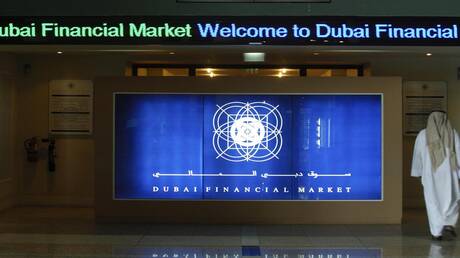
In Saudi Arabia, stocks fell significantly, with the market closing down by 1.2%, while the Dubai stock exchange experienced a 0.8% drop. Similarly, in Kuwait, the general index declined by 0.5%. These declines reflect increasing investor concern about the economic future under current conditions.
Background & Context
Historically, relations between the United States and China have been volatile, experiencing periods of cooperation and tension. The economic significance of both countries makes any meeting between their leaders a pivotal event that influences global markets. In recent years, there have been multiple attempts to ease tensions, but recent events have brought matters back to square one.
Regionally, many countries are suffering from the effects of global tensions, complicating economic conditions. Gulf states are looking for stability in global markets as part of their development strategies, making them sensitive to any changes in international relations.
Impact & Consequences
The decline in Gulf stock markets could have far-reaching effects on the regional economy. Investors may reduce their investments amid uncertainty, potentially leading to slower economic growth. Additionally, falling stock prices could undermine consumer and business confidence, increasing pressure on the local economy.
Moreover, any positive outcomes from the Trump-Xi meeting could restore confidence in the markets, while any escalation in tensions could lead to further declines. Therefore, investors in the region are closely monitoring any developments that may arise following the meeting.
Regional Significance
The Gulf markets are among the most affected by global changes, as many Arab countries rely on foreign investments. A decline in stock markets could impact the flow of investments, negatively affecting development projects in the region.
Furthermore, economic stability in the Gulf has a direct impact on other Arab countries, as these markets are a major driver of the regional economy. Thus, any changes in global economic policies could affect stability across the entire region.
In light of current conditions, investors remain on edge, as the outcomes of the upcoming Trump-Xi meeting may determine the direction of financial markets in the near future.