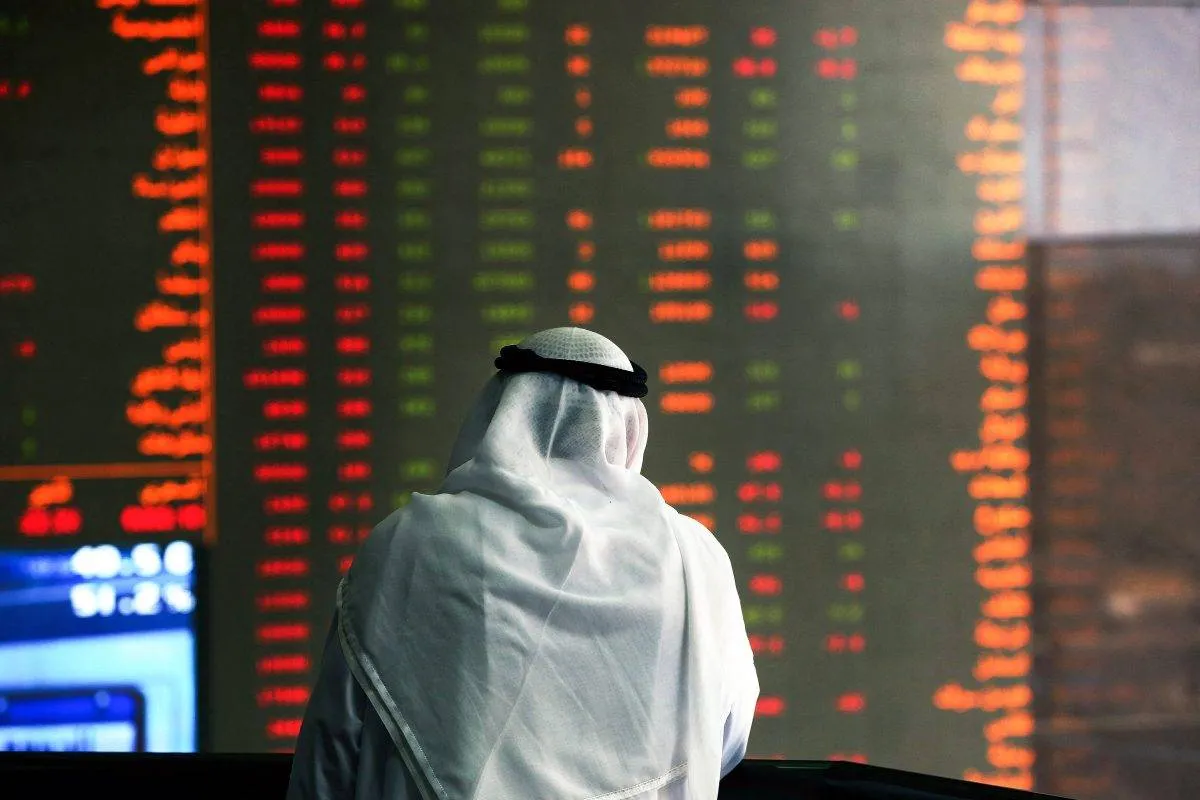
Most Gulf stock markets declined in early trading today, Sunday, amid rising fears of the expansion of the Iran-related conflict. These concerns have negatively affected investor sentiment, especially after the Houthis in Yemen launched their first attacks on Israel since the start of the conflict, coinciding with the United States deploying additional forces in the Middle East.
The Washington Post reported on Saturday that U.S. officials revealed that the Pentagon is preparing for a potential ground operation that could last for weeks inside Iran, despite ongoing uncertainty about whether President Donald Trump will approve the deployment of ground troops.
Market Performance Details
The Qatari index fell by 1.1%, with shares of Qatar National Bank, the largest lender in the Gulf by assets, dropping by 1.3%. The Kuwaiti stock exchange also declined by 0.4%, while the Bahrain market decreased by 0.1%.
In contrast, the Saudi main index rose by 0.4%, supported by a 0.4% increase in shares of Al Rajhi Bank and a 0.6% rise in shares of oil giant Saudi Aramco.
Additionally, Bloomberg reported on Saturday that the East-West pipeline in Saudi Arabia, which bypasses the Strait of Hormuz, is operating at full capacity of 7 million barrels per day, according to an informed source.
The Muscat stock index rose by 0.60%, while the Kuwaiti stock exchange fell by approximately 0.60%, and the Bahrain index experienced a slight decline.
Background & Context
Brent crude futures rose by $4.56, or 4.2%, reaching $112.57 per barrel on Friday, amid market doubts about the prospects for a ceasefire in the ongoing war with Iran.
In another context, diplomats stated that talks aimed at reforming the World Trade Organization and extending the temporary suspension of tariffs on electronic transactions entered their final day, with no breakthrough in sight yet. Trade ministers are working at a WTO meeting in Cameroon to bridge the gap between the United States and India regarding the extension of the tariff suspension.
Impact & Consequences
These developments indicate a rise in tensions in the region, which could affect the stability of financial markets. The increase in oil prices may lead to higher production costs, negatively impacting Gulf economies that heavily rely on oil.
Furthermore, the continuation of the conflict may drive investors to adopt more cautious positions, increasing market volatility. At the same time, U.S. military movements could escalate the conflict, further heightening uncertainty in the region.
Regional Significance
Arab countries are significantly affected by these developments, as any escalation in the conflict could lead to economic and social repercussions. Countries that rely on security stability to attract investments may find themselves in a difficult position, potentially impacting economic growth.
In conclusion, the situation in the Gulf remains of great interest, as investors and analysts closely monitor the developments of the conflict and its impact on the markets. The continuity of these crises could lead to radical changes in the economic and political landscape of the region.