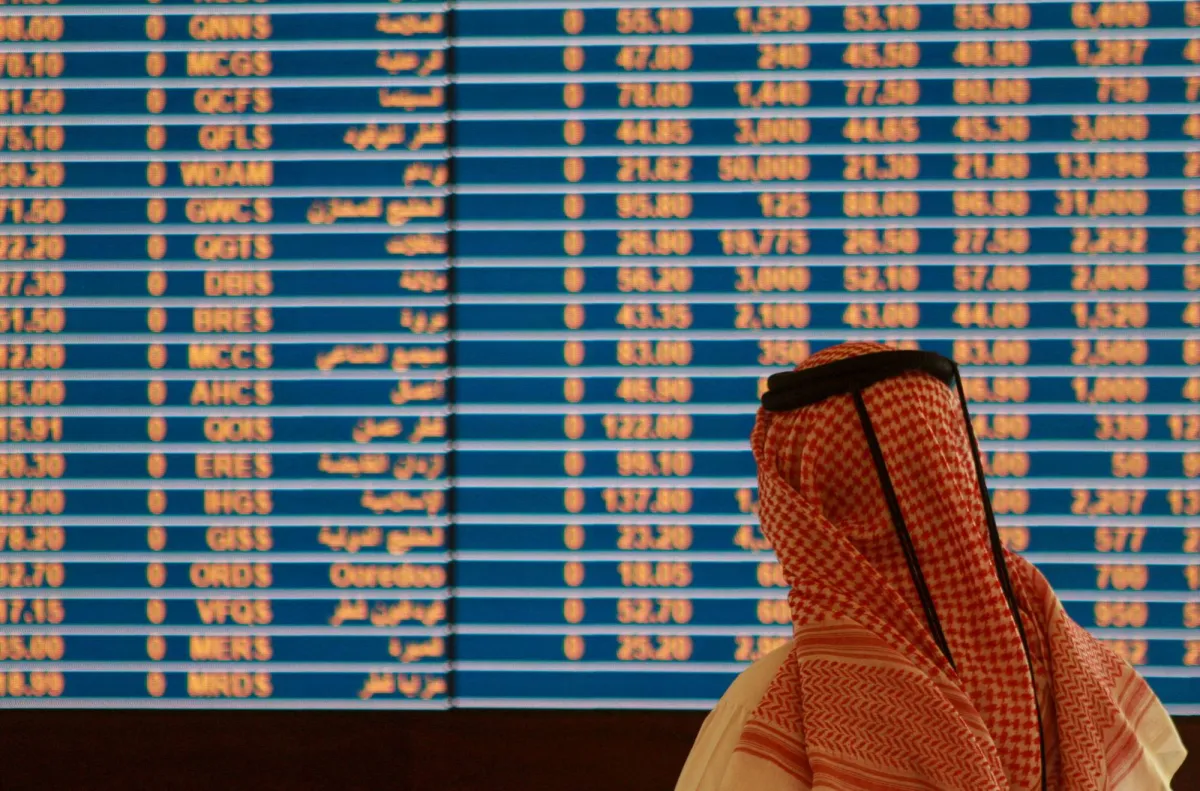
Most Gulf stock markets declined at the beginning of trading on Monday, amid escalating geopolitical tensions in the Middle East following the attacks launched by the Houthis in Yemen on Israel over the weekend. These events intensified the conflict between the United States and Israel on one side, and Iran and its proxies on the other.
In this tense atmosphere, U.S. President Donald Trump stated that Washington and Tehran are communicating both directly and indirectly, describing the new Iranian leadership as "very rational." At the same time, additional U.S. military reinforcements arrived in the region, while the Israeli army announced it targeted Iranian government infrastructure within Tehran.
Details of the Event
The Financial Times reported Trump saying that the United States could take control of Kharg Island in the Arabian Gulf, a major center for Iranian oil exports, but he noted the possibility of reaching a quick ceasefire. For its part, Iran confirmed its readiness to respond to any U.S. ground attack, accusing Washington of planning a ground operation, despite the ongoing negotiation process.
On the market front, the main index in Dubai fell by 1.1%, affected by a 3.1% drop in the shares of Emirates NBD Bank and a 1.9% decline in Dubai Islamic Bank shares. In Abu Dhabi, the index decreased by 0.5%, pressured by a 4.1% drop in Abu Dhabi Ship Building shares and a 0.1% decline in Aldar Properties shares. Conversely, Fertiglobe shares rose by 2.3%.
Background & Context
Emirates Global Aluminium, the largest producer of aluminium in the Middle East, reported significant damage to its facilities in Al Taweelah due to Iranian missile and drone attacks. Meanwhile, Aluminium Bahrain (Alba) announced it is assessing the damage from the strikes, leading to a 0.9% decline in its shares.
The Qatari index also fell by 0.9%, with Qatar National Bank, the largest bank in the Gulf, seeing its shares drop by 1.1%. In contrast, the Saudi market index defied the general trend and rose by 0.3%, supported by a 0.8% increase in Al Rajhi Bank shares and a 0.5% rise in Saudi Aramco shares.
Impact & Consequences
The net profit of Saudi Ades Holding Company, which specializes in drilling and exploration for the oil and natural gas sector, increased by 2% in 2025, exceeding expectations, reaching 818 million riyals (217.9 million dollars) compared to 802 million riyals (213.7 million dollars) in 2024. The company indicated that its revenues rose by 8% in 2025 to reach 6.68 billion riyals (1.7 billion dollars).
Additionally, data from Kepler showed that Saudi crude oil exports redirected from the Strait of Hormuz to Yanbu Port on the Red Sea reached 4.658 million barrels per day last week, helping to alleviate some supply disruption concerns. Meanwhile, oil prices continued to rise on Monday, with Brent crude heading towards record monthly gains.
Regional Significance
The war in Iran has ignited widespread turmoil in financial markets, prompting some investors and market makers to hesitate in taking risks, increasing trading difficulties and costs. Regulators are closely monitoring this scenario, as investors and traders confirmed that the largest global markets, from U.S. Treasury bonds to gold and currencies, have not escaped these disruptions.
In Europe, hedge funds currently dominating bond trading have exacerbated the situation by rapidly liquidating several of their positions this month. Investors noted the difficulty in obtaining prices or executing trades in the past four weeks due to market makers' fears of engaging in large positions that could quickly turn into significant losses.
In conclusion, Gulf markets remain under pressure from regional tensions, raising concerns about their stability in the near future. At the same time, some Saudi companies stand out as examples of resilience in the face of these challenges, reflecting the Saudi economy's ability to adapt to changing conditions.