Gulf stock markets saw a significant increase in early trading on Wednesday as investors assessed the ramifications of the stalemate in the conflict with Iran and the UAE's decision to withdraw from the Organization of the Petroleum Exporting Countries (OPEC) and OPEC+.
In Abu Dhabi, the stock index rose by 0.8%, supported by gains in companies linked to ADNOC, with shares of ADNOC Drilling surging by 8.3%, ADNOC Gas increasing by 3.1%, and ADNOC Logistics and Services climbing by 6.8%.
Market Performance Details
The main index in Dubai also saw an increase of 0.2%, with the Emirates NBD Bank's shares rising by 1.1%, and Salik's shares up by 1.2%.
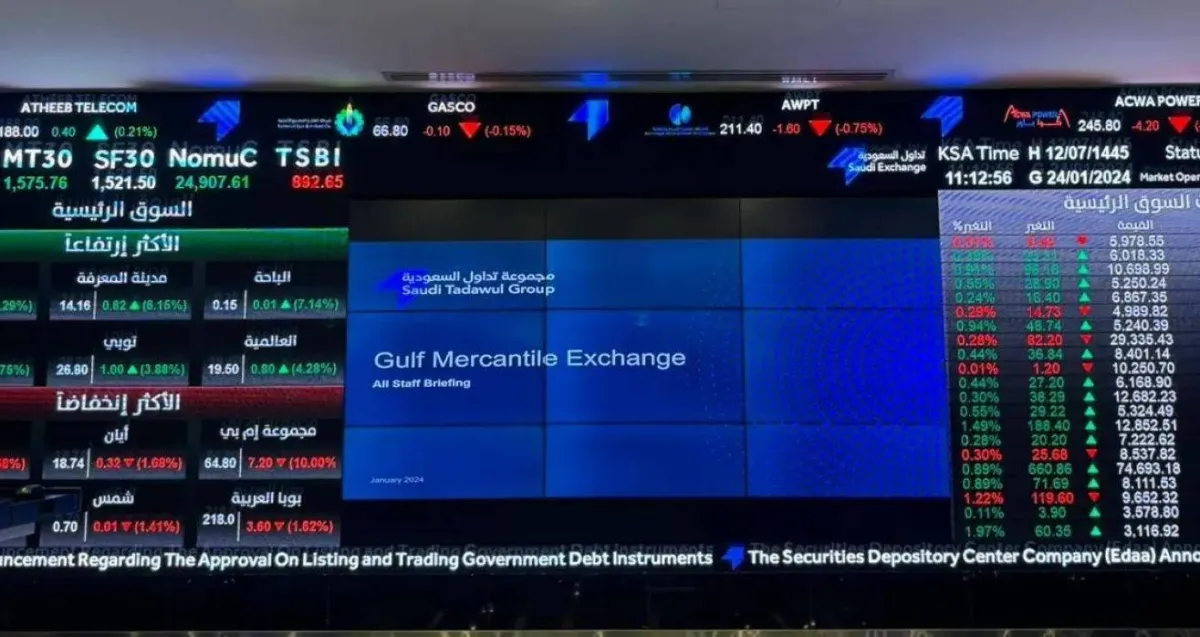
In Saudi Arabia, the benchmark index climbed by 0.1%, bolstered by a 2.4% rise in shares of STC following its announcement of an increase in quarterly profits, while Aramco's shares fell by 0.2%.
Meanwhile, in Qatar, the index increased by 0.1% amid volatile trading conditions.
Background & Context
In related developments, U.S. President Donald Trump expressed dissatisfaction with Tehran's recent proposal to end the conflict, emphasizing the need to address nuclear issues from the outset, according to a U.S. official.
The Wall Street Journal reported, citing U.S. officials, that aides have been directed to prepare for a prolonged blockade on Iran, reflecting escalating tensions in the region.
Impact & Consequences
The Saudi Ports Authority (Mawani) has enhanced Saudi Arabia's maritime connectivity by adding a new shipping service, SGX, from China United Lines to the Islamic Port of Jeddah. This initiative aims to improve supply chain efficiency and expand the Kingdom's connectivity to Asian and regional markets.
According to Mawani, the new service will connect the Islamic Port of Jeddah with several vital ports, including Shanghai and Nansha in China, as well as ports in Malaysia and Sokhna in Egypt, with a capacity of up to 2,452 standard containers.
Regional Significance
These developments come at a sensitive time for the region, which is grappling with the repercussions of the ongoing conflict with Iran, as oil prices continue to rise amid the ongoing closure of the vital Strait of Hormuz, heightening inflation concerns.
These events are expected to significantly impact financial markets in the region, as investors closely monitor any signals from monetary policymakers regarding the conflict's impact on inflation trajectories and monetary policy in the coming phase.
In conclusion, Gulf markets remain under pressure from geopolitical tensions, necessitating careful risk assessment by investors amid changing circumstances.