The Qatari Foreign Ministry announced yesterday a unified Gulf stance aimed at ending the escalation in the region, indicating a consensus among Gulf states on the necessity for these countries to be key parties in any agreement related to regional security.
Regarding the field developments, Saudi air defenses successfully intercepted 12 drones and 7 ballistic missiles launched towards the Riyadh area, in addition to an eighth missile fired towards the Eastern Province. The Saudi Ministry of Hajj and Umrah also launched a special operations room to facilitate the arrival of pilgrims amidst the escalating events in the region.
Details of the Incident
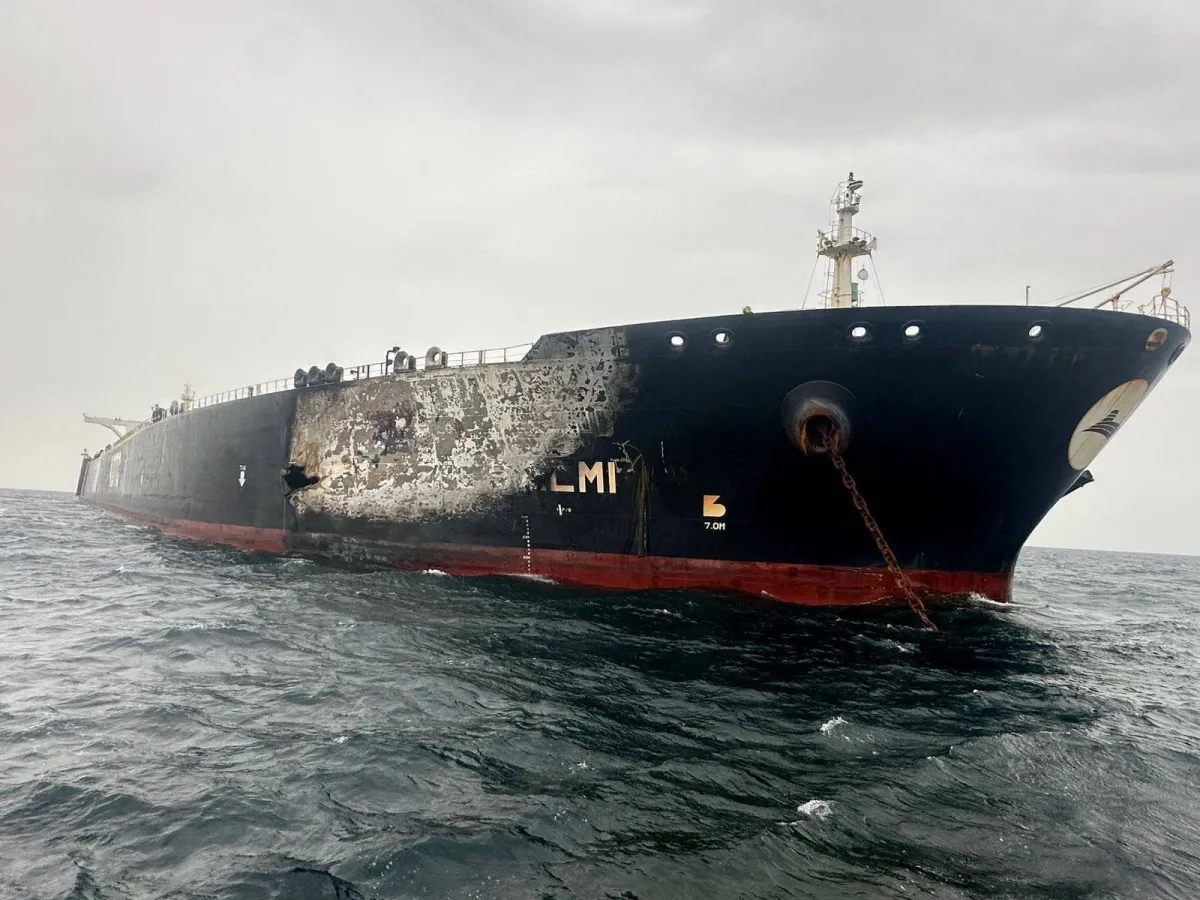
The Kuwait Petroleum Corporation reported that the crew of the giant tanker Salmi managed to extinguish a fire that broke out due to an Iranian attack, where Kuwaiti forces detected 5 ballistic missiles and 7 drones that were dealt with. Additionally, the UAE air defenses engaged with 8 ballistic missiles, 4 cruise missiles, and 36 drones.
In a related context, the Gulf Cooperation Council condemned on Tuesday the Israeli occupation forces' decision to execute Palestinian prisoners, with the Secretary-General of the Council, Jassim Al-Budaiwi, describing the decision as a blatant violation of international and humanitarian laws.
Background & Context
These developments come amidst rising tensions in the region, where Gulf states are facing missile and drone attacks from Iran, increasing the need for coordinated security efforts. Majed Al-Ansari, spokesperson for the Qatari Foreign Ministry, confirmed that Gulf states have a unified stance aimed at ending the escalation, highlighting the importance of their participation in any forthcoming security agreement.
Al-Ansari also pointed out that many red lines have been crossed in this war, particularly concerning the targeting of vital installations, stressing the necessity for Gulf leaders to end this conflict.
Impact & Consequences
Recent developments indicate that military escalation in the region could significantly impact regional and international security and stability. Al-Ansari warned of the threats posed to navigation in the Gulf, emphasizing that the threat of closing the Strait of Hormuz represents a danger to global energy security.
In this context, Al-Ansari underscored the importance of coordinating with international partners regarding the Strait of Hormuz, noting Qatar's commitment to energy security and supply chains.
Regional Significance
Concerns are growing that these events could lead to further escalation in the region, negatively affecting security and stability in Arab countries. The UAE President, Sheikh Mohammed bin Zayed Al Nahyan, discussed the developments in the region with the Emir of Qatar, Sheikh Tamim bin Hamad Al Thani, during their meeting in Abu Dhabi, emphasizing the importance of enhancing cooperation to address common challenges.
In conclusion, the situation in the region remains tense, and the unified Gulf stance underscores the importance of cooperation and coordination among Gulf states to confront increasing security challenges.