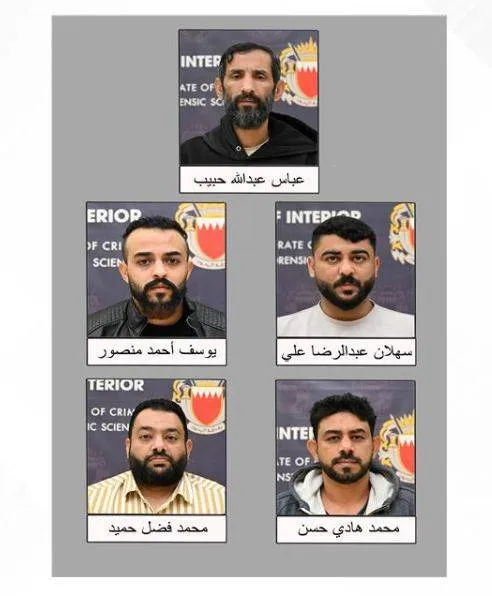
Recent reports indicate that security agencies in the Gulf states have successfully apprehended nine cells affiliated with Iran and its allies, including Hezbollah, across four Gulf countries: Qatar, Bahrain, Kuwait, and the UAE. Approximately 74 individuals of various nationalities were arrested within a short timeframe of just 27 days, signaling an escalation of security threats in the region.
The first arrests occurred on March 3, 2026, with cells discovered in Qatar, while the last were apprehended on March 30 of the same month. This suggests that Gulf states managed to intercept an Iranian-linked security cell approximately every three days throughout the previous month, reflecting a heightened state of alert in response to external threats.
Details of the Arrests
According to official data, the individuals arrested belong to various nationalities, including Kuwaiti, Lebanese, Iranian, and Bahraini. Investigations revealed that these individuals were communicating with terrorist elements abroad, posing a risk to the sovereignty of Gulf states. Additionally, plans to raise funds for executing terrorist acts were uncovered, alongside schemes to target leading figures and national symbols, underscoring the serious threat these cells pose to national security.
In this context, Jassim Al-Budaiwi, Secretary-General of the Gulf Cooperation Council (GCC), emphasized that the stability of the Gulf region is not merely a regional issue but an international necessity for maintaining the global economy and avoiding crises. He pointed out that the member states are facing increasing Iranian aggression, including missile and drone attacks targeting civilian and vital facilities, resulting in casualties and significant material damage.
Context and Background
These events unfold during a sensitive period marked by escalating tensions between Gulf states and Iran. Since February 28, 2026, Gulf countries have been subjected to several missile and drone attacks, leading to a deterioration of security conditions. The GCC condemned these assaults, stating they represent a blatant violation of sovereignty and principles of good neighborliness.
Al-Budaiwi also called on the United Nations Security Council to take immediate action to halt these attacks and protect maritime passages, stressing the importance of involving Gulf states in any discussions with Iran to ensure regional stability. He affirmed that Gulf states will not hesitate to defend their sovereignty and will take all necessary measures to protect their territories and citizens.
Impact and Consequences
The repercussions of these events extend beyond Gulf borders, as any escalation in the region could affect both regional and international security. The continuation of Iranian attacks may exacerbate economic crises, particularly given the global dependence on oil and gas from the region. Al-Budaiwi warned that any closure of maritime passages would impact many countries worldwide, increasing pressure on global markets.
The UAE Foreign Minister also indicated that his country would demand its rights in response to Iranian aggressions, asserting that Tehran has no legal right to close the Strait of Hormuz or impose transit fees. He confirmed that the UAE is prepared to confront any threats and will participate in any international efforts aimed at securing navigation in the region.
Significance for the Arab Region
These events serve as a wake-up call for countries in the region, highlighting the need for enhanced security cooperation among Arab nations to address common threats. The absence of a unified stance could lead to exacerbated crises and increased chaos in the region. Therefore, strengthening dialogue and diplomacy remains the optimal path for addressing crises and achieving stability.
In conclusion, Gulf states find themselves in a precarious position as they strive to maintain their security and stability amid rising threats. Current security challenges require immediate responses and international cooperation to ensure that such aggressions do not recur, safeguarding regional and international peace and security.