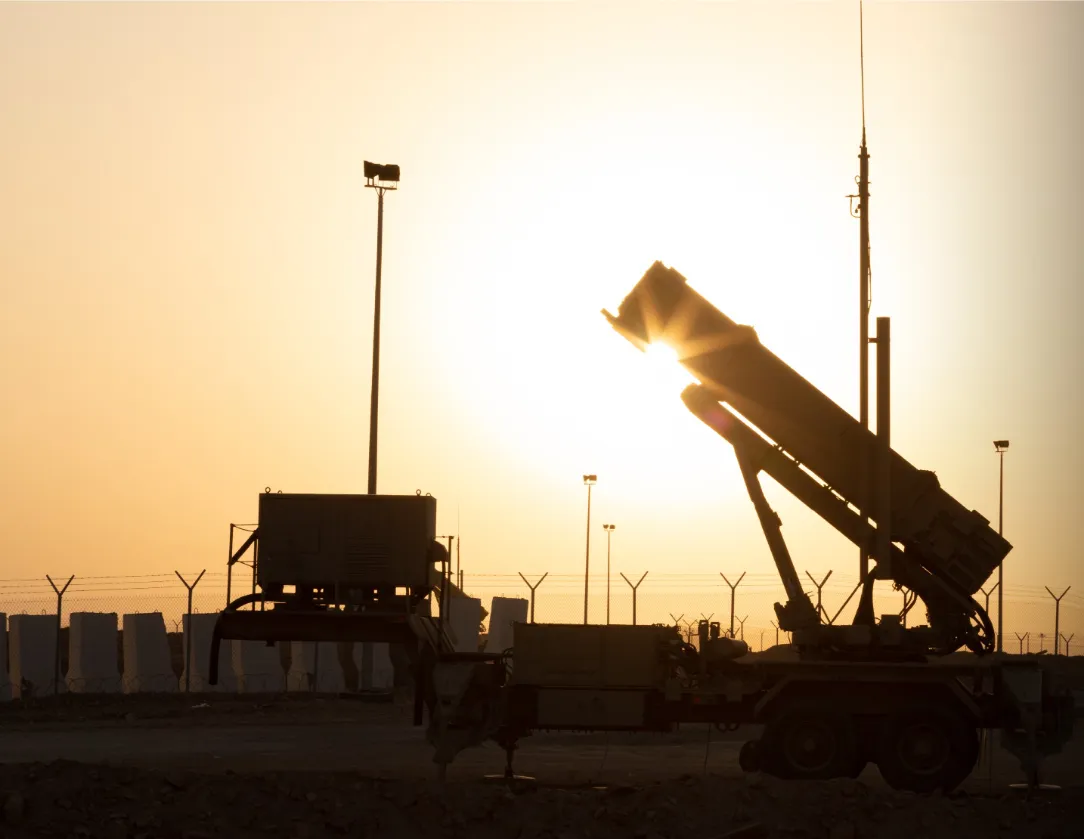
The air defenses in the Gulf states continue to thwart dozens of Iranian missile and drone attacks aimed at civilian targets and private properties, in a blatant violation of international humanitarian law and the United Nations Charter.
Amid this escalation, Gulf countries stressed the necessity of their involvement in any upcoming security agreement concerning the region, asserting that their regional security is an integral part of any future arrangements. Majid Al-Ansari, spokesperson for the Qatari Ministry of Foreign Affairs, clarified that the Gulf states share a unified stance aimed at ending the escalation, indicating a Gulf consensus on the need for these countries to be a key party in any agreement reached in the region.
Details of Recent Attacks
On Tuesday, Saudi air defenses intercepted a series of attacks targeting the Riyadh region and the Eastern Province, which included the launch of ballistic missiles and drones. The Civil Defense reported two minor injuries due to debris from an interception in Al-Kharj Governorate, alongside limited material damage.
The official spokesperson for the Ministry of Defense, Major General Turki Al-Maliki, stated that four ballistic missiles launched towards the Riyadh area were intercepted and destroyed. Shortly thereafter, an additional three ballistic missiles were intercepted and destroyed, along with one ballistic missile aimed at the Eastern Province, bringing the total number of intercepted missiles to eight.
Additionally, air defense forces managed to intercept and destroy twelve drones over the past hours, as part of their ongoing response to aerial attacks.
For its part, the Civil Defense reported that teams responded to debris from a drone interception that fell on a residential neighborhood in Al-Kharj, damaging three homes and several vehicles, resulting in two minor injuries.
Background & Context
Meanwhile, the Saudi Ministry of Hajj and Umrah activated a special operations room to facilitate the arrival of the "Guests of God" amid the ongoing events in the region, aiming to address all challenges and provide services to pilgrims coming from outside the Kingdom.
Dr. Tawfiq Al-Rabiah, Minister of Hajj and Umrah, announced the launch of the special operations room during his speech at the opening of the "Umrah and Visit Forum," confirming the ministry's high readiness and that of related entities to handle all emergency changes.
Kuwaiti armed forces monitored and dealt with five hostile ballistic missiles and seven drones within Kuwaiti airspace over the past 24 hours, managing them according to standard procedures.
The Kuwait Petroleum Corporation announced that the crew of the giant Kuwaiti oil tanker "Al-Salmi" managed to extinguish a fire that broke out following an Iranian attack directly targeting the tanker, with no human injuries reported.
Impact & Consequences
The Bahrain Defense Force announced the interception and destruction of 182 missiles and 400 drones since the onset of Iranian attacks on the country. Earlier, Bahrain arrested three individuals for forming a cell affiliated with the Lebanese "Hezbollah," indicating that necessary legal actions have been taken.
On Tuesday, UAE air defenses dealt with eight ballistic missiles, four cruise missiles, and thirty-six drones coming from Iran, with the Ministry of Defense reporting that UAE air defenses have engaged with 433 ballistic missiles and 1977 drones since the beginning of Iranian assaults.
The Dubai Media Office also reported that four individuals sustained minor injuries due to debris falling on homes in a residential area south of the city.
Regional Significance
UAE President Sheikh Mohammed bin Zayed Al Nahyan discussed the developments in the region with Qatari Emir Sheikh Tamim bin Hamad Al Thani, focusing on the military escalation and its implications for regional and international security and stability.
Qatar confirmed that the Gulf Arab states, which are facing Iranian attacks, are in constant communication to coordinate efforts that serve everyone's interests. Al-Ansari noted Qatar's support for the mediation efforts led by Pakistan, expressing hope that it would contribute to achieving peace and reducing tensions in the region.
In closing statements, Al-Ansari emphasized Qatar's firm rejection of any attempts to drag Doha into the conflict, expressing concern over the possibility of U.S. ground intervention in Iran.