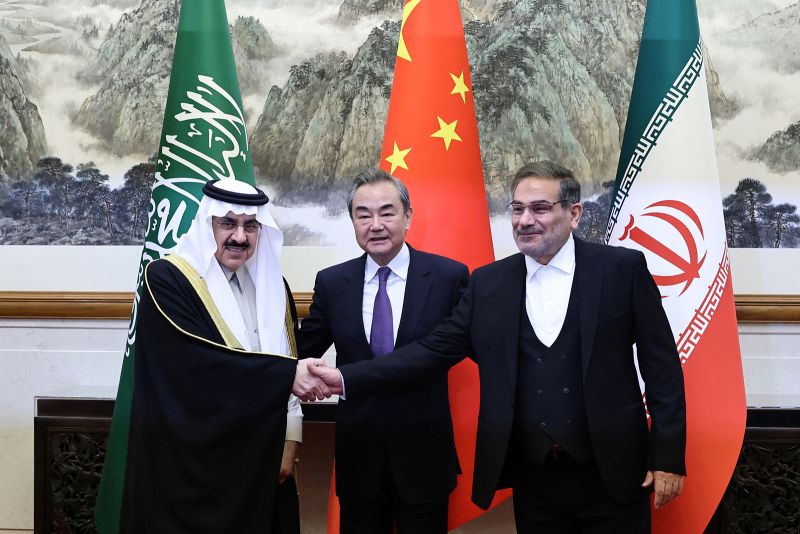
The Gulf States have emphasized the necessity of ensuring their security and interests in any future agreement with Iran, highlighting the importance of constructive dialogue to achieve regional stability. These statements come at a time when tensions between Iran and the Gulf countries are escalating, raising concerns about a potential security escalation.
In this context, Gulf officials clarified that any negotiations with Iran must take into account the security concerns faced by the countries in the region, especially in light of ongoing threats from Iran-backed groups. These statements reflect the Gulf States' anxiety regarding Iranian activities in the region, whether through their support for militias or their interference in the internal affairs of Arab countries.
Details of the Event
These positions follow a series of meetings among Gulf foreign ministers, where the need for clear mechanisms to ensure that the security of Gulf States is not threatened was reaffirmed. Some officials indicated that any potential agreement should include clear provisions related to disarmament and the reduction of Iranian military activities in the region.
Furthermore, the importance of security cooperation among Gulf States was emphasized, as efforts are underway to enhance joint defense capabilities to counter potential threats. These steps are part of the Gulf States' efforts to bolster their national security amid increasing challenges.
Background & Context
Historically, relations between the Gulf States and Iran have been marked by ongoing tensions, particularly following the Iranian Revolution in 1979. Regional events, such as the wars in Syria and Yemen, have exacerbated these tensions. Additionally, Iran's interventions in the internal affairs of Gulf States, such as its support for the Houthis in Yemen, have heightened Gulf security concerns.
In recent years, some Gulf countries have attempted to open channels of dialogue with Iran; however, these attempts have often faced obstacles due to mutual distrust. Recent events have shown that Iran continues to seek to enhance its influence in the region, complicating any efforts to reach an agreement.
Impact & Consequences
The recent statements from the Gulf States underscore that any future agreement with Iran must include clear guarantees for regional security. This could affect the course of upcoming negotiations, as Iran may reject certain conditions it perceives as interference in its internal affairs.
Moreover, these positions could lead to an escalation of tensions in the region, potentially impacting economic and political stability. The continuation of tensions may also result in increased military spending in Gulf States, which could affect economic development.
Regional Significance
The relationship between the Gulf States and Iran is pivotal in determining the future of stability in the Arab region. Any escalation in these relations could affect many Arab countries, especially those suffering from internal conflicts.
Furthermore, the continuation of tensions may exacerbate humanitarian conditions in affected areas, such as Yemen and Syria. Therefore, achieving security and stability in the Gulf is vital not only for the countries in the region but also for the entire world.
In conclusion, the Gulf States' insistence on ensuring their security and interests in any agreement with Iran reflects a complex reality that requires serious and constructive dialogue. Amid current challenges, hope remains for the possibility of progress toward stability in the region.