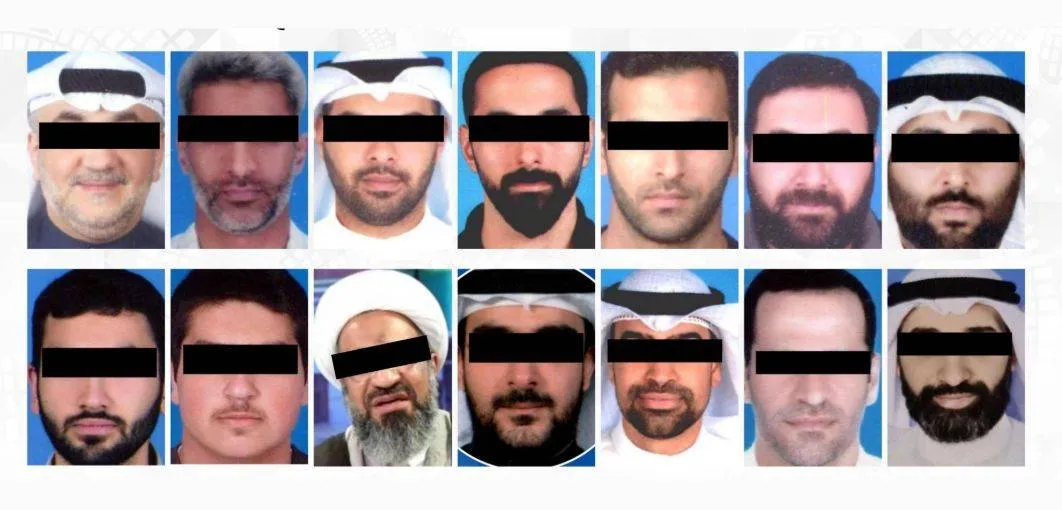
Gulf Cooperation Council countries continue their efforts against Iranian aggression, successfully intercepting 9 cells linked to the Revolutionary Guard and Hezbollah within 30 days. According to a recent statistic from the Gulf Research Center, approximately 6246 Iranian missiles and drones were launched at Gulf states, while Gulf defenses managed to intercept and destroy most of them.
Reports indicate that security agencies in the Gulf managed to apprehend these cells in 4 Gulf countries: Qatar, Bahrain, Kuwait, and the UAE. The first cell was apprehended in Qatar on March 3, while the last was caught on March 30, indicating that Gulf states managed to intercept an Iranian-linked security cell approximately every 3 days during the past month.
Details of the Operations
Reports have noted that the number of individuals arrested from these cells reached around 74 people, representing various nationalities including Kuwaiti, Lebanese, Iranian, and Bahraini. Confessions revealed that these individuals were communicating with terrorist elements abroad, posing a threat to the sovereignty of Gulf states. Funds were also collected to execute terrorist plots, in addition to assassination schemes targeting leading figures.
The accusations directed at these cells are similar to those that have been apprehended in previous periods. Dr. Dhafir Al-Ajmi, a Gulf security specialist, confirmed that Iran has pursued a policy of exporting revolution since 1979, turning its sleeper cells into an existential threat to Gulf states.
Background & Context
Historically, Gulf states have witnessed numerous terrorist operations executed by organizations linked to Iran. Since the onset of the current conflict, Gulf states have managed to apprehend and dismantle many of these networks, with the first publicly announced operation occurring less than 72 hours after the start of military confrontations between the United States, Israel, and Iran.
In Bahrain, 3 cells consisting of 14 individuals were apprehended, while in Kuwait, 3 cells linked to Hezbollah comprising 45 individuals were intercepted. In the UAE, a terrorist network consisting of 5 individuals was dismantled.
Impact & Consequences
These security operations demonstrate the vigilance of Gulf states in confronting Iranian threats. Al-Ajmi emphasized that Gulf states have proven exceptional efficiency in dismantling these networks through preemptive strikes, which have thwarted dozens of plots before they could be executed.
The enactment of strict laws to combat money laundering and terrorist financing has contributed to crippling the financial movements of Iranian proxies, reflecting integrated strategies to counter threats.
Regional Significance
These events indicate a rise in tensions in the region, as Iran seeks to destabilize Gulf states through the use of sleeper cells and proxy arms. Bahraini writer Faisal Al-Sheikh considers this strategy to reflect an old Iranian tactic aimed at undermining Gulf states from within.
In conclusion, these developments highlight the urgent need for greater security cooperation among Gulf states to confront common threats and enhance stability in the region.