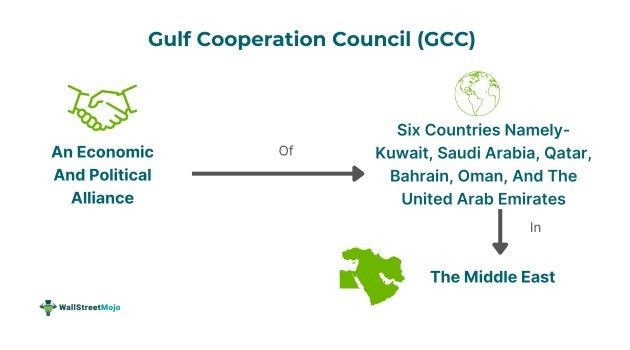
The Gulf States have declared that they will no longer accept outcomes shaped outside their control, emphasizing the need for their involvement in any negotiations regarding regional security. Current regional changes necessitate a reevaluation of the interaction rules between major powers and Gulf countries.
The ongoing developments in the region have surpassed the traditional conflict between the United States and Israel on one side and Iran on the other, revealing a new reality where the marginalization of Gulf States is no longer acceptable or imposed. Any negotiations held today to define the contours of the new regional system without the most affected parties by the security and economic consequences of the conflict are negotiations built on a political void, sowing seeds in a soil of illegitimacy.
Details of the Event
The nuclear agreement between Iran and major powers in 2015 was considered a diplomatic achievement, but what was not mentioned is that this agreement was built on the deliberate exclusion of the Gulf voice. This absence was not accidental; it was an expression of a policy that prioritizes the interests of international powers over addressing the threats that Iran's neighbors face daily.
The agreement focused on numbers and reactors while leaving the region to harvest missiles and drones. Ignoring Iranian regional behavior was the grave mistake that turned what was intended to be a 'peace agreement' into a temporary bridge to cross an internal American political crisis, establishing a new round of escalation that the region continues to pay for today.
Background & Context
The Strait of Hormuz, considered the center of gravity in the equation of global energy and security, continues to witness disputes over sovereignty. Iran's insistence on treating the strait as a bargaining tool contradicts international law and reveals a tendency to redefine the rules of the global maritime system. Any settlement that merely postpones this issue will be short-lived, as it overlooks one of the most dangerous vulnerabilities in the regional security structure.
In his recent article, former Iranian Foreign Minister Mohammad Javad Zarif presented a proposal that seems like a 'settlement initiative,' but in essence, it is merely an improved attempt to rewrite the crisis from a one-sided perspective, overlooking the fact that the Gulf has been a direct target of missile attacks.
Impact & Consequences
When Tehran demands compensation for the damages it has incurred, it ignores the damages caused by its expansionist policies in its Arab surroundings. The attacks on oil facilities in the Gulf have cost Gulf countries billions of dollars and have directly affected the stability of global markets.
What separates the Gulf from Iran is not geographical borders but a psychological and political wall that has accumulated over decades. Iran speaks the language of de-escalation when it needs it, but returns to a strategy of escalation whenever the balance of power shifts, deepening what can be termed the 'Gulf defensive memory.'
Regional Significance
The experience of the previous nuclear agreement confirmed that diplomacy without deterrent power is merely suspended negotiations. Reality dictates that post-war diplomacy must be built on a triadic foundation, including power, deterrence, and effective participation.
The upcoming phase necessitates a different thinking in the structure of regional security, where reliance on the old model of international guardianship is no longer feasible. The new security architecture must be based on equitable participation and mutual oversight, allowing for the opportunity to form a more balanced security formula.
Discussions about negotiations between the United States and Iran cannot be viewed in isolation from the broader context, where the Gulf emerges as an indispensable actor. Shaping the future of the region without the participation of Gulf States means producing an agreement that does not reflect the true balance of power.
The clearest lesson is that settlements imposed from above do not last long, while those written with the participation of those who bear the consequences are capable of establishing peace.