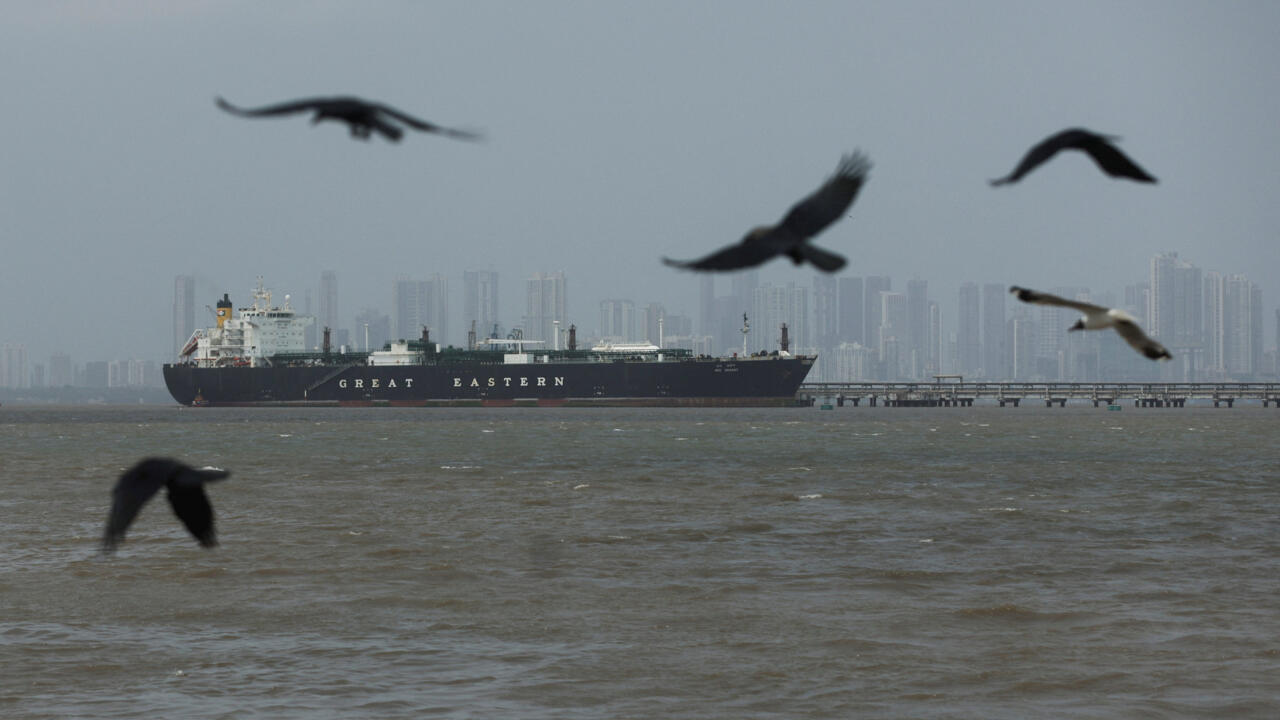
The Secretary-General of the Gulf Cooperation Council, Jasem Al-Budaiwi, has urged the UN Security Council to issue a resolution that permits the use of all available means to ensure navigation in the Strait of Hormuz, which has been significantly affected by the ongoing conflict in the Middle East. Al-Budaiwi emphasized in his address to the council that Iran's "destabilizing behavior" has crossed all red lines, warning of the potential expansion of conflict in the region.
Al-Budaiwi pointed out that the Houthis have threatened to close the Bab al-Mandab Strait, further complicating the security situation in these vital waterways. He called on the Security Council to assume its responsibilities and take necessary actions to protect international navigation and ensure the safe continuity of movement in the strait.
Details of the Situation
This call comes at a time when tensions between Iran and the United States are escalating, as Tehran has threatened to close the Strait of Hormuz, through which approximately 20% of global oil supplies pass. Iran has announced its intention to establish a protocol with Oman to ensure safe navigation in the strait, reflecting its attempts to control the security situation in the region.
In a related context, the Israeli Ministry of Energy confirmed the resumption of operations at the Leviathan gas field after a month-long halt due to the war. The Leviathan field is one of the largest gas fields in the Eastern Mediterranean, containing reserves estimated at around 635 billion cubic meters, highlighting the importance of this resource under current conditions.
Background & Context
The roots of the current tensions trace back to the escalation of military activities between Iran and the United States, with the latter launching attacks on Iranian sites last February, leading to a sharp rise in global oil prices. These events have resulted in the closure of the Strait of Hormuz, adversely affecting global trade and energy prices.
The Gulf States, including Saudi Arabia and the United Arab Emirates, are seeking to enhance navigation security in the region, particularly with the increasing Iranian threats. These countries have expressed concern over Iran's destabilizing activities, which include supporting armed militias in the area.
Impact & Consequences
If the Security Council issues a resolution allowing the use of force in the Strait of Hormuz, it could lead to greater military escalation in the region, potentially affecting global oil prices and heightening tensions among major powers. Furthermore, any military escalation could have negative repercussions on the global economy, especially given the heavy reliance on oil supplies from this region.
Concerns are growing that these conditions could lead to a comprehensive armed conflict, particularly with the mutual threats exchanged between Iran and the United States. Such a conflict could have far-reaching implications for regional and international stability.
Regional Significance
The Gulf States are among the most affected by the current tensions, as their economies heavily depend on oil exports. Any escalation in the conflict could lead to increased oil prices, impacting these countries' economies and intensifying economic pressures on citizens.
Moreover, the tense situation could result in increased migration and displacement from conflict-affected areas, placing additional pressures on neighboring countries. Under these circumstances, Arab nations need to strengthen security and economic cooperation to face the growing challenges.
In conclusion, the situation in the Strait of Hormuz remains under close observation, as the international community must take urgent steps to ensure safe navigation and protect economic interests in the region.