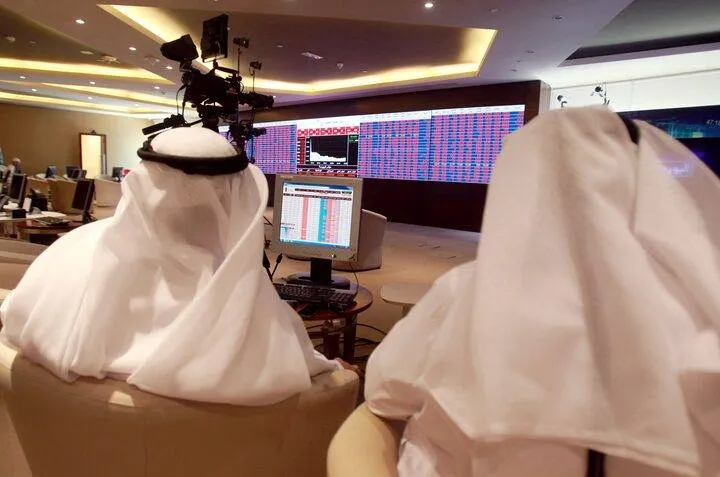
Major stock markets in the Gulf region experienced a notable rise in early trading on Wednesday, supported by hopes for de-escalation in the Iranian conflict. The Dubai index led the gains after a new economic support package worth 1 billion dirhams (approximately $272.3 million) came into effect, boosting investor sentiment.
In his statements, U.S. President Donald Trump confirmed that the United States might end its military campaign against Iran within two to three weeks, indicating that Tehran is not obligated to reach an agreement to halt the war. These remarks enhanced optimism in the markets, with the Dubai index rising by 2.1%, as shares of Emmar Properties surged by 4.7% and Emirates NBD shares increased by 5.7%.
Market Performance Details
The Abu Dhabi index also saw an increase of 1.3%, supported by a 3.6% rise in Al Dar Properties shares. In Qatar, the index rose by 1.5% with shares of Qatar National Bank, the largest bank in the region by assets, climbing by 2.6%.
In a related context, the Qatari Ministry of Defense reported that an oil tanker chartered by Qatar Energy was targeted by an Iranian cruise missile in Qatari economic waters, highlighting ongoing tensions in the region. Meanwhile, in Saudi Arabia, the benchmark index increased by 0.3%, with shares of Al Rajhi Bank rising by 0.5% and Saudi Aramco shares up by 0.8%.
Background & Context
These increases in Gulf markets come after a period of decline in March, where markets faced pressure due to escalating tensions in the Middle East. The unrest in the region has led to fluctuations in oil prices, negatively impacting investor sentiment.
At the same time, economic reports indicated that manufacturing sector growth in the Eurozone has rebounded to its strongest levels in nearly four years, although underlying demand remains weak. Supply chain disruptions have inflated growth figures, threatening the fragile recovery of the sector.
Impact & Consequences
These developments underscore the importance of stability in the Middle East and its direct impact on global financial markets. Continued conflict in Iran could cause further disruptions in the markets, affecting oil prices and commodity costs.
Moreover, tensions in the region may lead to increased input costs in industrial sectors, threatening economic growth in countries like Germany and Italy, which have seen rising production costs due to the conflict.
Regional Significance
Considering the situation in the Arab region, stability in Gulf markets could help bolster investor confidence and encourage foreign investment flows. Additionally, de-escalation in the Iranian conflict may open new avenues for economic cooperation among countries in the region.
In conclusion, attention remains focused on developments in the Iranian conflict and their impact on global markets, as any progress towards de-escalation could positively reflect on Arab economies and enhance their stability.