Gulf stock markets witnessed a significant recovery on Wednesday, driven by the announcement of a temporary truce agreement between the United States and Iran that includes the reopening of the Strait of Hormuz, a crucial artery for global energy. This move has alleviated investor concerns and rekindled their risk appetite, despite ongoing caution regarding the sustainability of the ceasefire.
The gains came at a time when markets have been in a state of anticipation since the outbreak of the war between the United States and Israel on one side and Iran on the other in late February, which led to a de facto closure of the strait, increasing global inflationary fears.
Details of the Event
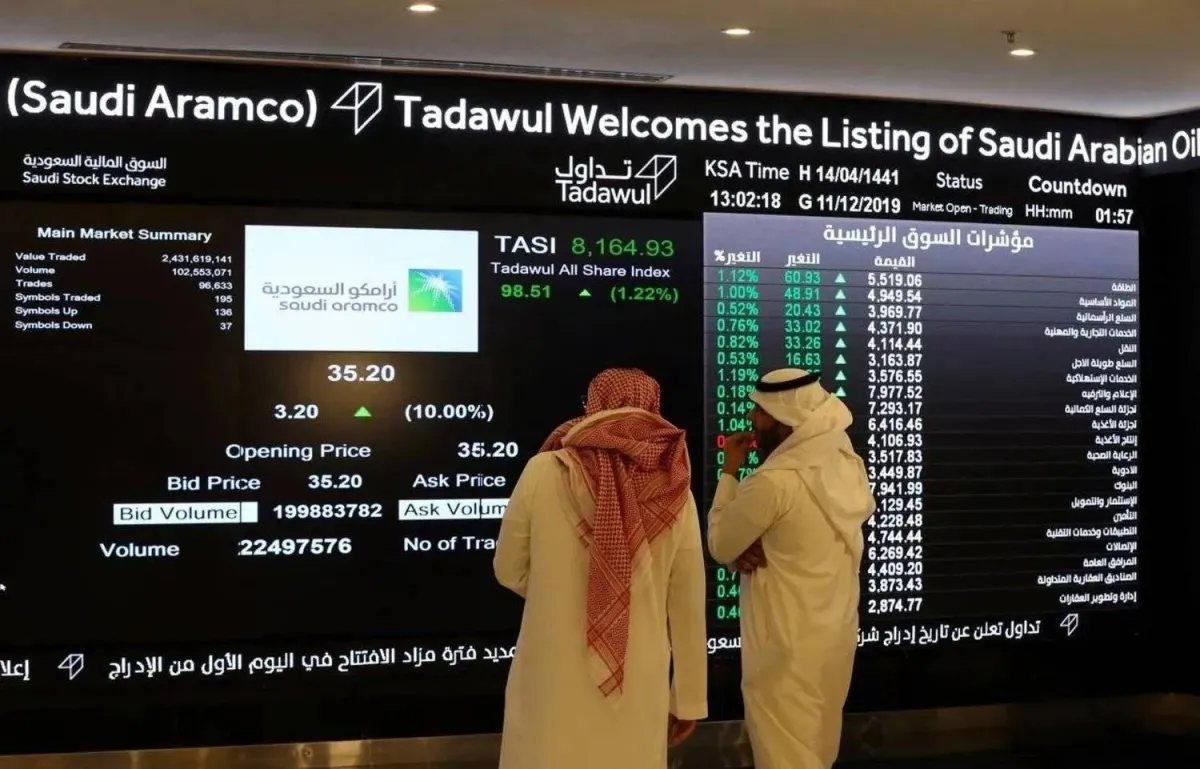
Oil prices sharply declined following the announcement of the truce, with Brent crude dropping by approximately 16 percent to $91.8 per barrel, reflecting a reduction in geopolitical risks to supplies. In Saudi Arabia, the market closed up 2.3 percent, supported by shares of Al Rajhi Bank, which rose 2.8 percent, and Flynas, which surged 8.9 percent. Conversely, shares of Saudi Aramco fell 2.8 percent, impacting the energy sector index, which declined by about 1.9 percent.
In the UAE, the Dubai index led the upward trend, recording its largest daily gain in nearly six years with an increase of 6.9 percent during trading, bolstered by strong jumps in leading stocks. The shares of Emirates NBD rose 11 percent, while Air Arabia jumped 10.8 percent.
The Abu Dhabi index also rose by 2.9 percent, supported by the rise of First Abu Dhabi Bank by 5 percent and aldar properties by 10.1 percent. In Qatar, the general index increased by 3.7 percent, with a collective rise in all its components, as Qatar National Bank surged 4.2 percent and Industries Qatar rose 5.8 percent.
Background & Context
These developments come at a time of increasing tensions in the region, as the war between the United States, Israel, and Iran has exacerbated economic conditions. This conflict has significantly impacted trade and supply movements, increasing pressures on financial markets.
It is noteworthy that the Strait of Hormuz represents a vital transit point for about 20 percent of global oil and gas supplies, making any tensions in the region directly affect global markets. Gulf markets have been experiencing uncertainty since the onset of the conflict, prompting investors to adopt cautious positions.
Impact & Consequences
Neil Keen, head of global sales trading at ADS Securities, reported that Gulf markets recorded a strong jump driven by the announcement of the ceasefire. He explained that the drop in oil prices by about 15 percent provided a morale boost to the markets, which achieved their largest gains in years.
He also noted that the real estate sector led the upward wave, with shares of major companies recording double-digit gains. However, he warned of the fragility of the agreement amid ongoing conflicting statements and reports of new attacks. He emphasized that details related to the Strait of Hormuz will remain a critical factor, especially as Iran seeks to strengthen its control over it.
Regional Significance
Investor appetite remains linked to the trajectory of the ceasefire in the region, alongside movements in oil prices and trends in U.S. monetary policy. Forecasts indicate an increased likelihood of interest rate cuts, which could support Gulf markets if geopolitical conditions stabilize.
In light of these developments, hope remains pinned on the sustainability of the truce and achieving stability in the region, which could contribute to enhancing economic growth and improving financial conditions in Gulf countries.