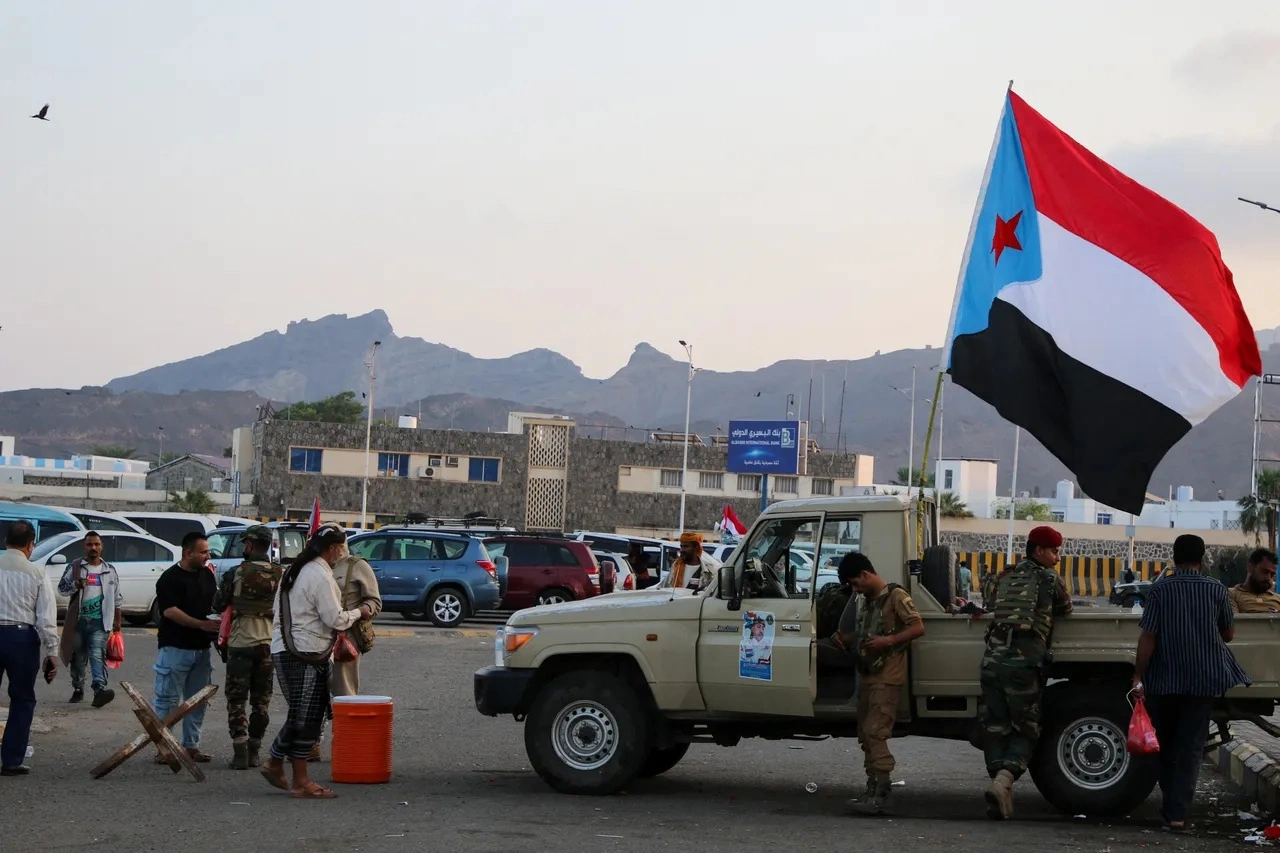
Significant security tensions were reported in the city of Mukalla, Hadhramaut, eastern Yemen, during a public event organized by supporters of the Southern Transitional Council. The event was marred by gunfire, escalating the already heightened tensions in the region.
These incidents come at a sensitive time for Yemen, where the Southern Transitional Council, which considers itself a representative of the south, is seeking to bolster its political presence amid the multiple crises plaguing the country. The event took place in a public square, attracting hundreds of supporters of the council, raising concerns among local authorities.
Details of the Incident
According to local sources, the gunfire erupted after security forces attempted to disperse the crowds gathered in the square. This led to chaos and panic among participants, with many rushing to flee the scene. Videos circulated on social media showed clashes between supporters of the Southern Transitional Council and security forces.
It is noteworthy that the Southern Transitional Council announced this event as part of its efforts to enhance its popular support, at a time when it faces significant challenges from the internationally recognized Yemeni government. The event was attended by several prominent political figures from the south, complicating the political landscape in the country.
Background & Context
Since the outbreak of the civil war in Yemen in 2015, the country has witnessed sharp divisions among various political factions. The Southern Transitional Council, established in 2017, seeks to secede from the north and establish an independent state in the south. The council has received support from the United Arab Emirates, further complicating the conflict in the region.
In recent years, Hadhramaut, one of Yemen's largest provinces, has seen a rise in political and military activities. The Yemeni government has attempted to regain control over southern areas but faces strong resistance from the Southern Transitional Council, increasing instability in the region.
Impact & Consequences
These events are indicative of rising tensions in Yemen, which could exacerbate the conflict among various factions. If these tensions continue, they may negatively impact the peace efforts pursued by the United Nations, aimed at ending the years-long conflict.
The escalation of violence in Hadhramaut could also lead to negative economic repercussions, as many residents rely on local business activities that may be affected by security disturbances. Therefore, stability in this region is vital for maintaining the economic and social well-being of the population.
Regional Significance
The events in Mukalla are part of the larger picture of the conflict in Yemen, which has implications for regional security. As tensions escalate, neighboring countries such as Saudi Arabia and Oman may be affected, as instability in Yemen could lead to an influx of refugees and increased border tensions.
Moreover, the situation in Yemen raises concerns for the international community, as many countries seek to find peaceful solutions to the conflict. Thus, the recent events in Mukalla may highlight the urgent need for a comprehensive agreement to end the conflict and restore stability to the country.