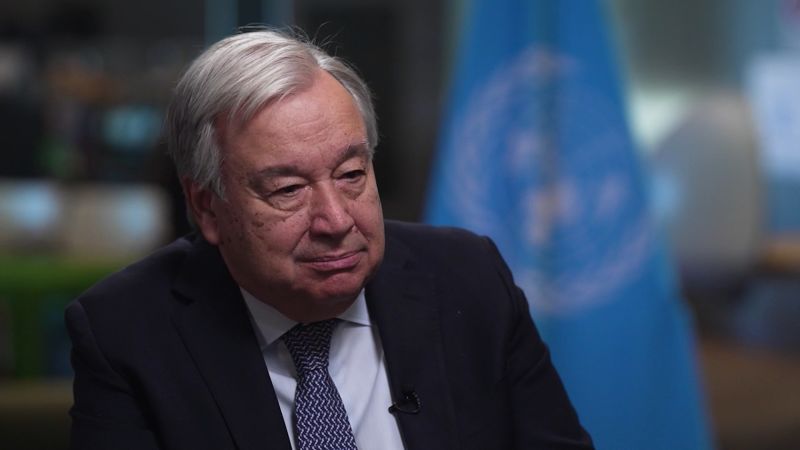
UN Secretary-General Antonio Guterres has warned of the risk of conflict escalation in the Middle East, emphasizing the urgent need to halt the cycle of death and destruction plaguing the region. This warning was issued during a press conference held in New York, where he called on the international community to take immediate action to stop the conflict.
Guterres confirmed that the situation in the Middle East is heading towards further escalation, noting that the ongoing violence significantly impacts the lives of millions of civilians. He pointed out that the increasing conflicts in the region, including the Israeli-Palestinian conflict, threaten regional stability and exacerbate the suffering of the people.
Details of the Event
During the conference, Guterres indicated that the United Nations is working to enhance mediation efforts to achieve peace, stressing that military solutions will only worsen the situation. He also urged all parties to commit to a ceasefire and return to the negotiating table.
He also addressed the humanitarian dimensions of the crisis, highlighting that millions of people in the region are in urgent need of humanitarian assistance, warning that the continuation of the conflict will lead to worsening humanitarian crises.
Background & Context
Historically, the Middle East has witnessed numerous armed conflicts that have led to a deterioration of humanitarian conditions. The Israeli-Palestinian conflict is one of the most prominent of these conflicts, having persisted for decades and resulted in the loss of many lives and the destruction of infrastructure.
In recent years, tensions in the region have escalated, particularly following recent events in Gaza and the West Bank, raising fears of a wider war. The international community, including the United Nations, is striving to find peaceful solutions, but challenges remain.
Impact & Consequences
The expansion of conflict in the Middle East could have serious repercussions for regional and international security. This could lead to a flow of refugees into neighboring countries, increasing pressure on these nations and affecting their stability.
Furthermore, the continuation of conflict may foster extremism and violence in the region, making it difficult to achieve peace and stability. The increasing humanitarian crises will also impact development efforts in the affected countries.
Regional Significance
The Arab region faces significant challenges due to ongoing conflicts, as the situations in the Middle East affect stability in other countries such as Lebanon and Syria. The humanitarian crises resulting from conflicts place additional pressures on Arab governments, necessitating greater cooperation between Arab nations and the international community.
In conclusion, hope remains pinned on diplomatic efforts to achieve peace in the Middle East, but this requires strong political will from all parties involved.