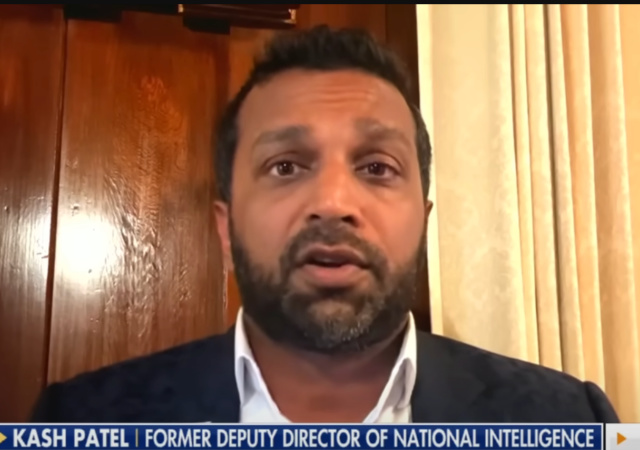
U.S. media reports on Friday indicated that a hacking group known as 'Hanthala' successfully breached the personal email of Kash Patel, the director of the Federal Bureau of Investigation (FBI), and published sensitive documents and personal photos online. Sources confirmed the authenticity of the released documents, including images from before Patel took office in 2025, according to CNN.
The U.S. Department of Justice and the FBI declined to comment on the incident when contacted by AFP.
Details of the Incident
The group 'Hanthala' claimed responsibility for the breach in a message posted on their social media accounts, indicating that the attack was a response to the FBI's seizure of their domain names. Last week, the U.S. Department of Justice announced the seizure of four websites, two of which bore the name 'Hanthala', linking them to cyber hacking activities carried out by the Iranian Ministry of Intelligence and Security.
'Hanthala' is considered one of the most prominent cybercrime groups, and its activities have increasingly been associated with the ongoing conflict between the United States and Iran, with many cybersecurity experts believing it operates under the auspices of the Islamic Republic.
Background & Context
This incident occurs at a sensitive time, as tensions between the United States and Iran are escalating, particularly following a series of cyberattacks targeting critical infrastructure in both countries. In recent years, there has been a surge in cyber activities, with cyberattacks emerging as a new means of conflict between nations, raising concerns about global cybersecurity.
Historically, Iran has been regarded as one of the leading countries in cyber hacking, targeting various government websites and major corporations in the United States and other nations. Experts point out that these activities reflect Tehran's strategy to counter international pressures and sanctions imposed on it.
Impact & Consequences
This incident could have serious implications for cybersecurity, as it may encourage other groups to carry out similar attacks. Additionally, the exposure of sensitive personal information could place Kash Patel under significant pressure, affecting his reputation and credibility as the director of the FBI.
Moreover, this incident may heighten tensions between the United States and Iran, potentially serving as a pretext for escalating security measures against Iranian activities in cyberspace. It could also raise new concerns about governments' ability to protect their sensitive information from cyberattacks.
Regional Significance
This incident serves as a reminder for Arab countries about the importance of enhancing their cybersecurity capabilities, especially in light of the increasing threats from cybercriminal groups. As reliance on technology grows, it becomes essential to have effective strategies in place to protect sensitive information and critical infrastructure.
Furthermore, cyber events like this could impact relations between Arab countries and the United States, potentially leading to a reevaluation of security and technological cooperation between the two sides. Under these circumstances, it is crucial for Arab nations to adopt comprehensive strategies to address cyber threats and enhance regional and international cooperation in this field.