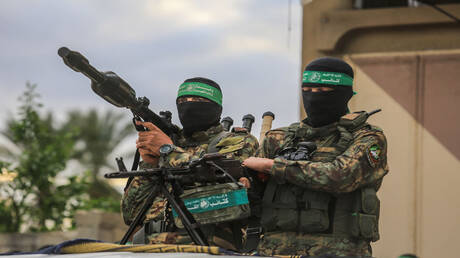
Hamas has reportedly started using advanced drone technology, similar to that used by Hezbollah in Lebanon, to carry out military operations in Gaza. This development reflects a significant shift in Hamas's military capabilities, amid ongoing tensions with Israel.
The drones, known as First Person View (FPV), are a modern technology that allows users to control the aircraft remotely, providing high accuracy in military operations. Hamas's adoption of this technology marks a significant advancement in its military strategies, indicating a potential increase in threats to Israel.
Event Details
An Israeli officer has confirmed that Hamas has developed its military capabilities through the importation or manufacture of advanced drones. These drones, which rely on fiber-optic technology, enable Hamas to carry out complex military operations, including targeted attacks.
This move is part of Hamas's efforts to enhance its ability to confront Israeli forces, particularly in the context of ongoing tensions in the Gaza Strip. The use of these drones also reflects the changing nature of the conflict, with technology playing a central role in military operations.
Background & Context
Historically, Hamas has relied on traditional methods in its conflict with Israel, but over time, it has begun to adopt advanced military technologies. In recent years, we have seen an increase in the use of unmanned aerial vehicles (UAVs) by Palestinian factions, reflecting a shift in their military strategies.
Hezbollah, one of the most prominent militant groups in Lebanon, has successfully used this technology in several operations, prompting Hamas to follow suit. This development may lead to a shift in the balance of power in the region, further complicating the conflict.
Impact & Consequences
Hamas's adoption of advanced drone technology may fundamentally change the nature of the conflict in Gaza. This technology could grant Hamas the ability to carry out more effective military operations, potentially leading to an escalation of tensions with Israel. At the same time, this development may prompt the Israeli military to reassess its strategies to counter these new threats.
The potential consequences of this development include increased retaliatory attacks between the two sides, potentially leading to a further escalation of the conflict. This technology may also open the door for other factions in the region to adopt similar strategies, further complicating the security situation in the Middle East.
Regional Significance
This military development in Gaza has significant implications for the entire Arab region. The tensions between Hamas and Israel may impact the stability of neighboring countries, prompting some factions to enhance their military capabilities to counter potential threats.
Furthermore, an escalation of the conflict in Gaza may impact peace efforts in the region, increasing the complexity of relations between Arab states and Israel. It is essential for Arab countries to closely monitor these developments, as the impact may extend to multiple political and economic spheres.
In conclusion, this information reflects a significant shift in Hamas's military capabilities, further complicating the conflict in the region. The current situation requires a response from all parties involved to ensure regional stability and prevent further escalation.