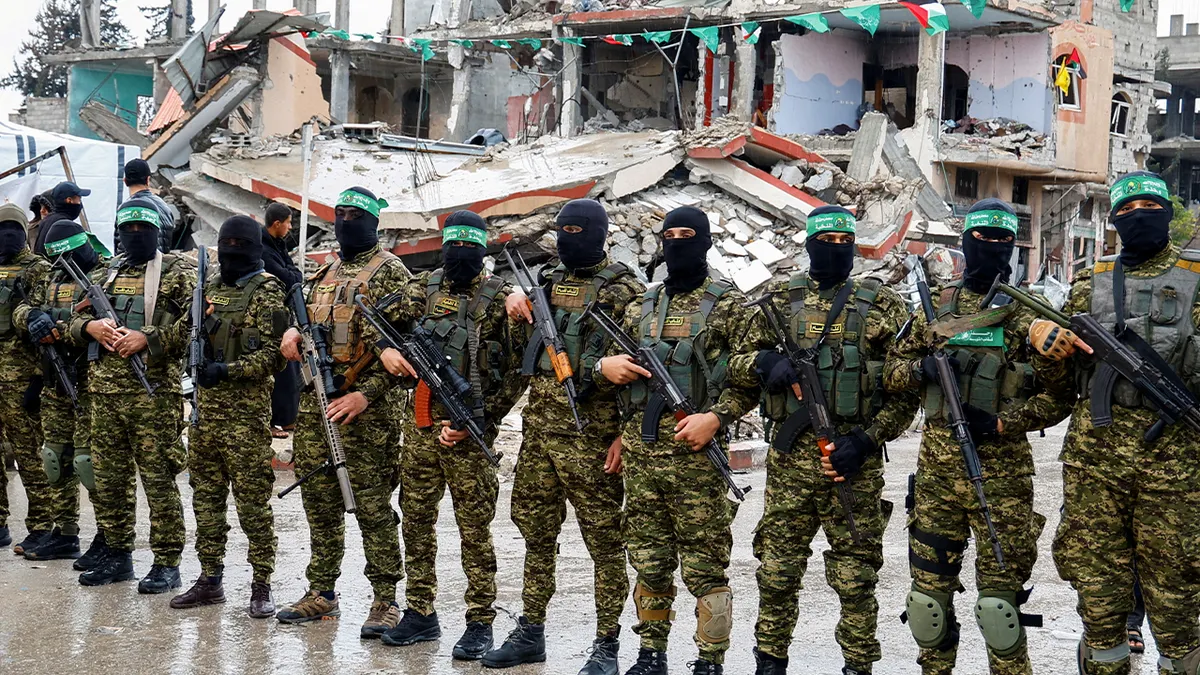
In a notable development on the Palestinian front, Hamas has confirmed its rejection of the "disarmament" proposal presented by the "Peace Council," stressing the necessity for amendments to the current draft of the proposal. This stance follows a series of internal discussions within the movement, where the armed wing played a prominent role in shaping the responses.
This move comes at a critical time, as the "Peace Council" has set a deadline for Hamas to decide on the proposal, complicating the political situation in the region further. The movement has expressed its willingness to explore the details of the proposal, but under specific conditions related to the content of the plan and its implementation mechanisms.
Details of the Event
Informed sources have reported that Hamas has sent messages to the relevant mediators, expressing its rejection of the proposal in its current form. The movement believes that the plan does not take into account the complex political and security conditions that Gaza is experiencing. Hamas has also emphasized the importance of dialogue and discussion as a means to reach consensual solutions.
This position arises amid escalating tensions in the region, where Hamas seeks to bolster its stance against increasing international and local pressures. Some observers have noted that the armed wing of the movement plays a central role in determining the political strategies of Hamas.
Background & Context
Historically, Hamas has always been in a position of defending Palestinian rights, particularly in light of the ongoing pressures from the Israeli occupation and the international community. Recent years have seen multiple attempts to disarm Palestinian factions, but Hamas has consistently rejected these efforts, viewing them as a threat to its existence.
In past years, there have been several rounds of negotiations between Hamas and the "Peace Council," but these have not yielded tangible results. Calls for disarmament have increased in the context of international efforts to achieve peace in the region, yet Hamas believes that these efforts are often unbalanced.
Impact & Consequences
Analysts believe that Hamas's rejection of the disarmament proposal could lead to heightened tensions in Gaza, which may affect the humanitarian and economic conditions in the region. This stance may also reflect the political instability that the movement is facing amid increasing pressures.
If Hamas continues to reject the proposal, the situation may escalate further, impacting peace efforts in the region. This could lead to a deterioration of security conditions, negatively affecting the lives of Palestinian citizens.
Regional Significance
The situation in Gaza is part of the larger picture of the Arab-Israeli conflict, where events there influence neighboring countries and the relationships among Palestinian factions. Continued tensions in Gaza could lead to increased divisions among different factions, complicating Palestinian reconciliation efforts.
Moreover, Hamas's rejectionist stance may provoke reactions from Arab countries seeking to achieve comprehensive peace in the region. This could affect Arab support for Palestine, further complicating the political landscape.
In conclusion, Hamas's rejection of the disarmament proposal reflects the significant challenges the movement faces under current circumstances. As pressures continue, the question of how to address these challenges remains open.