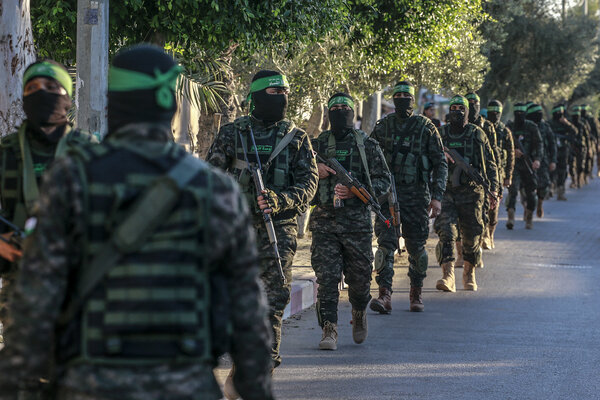
In a strong statement, the spokesperson for Al-Qassam Brigades, the military wing of Hamas, confirmed on Sunday that the movement will not accept disarmament in any form. This announcement comes at a sensitive time as tensions in the region are escalating, reflecting the movement's determination to maintain its military capabilities.
The spokesperson also warned against any infringement on Al-Aqsa Mosque, which is considered a sacred symbol for Palestinians and Muslims worldwide. He indicated that any attack on Al-Aqsa or on Palestinian detainees in Israeli prisons would be met with a strong response from the movement.
Details of the Incident
These statements come amid rising tensions between Palestinians and Israelis, with several confrontations occurring in Jerusalem recently, particularly around Al-Aqsa Mosque. Hamas has expressed its readiness to confront any assaults on Islamic sanctities, which further intensifies the ongoing conflict.
On the other hand, Israel continues to carry out military operations in the West Bank and Gaza Strip, exacerbating tensions. The Hamas spokesperson noted that the movement views its weapons as an essential part of its right to defend itself and its people.
Background & Context
Hamas was founded in 1987 and has since become one of the prominent Palestinian factions. The movement has engaged in several wars against Israel, considering its weapons a means to defend Palestinian rights. In recent years, relations between Hamas and Israel have become increasingly strained, especially following the rise in Israeli assaults on Palestinians.
Historically, there have been numerous attempts to disarm Hamas, but the movement has consistently asserted its right to resist. This stance reflects the significant challenges the movement faces in the context of the Israeli-Palestinian conflict.
Impact & Consequences
Hamas's statements could lead to a new escalation in the conflict, as Israel may conduct military operations in response to any perceived threats. Additionally, this position could affect peace efforts in the region, which have been stagnant for years.
If tensions continue, we may witness an escalation of violence, potentially leading to serious humanitarian consequences for civilians on both sides. This situation could also negatively impact relations between Arab countries and Israel, especially amid normalization attempts in the region.
Regional Significance
The Palestinian issue is one of the central concerns in the Arab world, and any escalation in the Israeli-Palestinian conflict directly affects stability in the region. This situation may lead to increased popular support for Hamas in Arab countries, strengthening its position against occupation.
Furthermore, the ongoing conflict could impact relations between Arab nations and Israel, potentially affecting normalization and regional cooperation efforts. At the same time, there may be increased pressure on Arab governments to intervene or provide support for the Palestinians.
The stance of Hamas against disarmament reflects the ongoing challenges the movement faces within the context of the Israeli-Palestinian conflict and indicates the likelihood of a new escalation in the region. Under these circumstances, hope remains pinned on peace efforts and de-escalation.