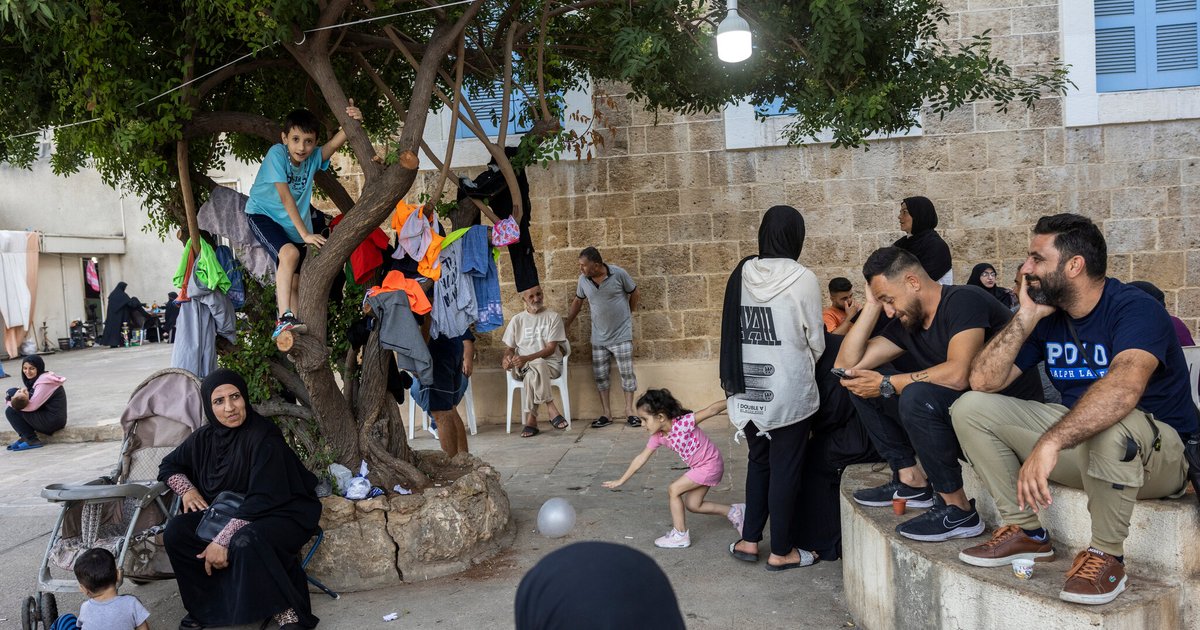
Thousands of displaced patients in Lebanon are living in dire health conditions, as the war has imposed a bitter reality on them. Alongside losing their homes, these patients are confronted with a collapsing healthcare system that exacerbates their suffering and threatens their lives due to chronic illnesses they endure.
The suffering of the displaced spans from the south to the southern suburbs of Beirut and the Bekaa Valley, where Israeli airstrikes have forced many families to leave their homes. They find themselves facing a harsh equation: displacement on one hand, and deteriorating health conditions on the other. Accessing medications has become a daunting task, while regular medical follow-ups have turned into a rare luxury.
Details of the Situation
Inside a classroom at a public school in Beirut, sixty-year-old Munira Ahmad Muhyiddin sits in heavy silence. She says, "I was displaced weeks ago, and I can no longer afford my medication, nor has anyone provided it for me, even though I cannot do without it." Her words reflect a reality that is repeated daily by thousands of patients who find themselves without a safety net to ensure the continuity of their treatment.
Meanwhile, Said Youssef Fares, a man with a disability, has been displaced from the border town of Maroun al-Ras. He clarifies that the problem is not limited to the difficulty of accessing services; it is more pronounced in the loss of essential medications. He states, "Treatments are not available as they should be, amid increasing pressure on health centers that already suffer from limited resources."
Ali Mustafa Hamdan, displaced from Mais al-Jabal, experiences compounded anxiety due to his diabetes. He requires strict adherence to his treatment, but what is available at health centers does not exceed pain relievers and fever reducers. He fears for the deterioration of his health, especially after his doctor warned him before the war about risks that could lead to the amputation of one of his limbs if he does not adhere to his treatment.
Background & Context
Harsh conditions are forcing many displaced individuals to make difficult choices, such as stopping their medications or rationing their doses. These practices increase the likelihood of health complications and threaten to exacerbate the burdens on Lebanon's already fragile healthcare system. In an attempt to contain the crisis, humanitarian organizations are working to bridge part of the gap. The organization "Doctors Without Borders" has launched about 15 mobile clinics that provide primary healthcare services.
In the most crowded centers, where the number of displaced individuals sometimes exceeds 1,500, fixed clinics have been established to support medical teams and handle emergency cases. In the Bir Hassan school complex in Beirut, patients receive medical examinations and health guidance, along with limited quantities of medications.
Impact & Consequences
Dr. Khadr Zalzali, the clinic director, describes the health situation, saying, "The condition is difficult, pressure is high, and shortages exist. We try as much as possible to record patients' needs and secure medications after a few days if available." However, these efforts remain limited in the face of increasing demand.
The suffering transcends the physical aspect, as the psychological state of the displaced appears fragile. Repeated traumas, continuous fear of bombardment, and the absence of privacy within shelters create a state of constant anxiety. Many suffer from sleep disorders and loss of appetite, while a significant number of displaced individuals complain of physical pain, but examinations reveal that the primary cause is psychological.
Regional Significance
The healthcare sector in Lebanon faces accumulated challenges. Since the outbreak of war, the Ministry of Health announced the provision of free hospitalization services for displaced individuals in public hospitals, but this decision collided with the reality of limited beds and staff shortages. These hospitals suffer from the repercussions of successive crises, beginning with the economic collapse that started in 2019.
Ministry data indicates that the primary healthcare network, which includes over 200 centers and 31 public hospitals, operates with limited resources even under normal circumstances. As the displacement expands, the gap between needs and capabilities has widened, especially regarding chronic diseases and ongoing care.
Amid these pressures, the Lebanese Ministry of Health affirms that it is working to enhance the stock of medications and connect shelters to the primary healthcare network. However, on the ground, the gap remains evident between announced policies and daily reality, where many displaced individuals do not receive regular medical follow-ups.
Between official promises and humanitarian efforts, displaced patients remain trapped in a gray area, where medication becomes a daily demand, and healthcare turns into a battle in itself. In a country burdened by accumulated crises, it seems that the war has not only added a new crisis but has also revealed the depth of vulnerability within its healthcare system.