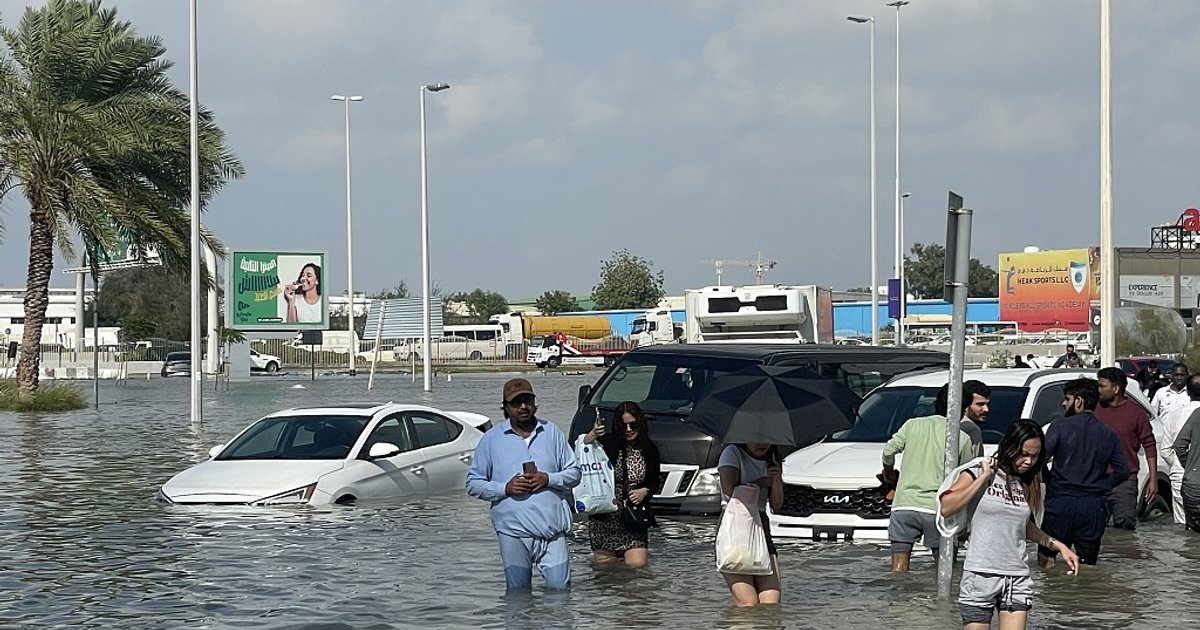
Heavy rains that fell on the United Arab Emirates have flooded the streets, making it difficult for residents to move in several areas. These severe weather conditions lasted for several hours, raising concerns among citizens about their impact on infrastructure.
In many cities, including Abu Dhabi and Dubai, residents witnessed unusual scenes as water inundated the streets, leading to the closure of some roads and disrupting traffic. Images circulated on social media showed residents navigating through waterlogged streets, reflecting the scale of the natural disaster that struck the country.
Event Details
Many areas were significantly affected, with some regions recording record rainfall. In Dubai, for instance, rainfall exceeded 100 mm in some parts, causing water to accumulate in streets and parks. Authorities issued warnings to residents to exercise caution while driving and to avoid low-lying areas that may be prone to flooding.
Emergency teams in the UAE responded quickly to reports from citizens, deploying rescue teams to the most affected areas. Heavy equipment was used to clear blocked roads and remove accumulated water, gradually facilitating traffic movement.
Background & Context
Heavy rains in the UAE are an uncommon phenomenon, as the country enjoys a dry desert climate for most of the year. However, global climate changes have led to an increase in the severity of extreme weather events. In recent years, the UAE has experienced several instances of heavy rains and flooding, raising questions about the readiness of its infrastructure to cope with such challenges.
Historically, the UAE relied on traditional drainage systems, but with increasing population density and urban expansion, there is an urgent need to develop these systems to address climate changes. The government has begun implementing projects to improve water infrastructure, but further investments in this area are still necessary.
Impact & Consequences
Heavy rains significantly affect the daily lives of residents, disrupting traffic and causing delays. There are also concerns about the impact of these weather conditions on the local economy, especially in sectors reliant on transportation and trade. Some traders have expressed worries about the impact of flooding on the supply of goods, which could lead to price increases.
Moreover, the recurrence of such weather events may affect sustainable development plans in the UAE, as the government seeks to enhance tourism and attract foreign investments. Therefore, improving drainage systems and water management has become an urgent necessity to ensure the sustainability of economic growth.
Regional Significance
The UAE is one of the Arab countries facing increasing climate challenges, with many other Arab nations experiencing similar phenomena. Countries like Lebanon and Jordan have witnessed flooding due to heavy rains, reflecting the urgent need for regional cooperation in water management and adaptation to climate changes.
In conclusion, these events highlight the importance of sustainable planning and investment in infrastructure to face climate challenges. Enhancing cooperation among Arab countries in water resource management may be the optimal solution to address these recurring phenomena.