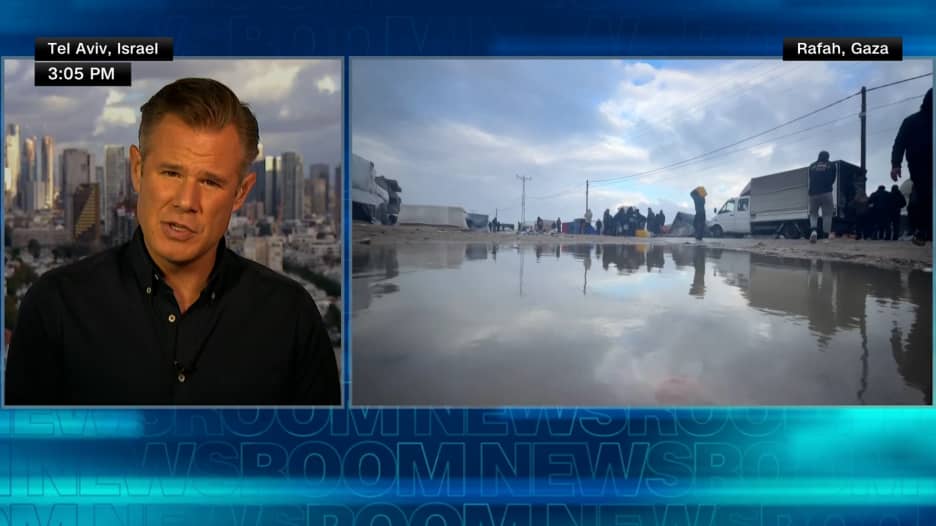
Three Palestinian displaced persons were injured on Thursday when a damaged wall collapsed in the center of Gaza City, due to the heavy rains and strong winds accompanying the weather system affecting the region since the night. These harsh weather conditions have led to the flooding of hundreds of displaced persons' tents and shelters, especially in the western areas of the city, worsening the plight of thousands of families living in difficult circumstances.
The heavy rains continue in Gaza, causing many areas to be submerged, which has resulted in the destruction of the already fragile infrastructure. Images circulated on social media have shown the extent of the damage to the tents, with many being inundated, making daily life for hundreds of families even more challenging.
Details of the Incident
Reports indicate that the displaced families, who are already suffering from the effects of the Israeli blockade, are now facing new challenges due to the severe weather. Injuries among the displaced have been reported due to the wall collapse, reflecting the fragility of the situation in the sector. Additionally, many families have lost their belongings due to the floods, increasing the psychological and economic pressures on them.
These events are part of a series of natural disasters that Gaza has been exposed to, coinciding with multiple humanitarian crises. With each weather system, the suffering of the residents is renewed, as they live in extremely difficult conditions, with most tents lacking adequate protection from the elements.
Background & Context
Gaza, which has been under a continuous blockade for over a decade, faces significant challenges in various fields, including health, education, and infrastructure. The humanitarian situation in the sector has deteriorated significantly, with more than 2 million Palestinians living in a small area, making them vulnerable to natural disasters. Studies have shown that living conditions in Gaza are among the worst in the world, with residents suffering from severe shortages of water and electricity.
Historically, Gaza has witnessed numerous humanitarian crises, with repeated wars and movement restrictions exacerbating the situation. With each winter season, the residents' suffering recurs with floods and heavy rains, highlighting the urgent need to improve living conditions in the sector.
Impact & Consequences
These harsh weather conditions directly affect the lives of the displaced, as health and psychological risks increase. With the tents flooding, residents become more susceptible to diseases, especially in light of the lack of healthcare. Additionally, the loss of property increases the economic pressures on families, which may lead to exacerbated social crises.
These conditions require an urgent response from humanitarian organizations, which must work to provide the necessary assistance to those affected. There is also an urgent need to provide long-term solutions to improve infrastructure in Gaza, ensuring the protection of residents from future natural disasters.
Regional Significance
The situation in Gaza is indicative of the humanitarian crises faced by many Arab regions. With the increasing climatic and economic challenges, it is essential for Arab countries to collaborate in providing support and assistance to those affected. The crises in Gaza are not merely a local issue; they are part of a larger picture concerning regional stability.
In conclusion, what is happening in Gaza is a stark reminder of the extent of the suffering experienced by the residents, and there must be collective efforts from the international community to assist those affected. Improving living conditions in Gaza requires a comprehensive response, including support for infrastructure and the provision of urgent humanitarian aid.