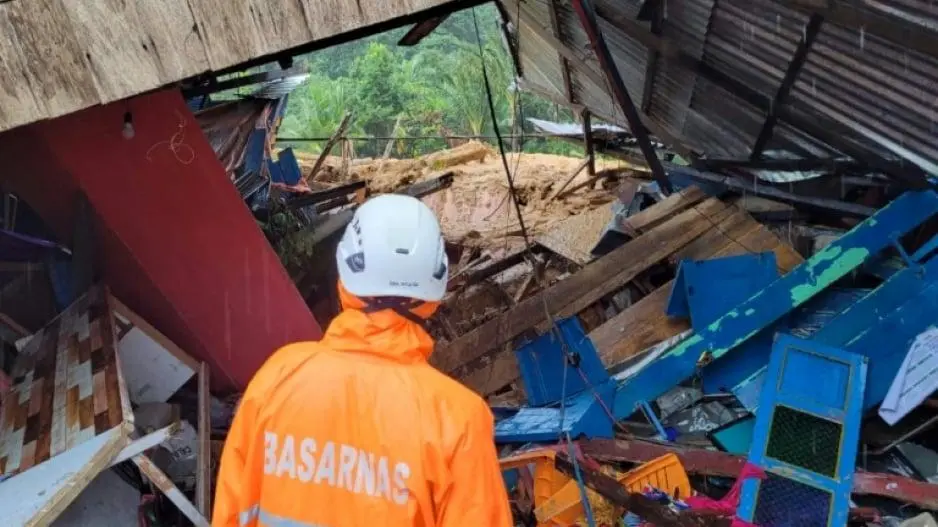
On Friday, September 22, 2023, the Tulungagung region in Indonesia experienced severe landslides and storms due to heavy rainfall that lasted for three consecutive hours. According to Sudarmaji, the head of the local disaster management agency, these natural disasters particularly affected the areas of Sendang and Ngantru.
Reports indicate that the landslides resulted in the closure of roads leading to Dusun Ngringging in the village of Geger, hindering traffic and impacting the lives of local residents. Additionally, 18 houses in the Ngantru area were damaged due to the storms, with roofs being the primary concern.
Details of the Incident
The local disaster management team received reports of landslides in the Sendang area, where heavy rains led to soil erosion. Roads were completely blocked due to the accumulation of earth materials, making access to some areas extremely difficult. Meanwhile, the storms caused roof damage in the villages of Keboharjo and Pohok, with reports of minor damage related to asbestos roofs.
Sudarmaji noted that relief teams have begun assessing the damage and providing urgent assistance to affected residents, including the distribution of tents and essential food supplies. It has been determined that the number of damaged homes may increase as evaluation operations continue.
Background & Context
Indonesia is considered one of the countries most prone to natural disasters, frequently experiencing floods and landslides due to its geographical location. The country lies on the Pacific Ring of Fire, making it susceptible to seismic and volcanic activity. Historically, Indonesia has witnessed numerous natural disasters that have resulted in loss of life and destruction of property.
In recent years, the intensity of natural disasters in Indonesia has increased, necessitating improvements in disaster management strategies and rapid response. Agencies like BPBD have been established to enhance coordination between government entities and local communities in facing these challenges.
Impact & Consequences
These incidents underscore the importance of raising community awareness regarding the risks of natural disasters and the necessity of taking appropriate precautions. Landslides and storms significantly impact the local economy, disrupting business activities and leading to additional costs for relief and reconstruction.
These disasters require an immediate response from the government and civil society to ensure the safety of residents and provide necessary support to those affected. Long-term strategies must also be in place to adapt to climate changes that increase the severity of such phenomena.
Regional Significance
While natural disasters in Indonesia may seem distant from the Arab region, there are lessons to be learned. Many Arab countries face similar challenges, such as floods and sandstorms, which necessitate improvements in disaster management strategies. Regional cooperation in knowledge and experience sharing can contribute to enhancing disaster resilience.
In conclusion, these incidents highlight the importance of preparedness and planning for natural disasters, whether in Indonesia or any other region. A swift and effective response is essential to ensure the safety of affected communities.