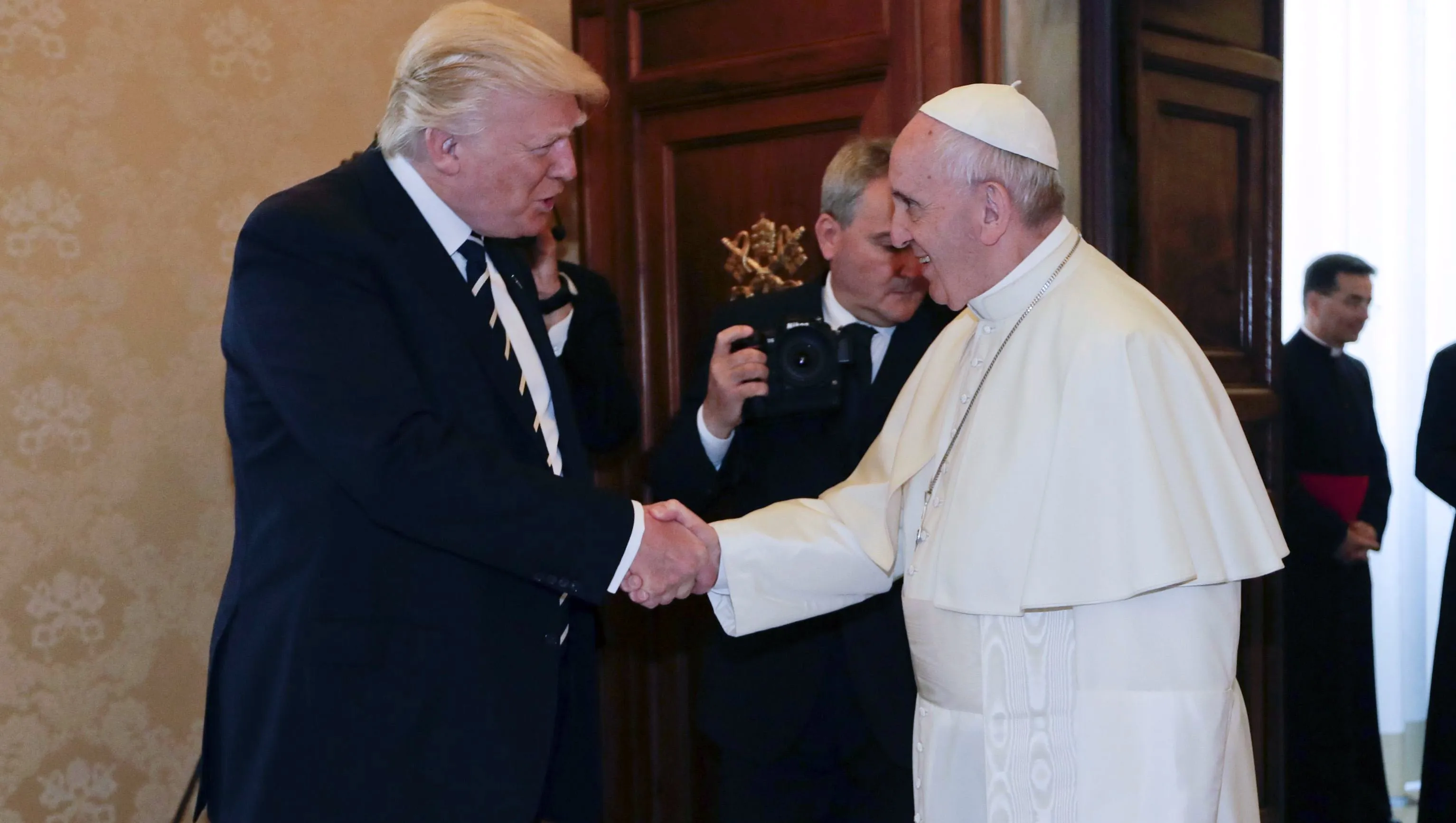
The relationship between the Vatican and the administration of U.S. President Donald Trump is experiencing unprecedented tension, as Trump's policies in Iran, Venezuela, and Cuba have united American Catholics against him, leading to a clash that goes beyond religion into politics and technology.
In an article published by the Financial Times, Italian writer Mattia Ferrarisi noted that the administration's policies, which embrace the "MAGA" (Make America Great Again) movement, have succeeded in uniting American Catholic bishops against a "common worldly enemy," despite traditional divisions between conservatives and progressives.
Details of the Conflict
The war on Iran is a central point of tension in the relationship between the Vatican and the Trump administration, with Pope Leo XIV describing this war as a "shame on humanity." The Pope criticized the U.S. administration's use of religion to justify "excessive violence" against Iran, stating that "Christ does not listen to the prayers of those who wage wars."
This criticism came after U.S. Secretary of War Pete Hegseth prayed for God to grant American forces "overwhelming violence against enemies unworthy of mercy." At the beginning of March, Pope Leo XIV stated that "Christian political leaders who ignite wars should go to confession and evaluate whether they are truly following the teachings of Christ," a clear reference to the war on Iran.
Background & Context
The disagreement between the Vatican and the Trump administration is not limited to war; it also extends to issues of immigration, policy towards Venezuela, tensions with Europe, and the blockade of Cuba, reflecting a deep gap between the Vatican's moral vision and the U.S. administration's approach. Additionally, the rapid use of technology and artificial intelligence in wars and internal repression is another point of contention between the two parties.
In this context, the Vatican has faced Trump's allies in the technology sector, such as billionaire Peter Thiel, founder of Palantir, a company linked to Middle Eastern wars, particularly the Gaza conflict. Thiel is known for delivering "political theological" lectures aimed at crafting a religious vision that justifies his technological and political project, and he has expressed interest in Catholicism after attending one of these lectures.
Impact & Consequences
Thiel's recent visit to Rome sparked widespread controversy, with orders "from above" preventing clergy from attending his lectures, and his ideas were met with strong rejection from Catholic circles. One cleric even described him as the "Antichrist," reflecting the church's fears about his influence on religious values.
Thiel insists that the "Antichrist" is the force that seeks to slow technological progress and bind human innovation with ethical and regulatory constraints. He also argues that the idea of curbing technology, which the Vatican is attempting to do, is an act against human will and evolution.
Regional Significance
The repercussions of this conflict between the Vatican and the Trump administration extend beyond U.S. borders, as American policies in the Middle East can affect conditions in Arab countries, especially amid ongoing tensions in Iran, Venezuela, and Cuba. The use of religion as a tool to justify military policies may provoke negative reactions in Arab and Islamic communities.
In conclusion, the author notes practical steps taken by the Vatican to avoid cooperation with the Trump administration, such as rejecting the president's invitation to visit the United States, the American church's refusal to collaborate with the government on refugee issues, and declining to join the "Peace Council." These steps reflect the Vatican's desire to maintain its independence and reject political pressures.