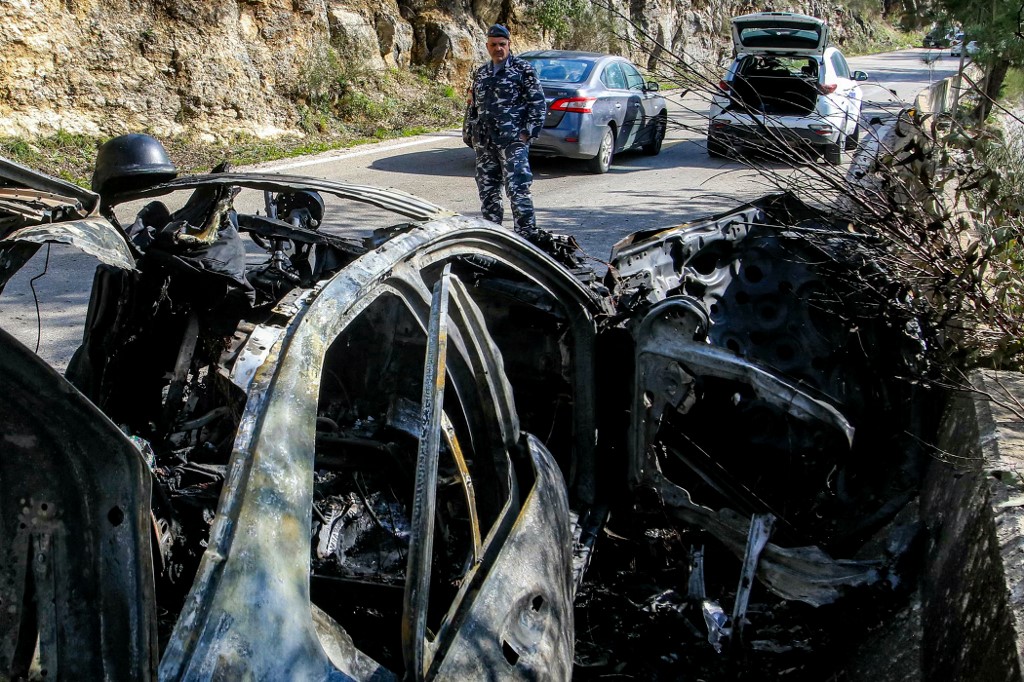
Hezbollah, the Lebanese militant group, announced the execution of a series of attacks against Israeli forces in southern Lebanon, where an artillery unit targeted an armored unit attempting to recover a damaged vehicle in the town of Deir Siryan. The group also launched a surface-to-air missile at an Israeli helicopter over the town of Adaisseh, forcing it to withdraw, in addition to targeting a gathering of Israeli soldiers at the Malikiya site with rockets.
These attacks come at a time when tensions along the Lebanese-Israeli border are escalating, as Hezbollah seeks to assert its strength and ability to respond to any Israeli aggression. The group indicated that these operations are part of its defense of Lebanon's sovereignty and its right to respond to any threats.
Details of the Attacks
In the details of the assault, Hezbollah reported that it targeted an Israeli armored unit that was attempting to recover a vehicle damaged during previous clashes. The attack was executed using artillery shells, demonstrating the group's use of advanced military tactics. The group also noted that it fired a missile at an Israeli helicopter, reflecting the evolution of its military capabilities in facing warplanes.
This escalation follows a series of skirmishes along the border, where tensions between the two sides have increased in recent weeks, raising concerns about the outbreak of a wider conflict in the region.
Background & Context
Historically, the Lebanese-Israeli border has witnessed numerous conflicts, with Hezbollah being one of the most prominent armed factions in Lebanon. The group has fought several wars against Israel, most notably the 2006 war. Since then, Hezbollah has maintained its military capabilities, making it a key player in the regional equation.
Concerns are growing over a new escalation in the region, especially with ongoing tensions between Iran and Israel, where Hezbollah is considered a key ally of Tehran. This alliance complicates the situation in the Middle East and makes any potential military escalation likely to have far-reaching consequences.
Impact & Consequences
Hezbollah's recent military operations could lead to a greater escalation in the conflict between Lebanon and Israel, potentially dragging the region into a full-scale military confrontation. If these attacks continue, regional and international powers may intervene to contain the situation, further complicating the security landscape in the area.
Moreover, these events could affect Lebanon's relations with Western countries, especially given the economic and political pressures Lebanon is currently facing. Any military escalation could negatively impact the Lebanese government's efforts to restore economic stability.
Regional Significance
The recent events are seen as an indicator of rising tensions in the region, which could affect regional security and exacerbate conflicts in neighboring countries such as Syria and Palestine. Additionally, any escalation in Lebanon could impact other Arab countries, particularly those experiencing internal conflicts.
In conclusion, the situation along the Lebanese-Israeli border remains tense, with the potential for military escalation that could alter the balance of power in the region. The international community must closely monitor these developments and work to prevent any escalation that could lead to a comprehensive conflict.