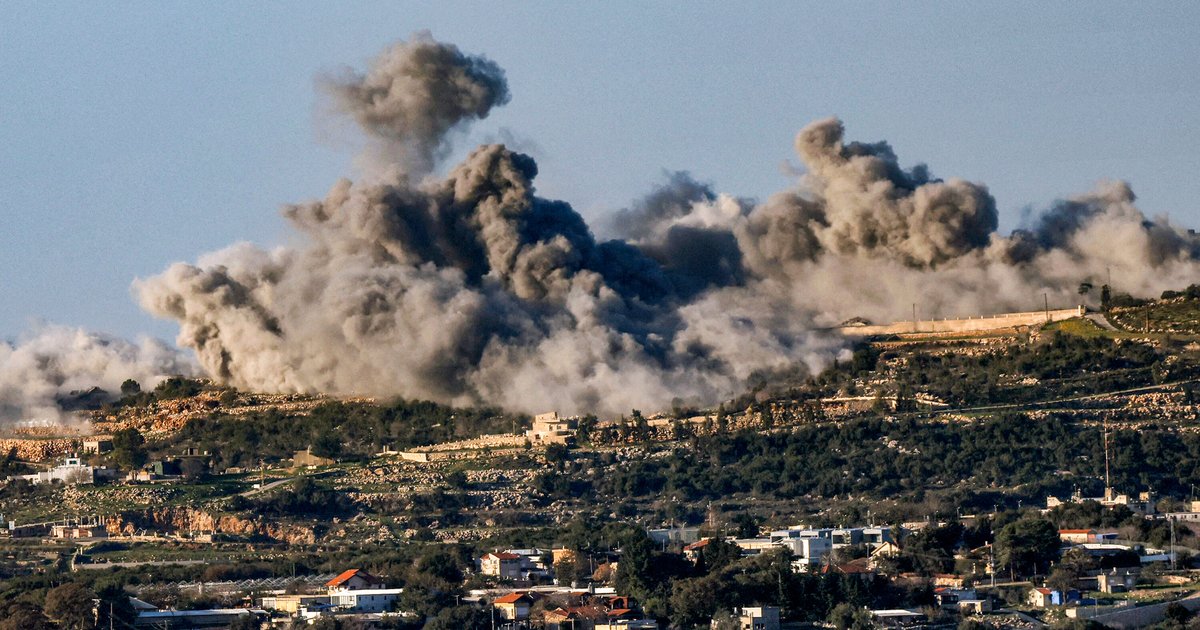
Hezbollah announced today, Wednesday, that it successfully intercepted a third Israeli warplane using a ground-to-air missile in the skies over southern Lebanon. This escalation comes at a time when tensions between the party and Israel are increasing, reflecting a state of instability in the region.
The recent incident is part of a series of aerial confrontations between Hezbollah and Israeli forces, as the party seeks to enhance its defensive capabilities against growing Israeli threats. A spokesperson for the party indicated that this interception reflects their commitment to protecting Lebanese airspace from any violations.
Details of the Incident
According to sources, the Israeli aircraft was conducting reconnaissance operations over southern areas, prompting Hezbollah to take immediate action. The missile was launched from a site near the border, where the party confirmed that the aircraft sustained damage as a result of the attack; however, this has not been confirmed by the Israeli side.
This escalation follows a series of military incidents in the region, with both Hezbollah and Israel seeking to strengthen their positions. This interception serves as a strong message from Hezbollah, affirming its ability to confront Israeli threats.
Background & Context
Historically, the Lebanese-Israeli border has witnessed ongoing tensions, especially following the 2006 war that resulted in widespread destruction in Lebanon. Since then, Hezbollah has been working to enhance its military capabilities, including the development of air defense systems. In recent years, Israel has increased its airstrikes on Hezbollah positions, leading to heightened tensions.
The complex regional situation, including conflicts in Syria and Iraq, has also influenced the dynamics of the conflict between Hezbollah and Israel. Hezbollah seeks to exploit regional chaos to enhance its influence, while Israel continues its military operations to prevent any potential threats.
Impact & Consequences
These incidents could lead to greater escalation in the conflict between Hezbollah and Israel, threatening stability in Lebanon and the region as a whole. Should these confrontations continue, they may provoke military responses from the Israeli side, increasing the risk of a new war.
Moreover, military escalation could impact the economic and social situation in Lebanon, which is already suffering from multiple crises. Any escalation in the conflict could exacerbate humanitarian conditions and increase civilian suffering.
Regional Significance
These developments are of significant importance to the Arab region, reflecting a state of instability that could affect neighboring countries. Any escalation in the conflict may have political and security repercussions in other Arab nations, especially those grappling with internal conflicts.
At the same time, these events may shine a light on Hezbollah's role in the region and how it can influence regional balances. International reactions to these developments will be crucial, as some countries may seek to intervene to mitigate escalation.
The interception of a third Israeli warplane by Hezbollah reflects rising tensions in the region and suggests that the conflict between the two sides may enter a new phase of escalation. It is important to closely monitor developments, as any escalation could impact regional stability and increase civilian suffering in Lebanon.