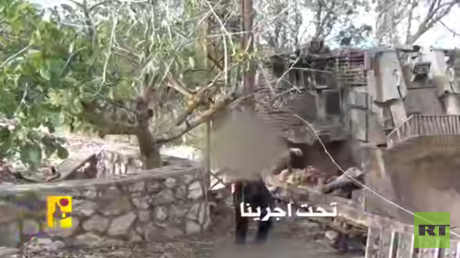
On Wednesday evening, Hezbollah documented direct clashes with a unit of the Israeli army in the town of Hadatha, located in southern Lebanon. The footage released by the party showcased the destruction of Israeli military vehicles during an attempted advance in the area, reflecting the escalating tensions in this sensitive region.
These clashes come at a time when the security situation in southern Lebanon is increasingly tense, as the Israeli army seeks to bolster its military presence in border areas. Hezbollah indicated that these operations are part of defending Lebanese territory against any potential aggressions.
Details of the Incident
The video circulated on social media shows Hezbollah members exchanging fire with Israeli forces, illustrating the intensity of the clashes. Moments of the destruction of Israeli military vehicles were also documented, which is considered a significant blow to the Israeli army in this area.
Hadatha is a strategic town, located near the Lebanese-Israeli border, making it a frequent site for military operations. The recent clashes demonstrated Hezbollah's capability to counter any advances by Israeli forces.
Background & Context
Historically, southern Lebanon has witnessed numerous armed conflicts between Hezbollah and the Israeli army, especially since 2006 when the July War broke out. Since then, both parties have sought to strengthen their military positions in the region.
These clashes are part of the ongoing conflict between Hezbollah and Israel, which has spanned decades. The continuous tensions have led to increased military preparations from both sides, raising concerns about a larger escalation in the future.
Impact & Consequences
These clashes could lead to greater escalation of tensions between Lebanon and Israel, potentially affecting stability in the region. Any military escalation may have severe humanitarian repercussions for civilians in border areas.
Regional and international powers are striving to calm the situation, but the intensifying clashes could complicate peace efforts and increase instability in the region.
Regional Significance
The events in southern Lebanon are of great importance to Arab countries, as they reflect the ongoing conflict between regional powers. Any escalation in this conflict could impact relations between Arab nations and Israel, heightening tensions in the region.
Under these circumstances, Arab countries must closely monitor the situation, as any escalation could affect regional security and increase the challenges they face.